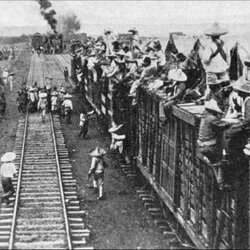
In the last major battle of the Revolution, Constitutionalists fought Villistas in Agua Prieta. The Constitutionalists successfully defended Agua Prieta.
Díaz agreed to step down in return for Madero's acceptance of the nomination of Francisco León de la Barra as interim president until new elections in October.
Tired of the oppression by the Porfirians, Emiliano Zapata led the agrarian villagers of the indigenous regions in to a revolt on the side of Madero. These villagers were focused mainly on the protection and possible expansion of the land they owned and felt they deserved. These peasants were essential to the revolution in the way of rural support and a fighting force throughout Mexico.
After the toppling of the Diaz regime, Madero and his supporters organized the return of free elections in Mexico City as well as some areas. While these elections might not have encompassed all of Mexico, the act of free elections gave hope to the Mexican people about the return of Democracy. These free elections also resulted in a congress and other forms of state and local government not run solely by Porfirians but many different groups.
Madero was nominated by an anti-reelection party, this sparked anti Diaz forces all around the country. Madero began a grand tour around Mexico where he stirred up fervor for his campaign. Madero was able to unite the repressed peasents, middle class, land owners, elites left out of Diazs government and liberals behind him. This powerful political coalition scared Diaz and he arrested Madero later in 1910.
Prior, the Pact of the Embassy between Huerta, Díaz, and U.S. Ambassador Wilson was created. This united united both Huerta and Díaz to a common cause. This was when the final steps were arranged for Madero's coup. This also assured that Huerta would gain presidency. On February 18th Madero and VP Suárez were arrested and three days later were assassinated.
In the first US invasion of Mexican territory since the mid-19th century, President Wilson ordered the American troops to occupy the port at Veracruz after learning a German ship was en route with arms. This occupation, while unpopular with Mexicans for the blatant breach of soverignty, eventually helped the Constitutionalists launch major attacks on the Huerta government.
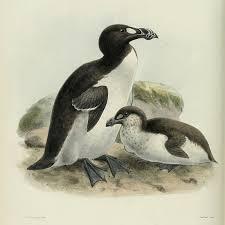
In 1775 it became illegal to hunt the bird for its feathers or eggs, but hunting them for using as fishing bait was still allowed. Eventually, only 65 years later in 1840 the last Great Auk was seen.
Carranza received Diaz's permission to run for governor, and he gained the support of the sitting governor as well as Madero's father, but Don Porfirio's inflence blocked him from winning the election. He supported Francisco I. Madero's challenge to the Díaz regime in the elections and Madero's Plan to nullify the elections and overthrow Díaz by force.
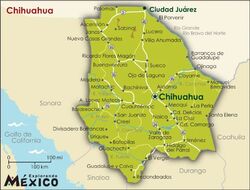
Pascual Orozco led a decisive victory against the federales at the railroad station in Rellano, Chihuahua. This took place 20 days after Orozco declared his rebellion, and two days before denounced the Madero administration in the Orozquista Plan.
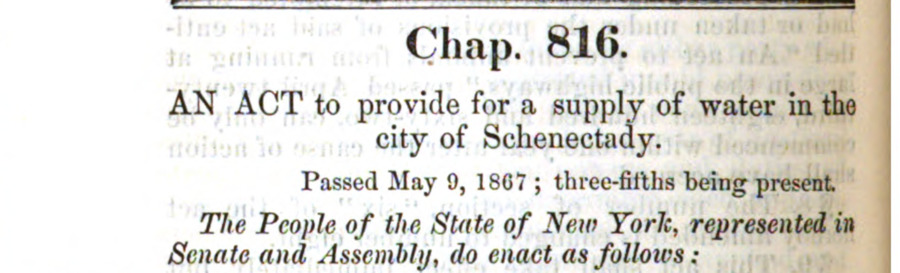
The act created the position of a Water Commissioner for the city. This commissioner was to be responsible for the oversight of the water supply, ensuring that a "sufficient quantity of pure and wholesome water" would be available to residents.
The Migratory Bird Treaty Act prevented all economic traffic between the U.S., Canada, and Great Britain on certain birds. This was one of the earliest U.S. environmental laws alongside the Lacey Act. It currently lists over 800 birds, all of which cannot be used for commercial trade whether alive or dead among the nations.
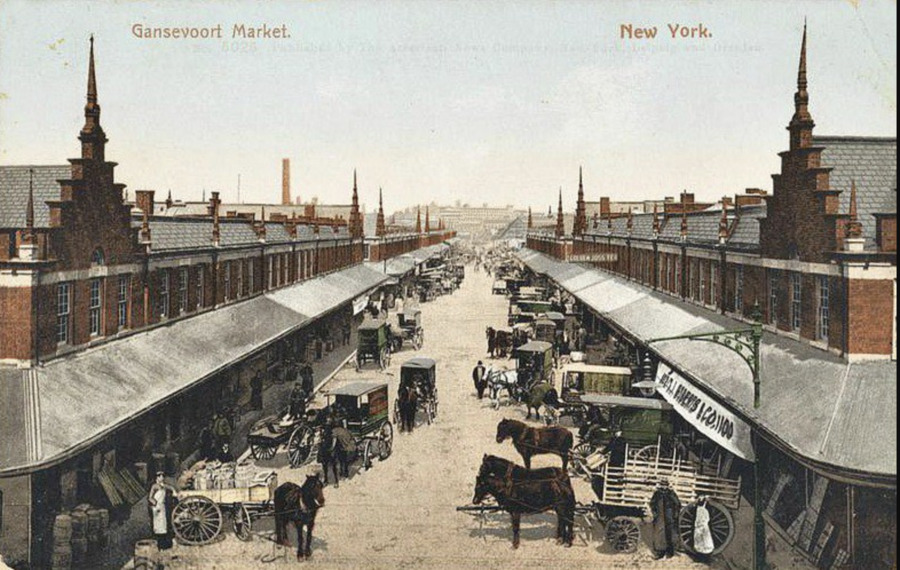
hundreds of meatpacking plants filled lower manhattan during this time period and at the end of it produced the third largest amount of processed/dressed meat.