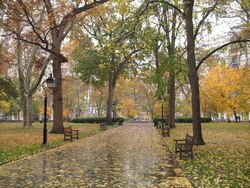
Washington Square, formerly Southeast Square, was one of the five original public squares William Penn designated in his 1682 plan. Starting in 1706, it was used as a Potter’s Field . This served as a burial ground for poor Philadelphians, as well as Black and Native people who weren’t allowed to be buried elsewhere. It also served as a mass grave on several occasions, including thousands of bodies from each of the Revolutionary War and the Yellow Fever epidemics. The square was a gathering place for Black Philadelphians, in part, apparently, to prevent grave robbers from selling the bodies of their loved ones to the burgeoning medical establishment. Burials in Washington Square ceased in 1794, but dumping of refuse continued for a half a century. It was rejuvenated in 1842 and has been a park ever since.
Between the years of 1793 and 1805, there were six outbreaks of yellow fever, the worst of which was in 1793. In 1793, those who were wealthy enough to leave the city did (about 40%). It was thought at the time that all Black people were immune to the disease, so much of the work of caring for the sick fell on African Americans. Interestingly, the virus was spread to Philadelphia through European soldiers who were being sent to Haiti to attempt to repress the revolution which took place between 1791 and 1804.
Due to an increasing population, aquifer drying up, and saltwater intrusion, Montauk and East Hampton reached an agreement and extended the East Hampton water pipeline to Montauk. Although the Concerned Citizens of Montauk fought against this decision, they were instrumental in making sure that there would be no future contamination as the pipeline was being built/extended.
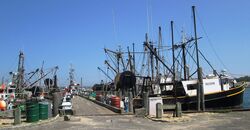
Montauk fishing hub is the one of the largest fishing hubs in the entire Northeast. The fishing industry accelerated after the sinking of The Pelican but recently it is in decline as new regulations and restrictions limit number of fish that can be caught and the time of year (shortening fishing season).
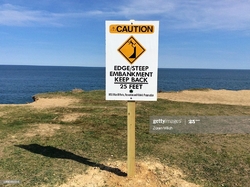
In the 1970s, citizens of Montauk started noticing that up at Montauk Bluffs due to loose gravel and lack of care and attention, that erosion has been going on for decades and the bluffs have eroded over 15 feet. Montauk has moved walking trails further inland accordingly and have put up signs and railings to prevent people and cars from getting to close to the edge.
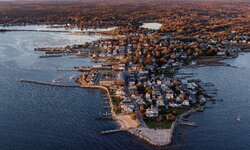
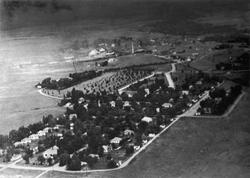
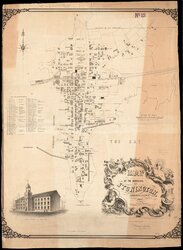
The land that makes up Stonington today used to belong to Massachusetts. They eventually yielded it to Connecticut and King Charles II gave them a charter for Southertown, which would be changed to Mystic, and then finally Stonington in 1666. The creation of Stonington helped to solidify the Connecticut and Rhode Island border.
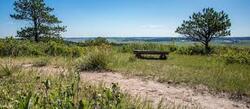
In an effort to protect open spaces and parks in Douglas County, the Open Space Program was established in response to voters in 1994. This program ensured that the designated space could not be used for any other purpose in the future. Since the program began, a total of 63,037 acres of land has been protected.
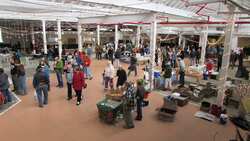
The American Velvet Company was a corporation that was located on Stonington before it was moved to Virginia. At its peak it was the top velvet producer for the United States. It employed 450 people and house 300 looms. Many of the people who lived in Stonington were employed at the mill. Labor and energy costs became too expensive in Connecticut and the company had to move to a cheaper location. Today it houses farmer's markets, bakeries, and an art gallery.
In 1906, the DuPont Company founded the town of Louviers in Douglas County, solely to manufacture dynamite. During the 1940s, production significantly went up due to the war efforts and they were producing millions of dynamite each month. When plant closed in 1971, it took the company 20 years to fully clean up the site, because they had to ensure everything was properly removed, as to prevent any damage onto the environment.
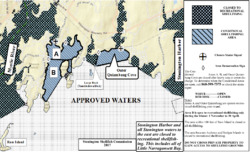
The Stonington Shellfish Commons stocked three areas on the coast with oysters and clams. They can be harvested by residents who pay for a permit. The hope is to promote clean waterways and to reintroduce the creatures to the area. People will not have to purchase shellfish that travels many miles to get to them, this provides a cheaper and local alternative.
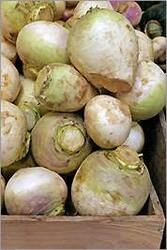
In the 1870s, the Macomber brothers, who owned a local farm, cross-bred yellow turnips with white horseradish, creating a uniquely sweet species of turnup that is still grown today, almost exclusively in Westport.
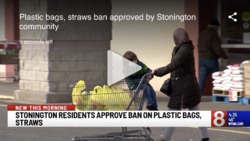
At a town hall meeting Stonington residents unanimously voted to ban plastic bags and straws (with exceptions). This comes after residents voice concerns for marine life and their own impact on the ocean. Straws will still be allowed but only if a customer asks for one. Restaurant will be fined if they are found to be giving customers plastic bags.
The Providence and Stonington Railroad was a subsidiary of the New York, Providence and Boston Railroad. It connected the three cities and ran right through Stonington. This allowed for people to work in the cities and live in a place like Stonington, which was perfectly nestled between New York City and Boston. This was the first railway to run through Connecticut.
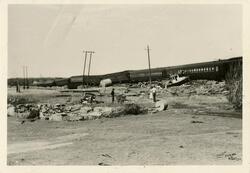
The 1938 Hurricane hit Connecticut on the 21st of September. High winds and storm surge were responsible for most of the damage. Seaside homes were destroyed along the whole coastline. Beach cottages were carried miles inland, some intact and some in pieces. Railways along the shore were damaged and trains were pushed off tracks. This is still considered to be one of Connecticut's most destructive natural disasters.