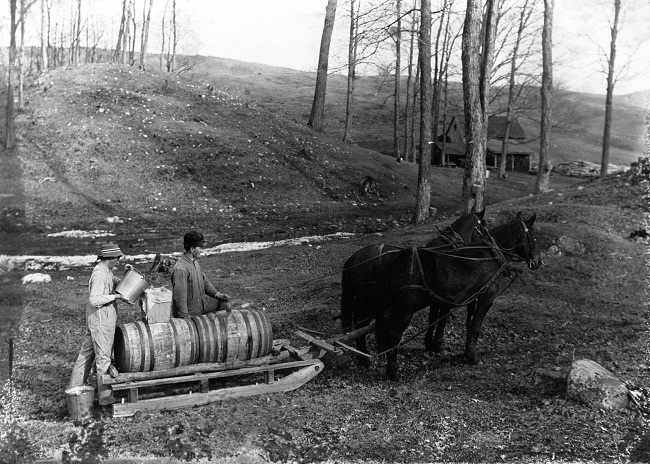
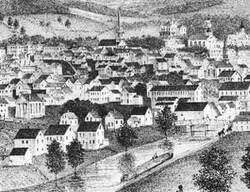
The first settlers arrive in Bennington, the first Vermont town west of the Green Mountains. By 1765 1500 people lived in the town, each house feeding it self from its own lands and herds. Primary harvests were of Corn, Maple Sugar, Wheat and Dairy products. They also built a dam at Benton Pond to provide power for several mills, potteries and furnaces, being built along the Walloomsac river. Over by the 1800s Bennington had become a local political and economic power making use of the country side to prosper. (Pictured Maple Sugar being collected by horse drawn sledge)
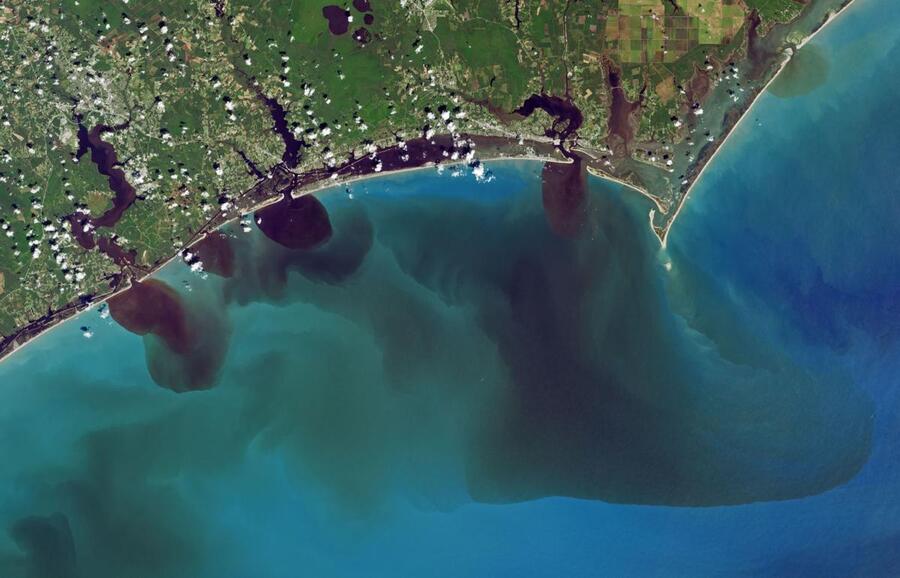
As Steinberg mentions, this event took place when animal waste flowed out of the animal farm/feedlot into the New River in North Carolina. This event wreaked havoc on the river. Not only did it hurt the river but the waste disrupted and killed many fish populations as well as eventually making its way to the ocean. This one instance of waste overflow speaks to a much larger environmental issues of the meat industry which is water pollution.
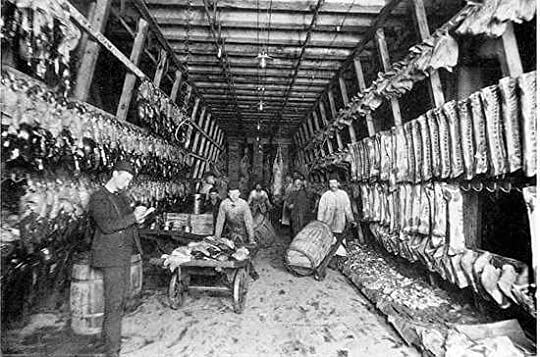
The Industry for meat within America had been growing at a substantial rate ever since the first livestock arrived with European settlers. As population exponentially grew, so did the need for more livestock to support the new masses of people. The major issue that stood in the way was shipping the meat without it going bad. Previous methods were successful, but none more successful and impactful than the refrigerator. The first refrigeration system used in the meat packing industry was in Chicago during the year 1900. Within fifteen years, every meat packing company had refrigerators. This invention provided the ability to store meat safely for much longer which gave the packing companies security if they overhauled production to much. Unfortunately, it did not and the horrifying 1900's Chicago meat packing industry took off. This required more trains, more livestock, more workers, more fossil fuels, and more chemicals. All of these factors lead to significant environmental damage of water, the soil, and the atmosphere.
The Blackstone Canal, constructed in 1828, connected Worcester to Providence along the Blackstone River and allowed for faster and cheaper transportation of goods between the two cities. This canal opened up a wide range of industrial opportunities for Worcester, making it a crossroads city with access to more distant trade markets. In 1835, soon after the canal was built, railroads connecting Worcester and Boston were constructed to further improve trade routes and allow for more rapid industrial expansion in Worcester.