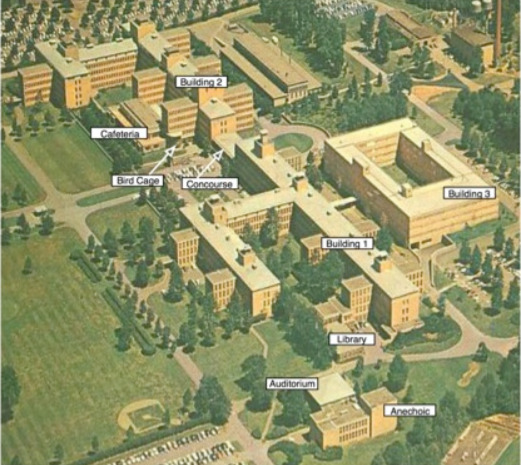
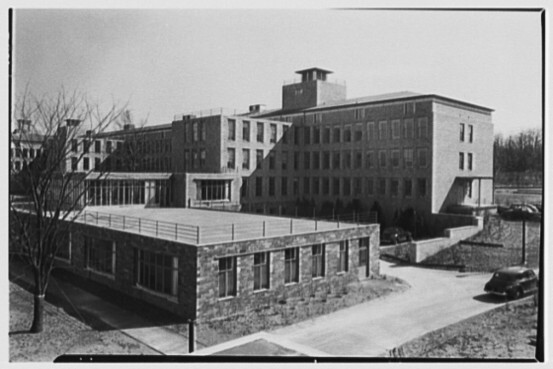
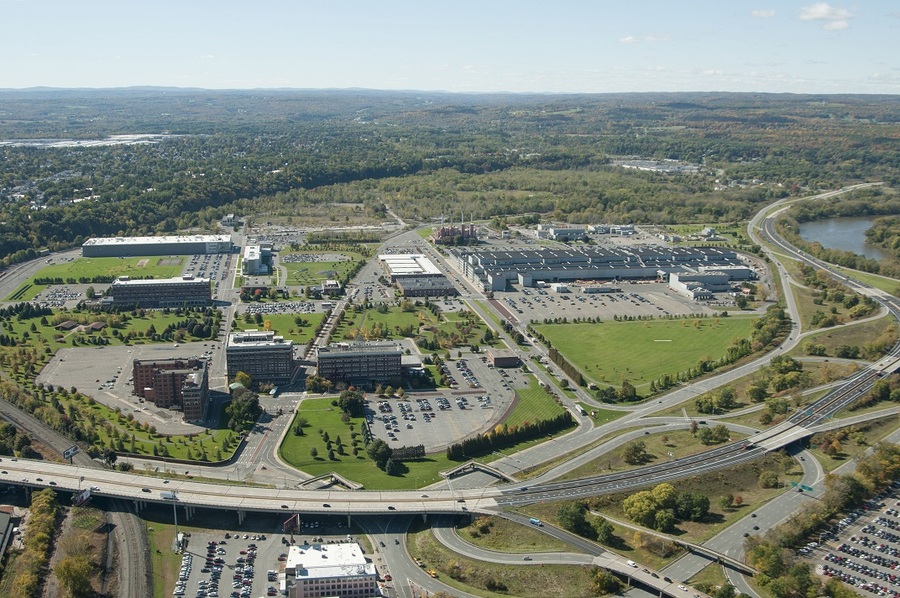
During the 1940s, Bell Labs moved their headquarters from Manhattan to a much more rural area in Murray Hill, NJ. The introduction of a large industry to a more remote location draws parallels to General Electric and Schenectady, but there are certain key differences as well. As opposed to appearing more industrial and dirty like Schenectady industry was, Bell Labs chose a more natural look by incorporating elements like fields, courtyards, and forestation within their new campus. The facility housed buildings that hosted research and development, offices, laboratories, and even an auditorium and the newly designed Anechoic Chamber. The location was near a train station that led to many employees choosing to remain in New York City and commute using public transit rather than moving to a nearby suburb. The facility brought new growth to an area previously host to very little development.
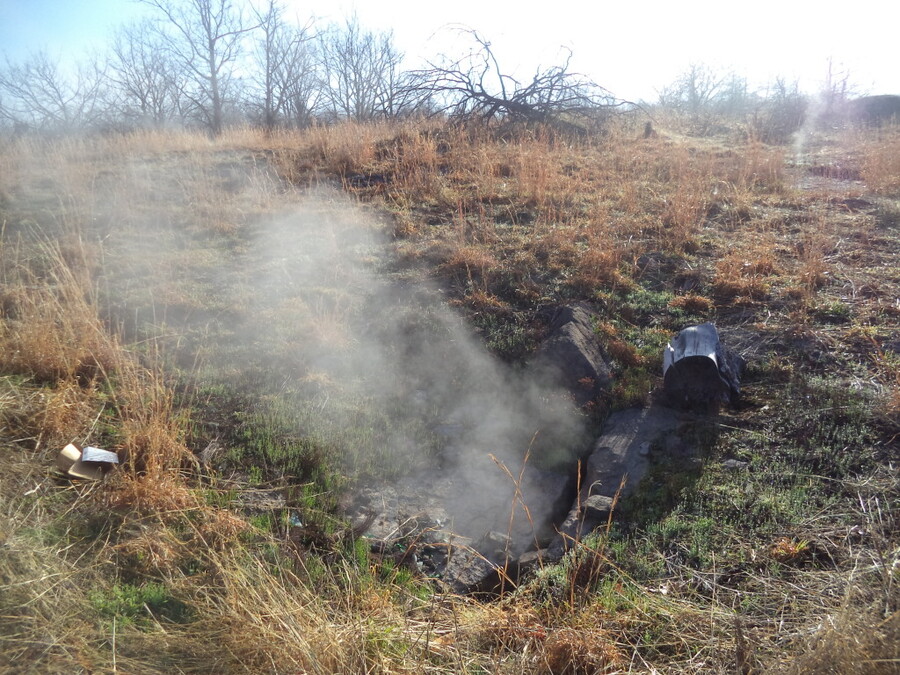
On December 6, 1915, a miner unintentionally left a carbine lamb attached to a piece of timber. Due to the Red Ash Mine having no positions on night's watch, the fire was able to burn over the entirety of the ensuing weekend. The company was made aware of the fire and began to plug surface opening of the mine with concrete and sand into the area. The company believed it had taken care of the fire, however it continued to burn and in 1921, the fire burned beyond the company's containment area. The company continued to mine resources in certain sections of the mine while building seals to block off other sections. The fire continued to burn in 1957 when the mines below Laurel Run were forced to close. Five years later in 1962, a woman was forced to evacuate her home due to mine gasses from the fire. It was around this time where the community realized that they were facing an uncontrollable mine fire beneath their feet. In April of 1966 a plan to control the fire was adopted and a series of bore-holes were drilled into the mine. The fire did spread into the Stanton-Empire Mine of Scranton as well as the Georgetown mine of Wilkes-Barre.
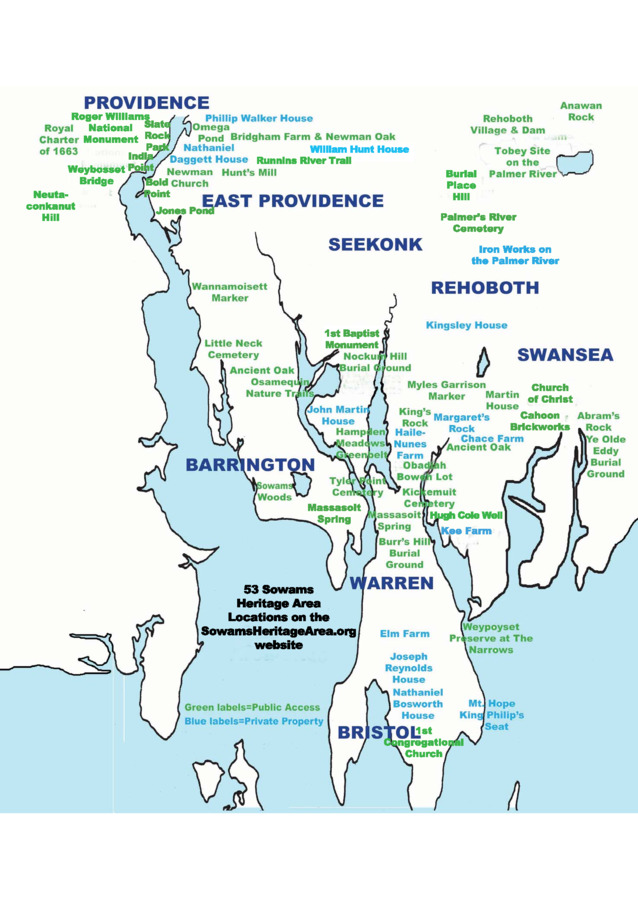
In 1621, the Pokanoket Tribe and and Plymouth colony signed a treaty that resulted in 5 years of peaceful relationships between the groups. After the death of Wampanoag leader Massasoit, chaos broke out and the King Philip War ensued. The colonials won and they took over the Sowams Heritage Area. Over the next 150 years Barrington among other towns was formed.
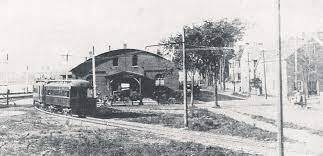
In 1855, the construction of the Providence, Warren and Bristol Railroad was finished. It was one of the largest organized railways in New England at the time. This railroad was responsible for carrying freight and passengers for about 100 years. It played a crucial part of connecting Barrington to more urban areas. During the 20th century the tracks were covered and turned into a bike path.
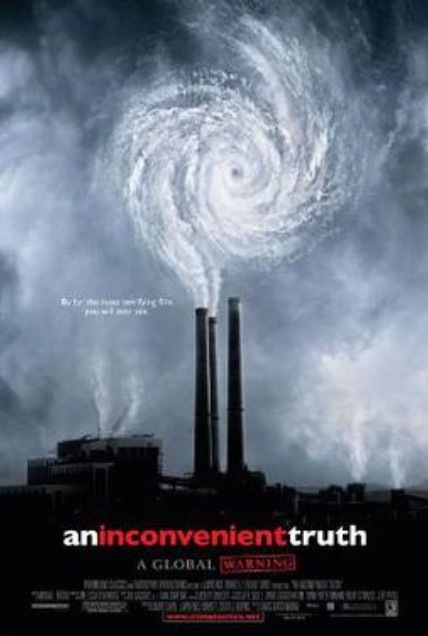
Al Gore's An Inconvenient Truth was a revolutionary documentary that provided visual evidence of the urgency of the environmental crisis the planet currently faces. This form of media was amongst the first that showed viewers the threat human activity has on the global climate. Additionally, this documentary was backed by scientific findings, so not only did the imagery help portray a daunting message, but the evidence gathered from data was quite affective to audiences. Because of the harsh yet accurate cinematography the film displayed, an rise in public awareness was brought upon an international level. The film also stirred up some controversy between different political groups and people, because the idea of what is more important, economics or the environment, became even more relevant. The media has the power to publicize an issue on a mass scale, and this documentary was certainly no exception to that, ultimately adding to the overarching environmental movement.
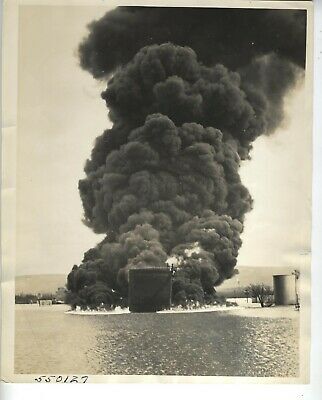
From up to twenty miles away, the smoke could be seen from the fire that lit on the Susquehanna River as it ran through Wilkes-Barre, PA. This fire was the result of a section of the river dike breaking causing water to flood the area beneath it. Hours later, a very loud roar would be heard as the American Oil company's tanks exploded. A tsunami of combustion was followed by dark black smoke that hung in the air menacingly. In addition to the fire, the floodwaters that poured through the dike walls flooded homes and businesses alike, causing the displacement of 15,000 people with 9 being confirmed dead.
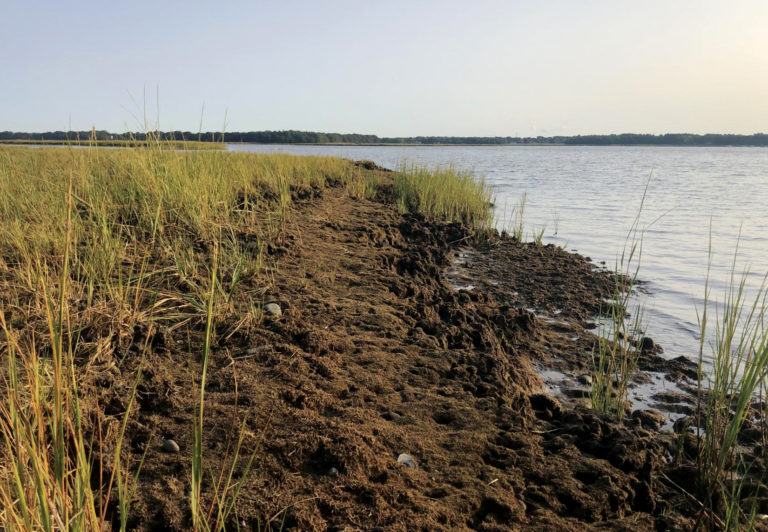
In recent years, Hundred Acre Cove located in Barrington, RI has been threatened by habitat loss. Salt marshes line the coast of the Cove and with rising sea levels the marshes have been submerged. With the coast rescinding, fiddler crabs have been moving farther inland to burrow. Coincidedly, the banks of Spartina grass are disappearing.
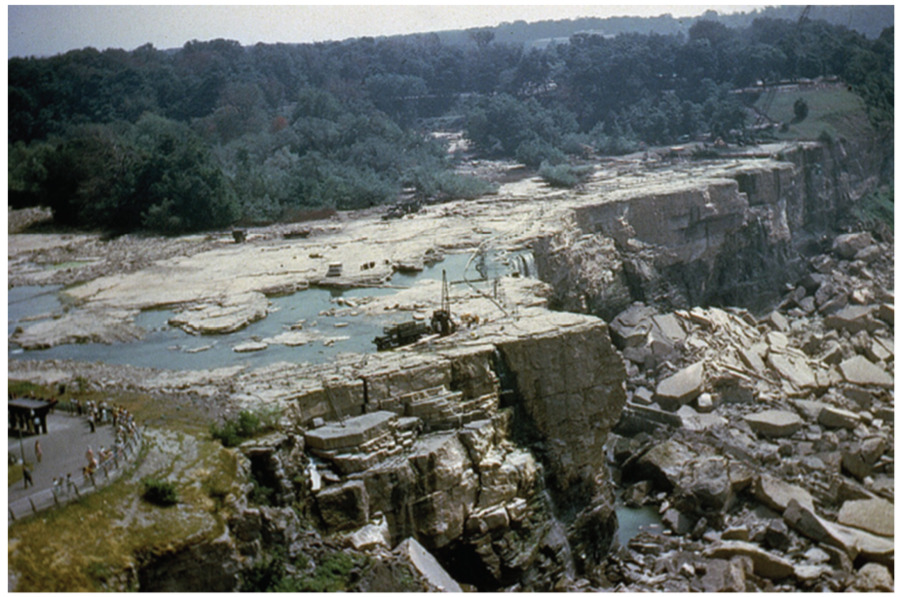
During the 1950's a series of rockslides were caused by the natural erosion of Niagara Falls, and sediments and boulders piled up in the basin at the bottom. Along the American portion of the falls, the curtain of water was effectively halved, therefore making it less impactful on viewers. In 1969, the American side of Niagara Falls was dammed and drained, which allowed for Engineers to clean out the basin, fortify the overhang at the top of the cliff, and eliminate any rock outcrops that showed signs of faultiness or future breakage. Science and technology had progressed so far that we began to alter our natural environments and even our natural wonders. With Niagara Falls, we saw Humans enact their views on how the falls should look, instead of appreciating the natural beauty that they offer. The very geologic processes that once created the falls, were now is seen as a threat that challenged the idealized version of Niagara Falls in people's minds.
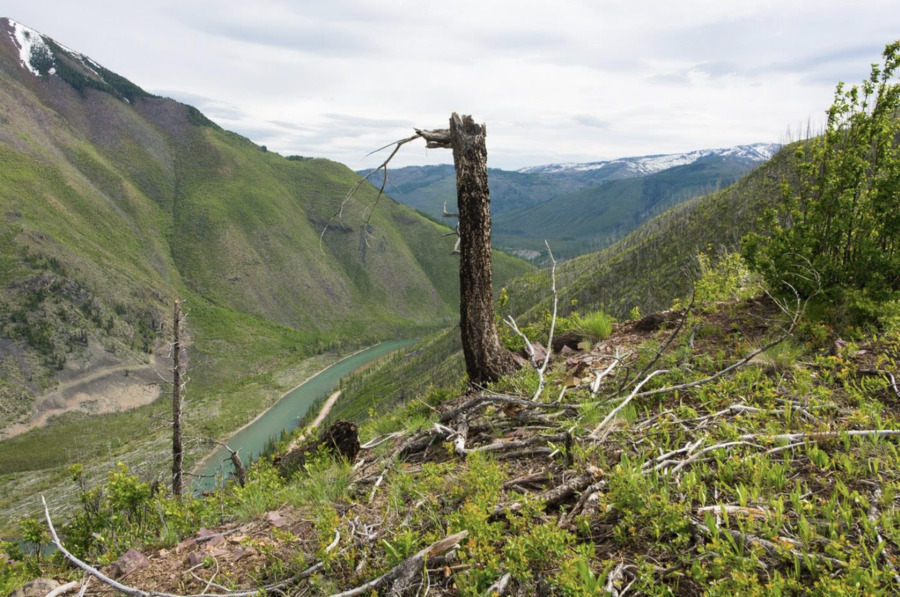
In 1943, the Army Corps of Engineers in Montana proposed to build a 416 foot tall dam in Glacier National Park in the canyon between Glacier View Mountain and Huckleberry mountain. This is on the western border of the park and the state, and the fact that visitors rarely traveled there was one excuse for them to build. The intent of this dam was to make western Montana more industrialized, inspired by the city of Chicago in the 40's. The dam would have created a reservoir 25 miles long providing 977 billion gallons of usable water storage. This would attract industries like aluminum processing plants and airplane manufacturers, which is what the Army Corps of Engineers saw as technological and urban advancements. The park service, which was founded in 1916, strongly opposed, and they won this debate, making sure Hetch Hetchy would not be repeated.
The Brookline Bird club is a club dedicated to learning, documenting, and watching birds but most importantly to gaining “a fuller appreciation of nature.”. It is the largest bird club but isn't limited to just Brookline. Though it is one of the country's oldest. The forming of the club can be linked to a few things including the outlawing of the plume trade and the growing interest in birds/ the environment in wealthy circles. Though the club also took an active part in protecting through local ordinances and going as far as having a "bird warden". In 1915 they had around 150 feeding stations. Lastly, this club was not only for men but also women and all ages and recognized the role women played in stopping the millinery trade.
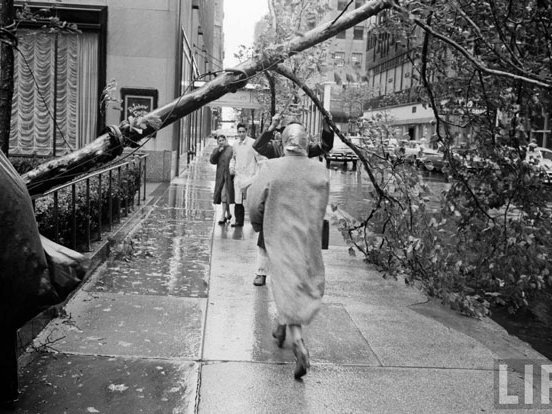
Hurricane Donna was similar to Hurricane Sandy in terms of the destruction caused to New York City. The hurricane caused $100 million in damage, and caused the area to be evacuated. There was a lot of damage to the natural environment as well, specifically $200,000 in damage due to uprooted trees.
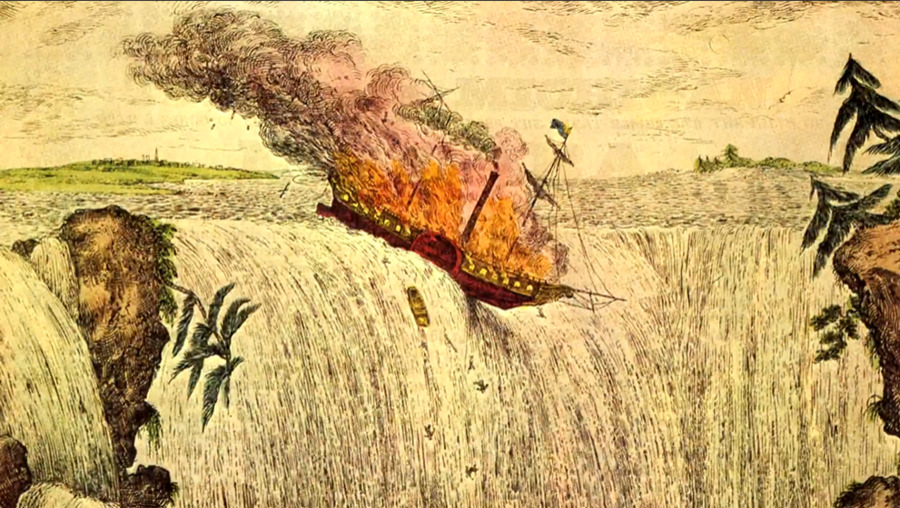
In 1827, Niagara Falls hotel owners looked to increase visitor interaction with the Falls in order for tourists to stay longer and spend more money. Therefore they organized for an old mercantile vessel named "The Michigan" to be loaded with wild animals, lit on fire, and allowed to float down the Falls so that tourists could watch it smash into a thousand pieces. In total 23 animals were aboard, including two bears and a bison, while 20,000 people spectated. This event illustrated a public view that Niagara Falls wasn't exciting enough on its own, and that more was needed to captivate an audience than just the natural and unique beauty that they offer. Additionally, the animal abuse clearly demonstrated European views on the natural world that the environment, and its wildlife, were created to be dominated by man.
During World War II, the Bell Labs facility in Murray Hill, NJ was utilized in research for developing barrier material for the K-25 site in Oak Ridge TN. The K-25 facility was used for developing enriched atomic material for bombs for the Manhattan Project. The Bell Labs facility, although under the oversight of the US government, housed unknown quantities of uranium, and the documentation for this research is very limited for unknown reasons. In 2011, a spokesman for the then-owners of the property, Alcatel-Lucent, stated that, "Although members of Bell Labs may have performed research and development work on behalf of the U.S. government in the 1940's that may have necessitated the use of radioactive materials at its Murray Hill campus, the files of our Radiation Safety Department do not contain records of those years." Although it has been proven that no radioactive material remains in the facility, the lack of knowledge of the research done on the property leaves uncertainty surrounding the possibility of residual radioactive contamination in the area.
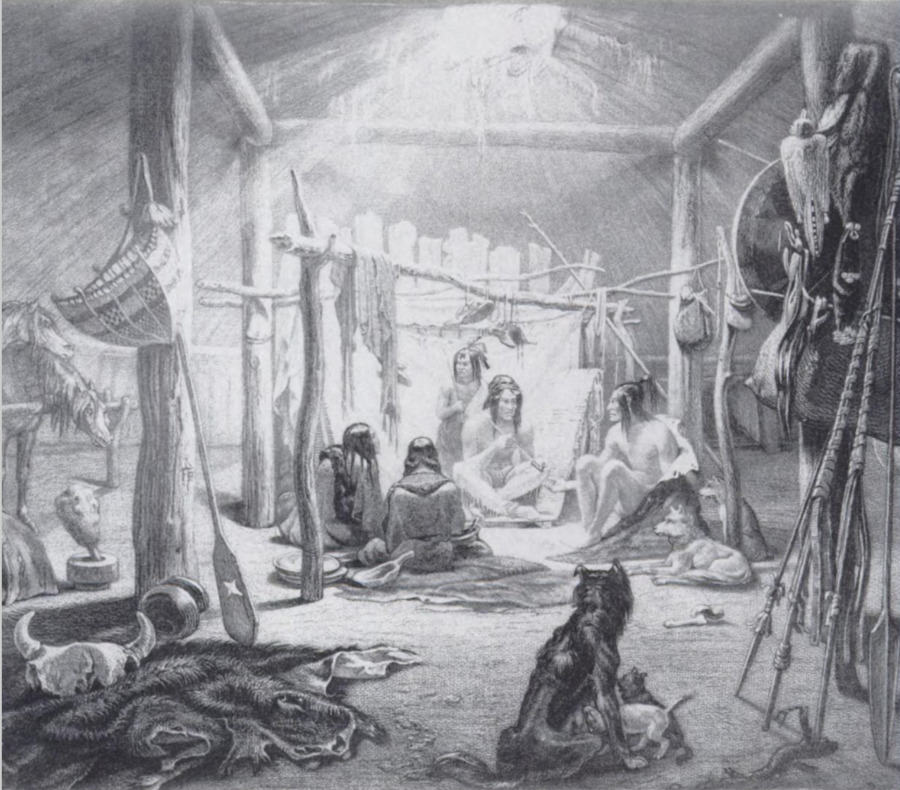
Approximately 500 years ago, when Europeans first settled in the U.S., they had brought technology and diseases, specifically small pox, that killed many Natives. At first they invaded the East, and eventually traveled westward toward the Rocky Mountain states. By the 17th century, many Natives were fleeing the east and resided in Montana. They adopted many European resources, especially horses. These horses allowed for easy trading, and also to efficiently pack their camp and travel. Similarly, they adapted the gun from settlers, and eventually changed their lifestyle, relying on hunting the bison. This was a drastic change from their ancestors, and is more similar to the lifestyle of the Plains Natives today. Today, there are seven native reservations in Montana that decedents live on, including towns and cities across the state. Glacier National Park is directly west of the Blackfeet Reservation.
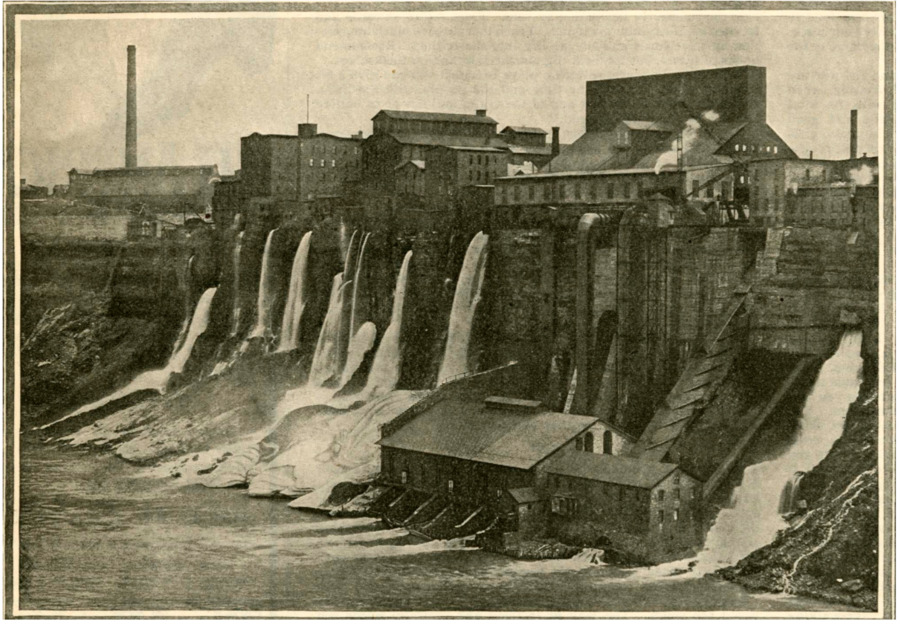
In 1881 the first hydropower plant was developed in Niagara Falls, making use of the water and elevation drop of the Niagara River. Canals were built through the city that diverted water from the Falls to the power plant. Today up to as much as 75% of the water that would go over the falls is instead diverted and used for hydropower. In 1896 desires to utilize Niagara Falls to power more distant places resulted in the invention and first use of long distance transmission developed by Nikola Tesla, and energy was sent 20 miles south to power Buffalo. Now that Niagara Falls had a value for producing energy, its values of sublimity and grandeur came second to providing energy to the cities of the Northeast. Not only was water over the falls reduced, effectively reducing its impact and power, but the power plants situated themselves along the vista of the Niagara River Gorge, roughly half a mile downstream of the Falls, therefore marring the appearance of the whole area.
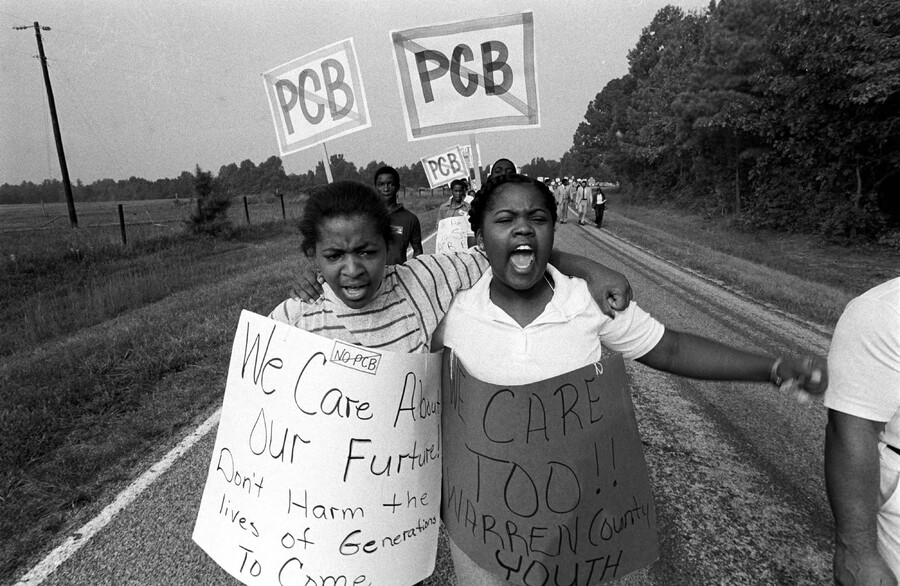
In 1978, two men disguised a tanker truck and dumped 31,000 gallons of PCB's along North Carolina roads using the cover of darkness. The two men were caught and locked away, but the state of North Carolina was now tasked with cleaning up these road shoulders and dumping the chemicals into a remote location. The Toxic Soil Control Act created in response to Love Canal required that the toxic soil be placed into a landfill. The state chose to place this toxic landfill in Warren County, North Carolina, a town that had been politically neglected. A key component in this story was that the town's population was 65% black, forty percent of houses lacked indoor plumbing according to the 1970 census. This town with the third lowest GDP across the state. In January of 1979 a public hearing was held in which an outstanding and outspoken group of 800 protestors showed up, but despite their cries, the governor announced that the construction would persist. Despite years of protest, in 1982, the EPA Superfund allocated $2,500,000 for the construction of the landfill in Warren County. Once construction began, 500 people were arrested in the six-week long protests, majority of which were extremely peaceful. Warren County would come to be symbolic of community members protesting to protect their homes as well as a vivid example of discriminatory state-level action by the government of North Carolina.
$78 million has gone into this clean up project so far and it is still incomplete. So far, fencing has been installed around the site to restrict access, the property is locked to prevent trespassing, several underground storage tanks have been removed, contaminated sediments have been removed from drainage ditches, and storm sewers have been sealed to prevent contamination of storm drainage. Contaminated water from the on-site stormwater drainage ditch is treated to meet NYS water standards, and a pipe has been placed at the groundwater surface to collect soil gas and water for cleansing. All of these efforts are aimed at reducing negative human health effects and further environmental impacts.
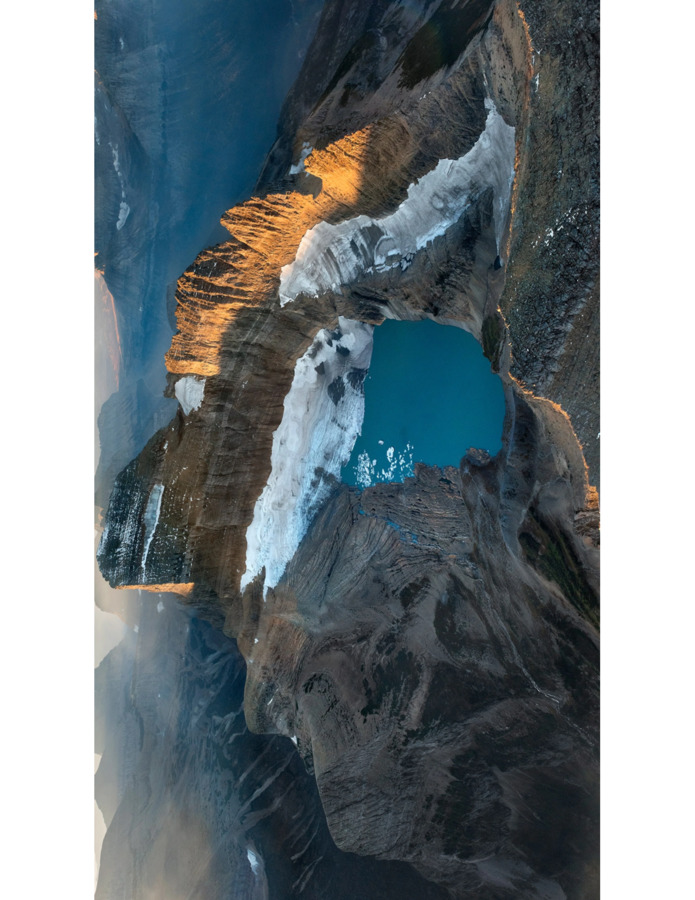
Glacier National Park was signed into law by President Taft on May 11, 1910. It is in northwestern Montana and on the Canadian border on the Rocky Mountains. John Muir wrote about his travels in his collection of essays Our National Parks in 1901, prior to the official designation of the park. He writes“[w]ander here a whole summer, if you can. Thousands of God’s wild blessings will search you and soak you as if you were a sponge, and the big days will go uncounted…you will find yourself in the midst of what you are sure to say is the best care-killing scenery on the continent.” Similar to his perspective on Yosemite, Muirs writing sparked the conservation movement in the early 1900's, along with Roosevelt, Pinchot, and Cole.
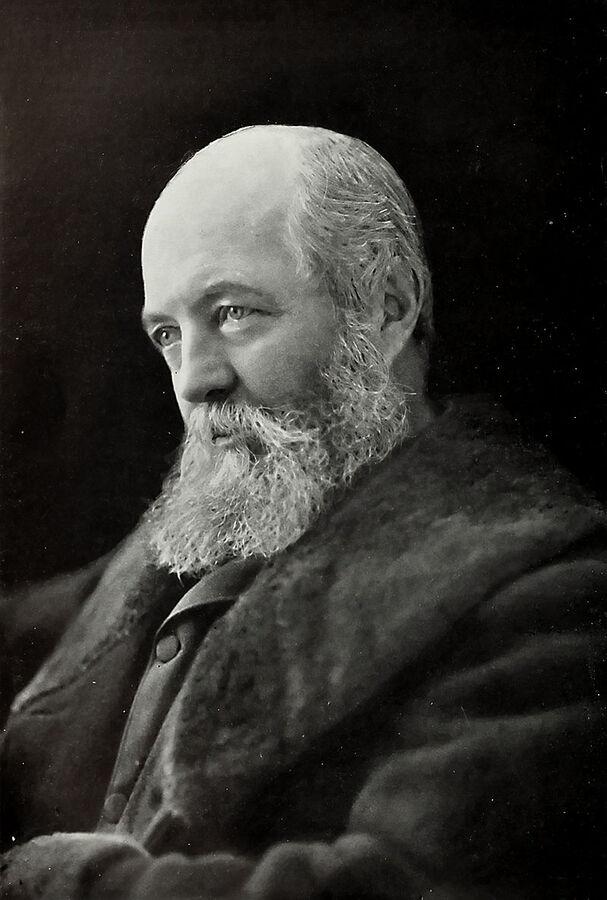
Frederick Law Olmstead was well known for his creation of the Olmsted Park System which includes parks like Boston Common, Boston Public Garden, and Arnold Arboretum. Though his work isn't limited to just Massachusetts he is responsible for the creation of the central park as well. Though he did a lot of work locally in the town of Brookline and in the process created a business where he passed his trade down to his children. His architectural work was so well received that he not only shaped the future development of landscape architecture but two members of the office, one being his son, designed the curriculum of landscape architecture education at Harvard and nationally. This all relates to what we learned in class because his works came to light because of the conservation movement and the more environmentally minded wealthy during the late 1870s-1900s also he did create a fair amount of parks in urban settings.
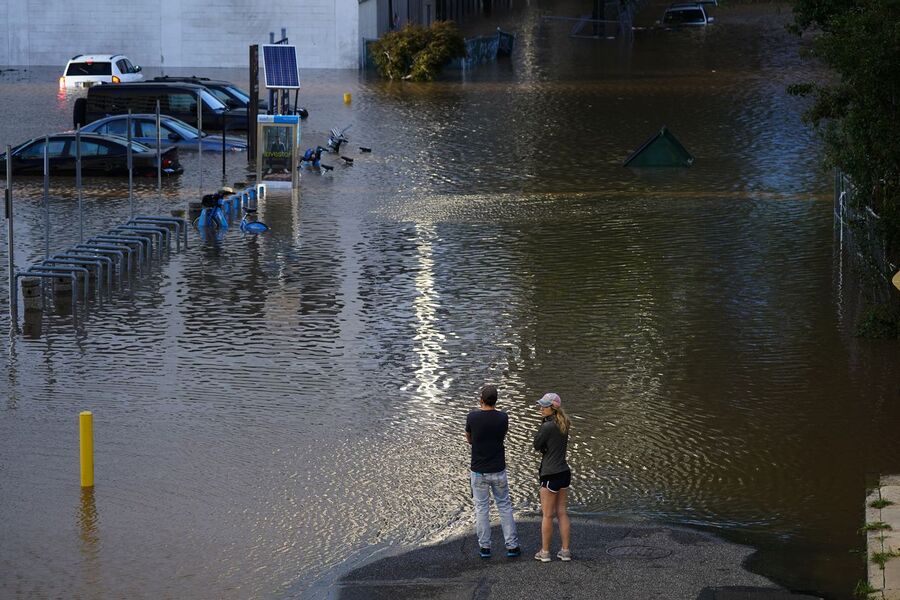
New York City has experienced a lot of flooding throughout its history, however, with its old infrastructure, the city isn't well adapted to 21st century storms. For example, Hurricane Sandy devastated the city's subway system, and the city had to recuperate. However, even after putting repairs on the city post-Sandy, Hurricane Ida proved that they weren't entirely prepared for regular hurricanes. New York City once again had to make repair to itself, and they were faced by the multitude of problems given by Ida.
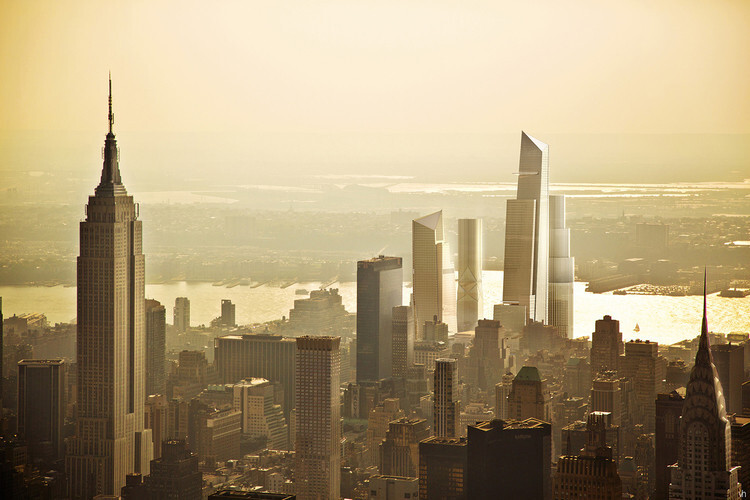
Many hurricanes have hit New York City and the general Northeast in the past, but the most recent one, Hurricane Sandy exposed a need to change the city's infrastructure. The hurricane devastated the Manhattan coastline, which meant that it needed to be rebuilt all together, and it needed to be built stronger to make sure that the coastline isn't hit as hard the next time there's a major flood or hurricane. The city's government hosted a contest called Rebuild by Design to bring the people in the city together and help rebuild what was lost.
In 1995 GE signed an agreement with NYS to start investigating local contamination they have created. The Schenectady plant was seen as a "current and potential significant threat to public health and the environment." In the past, the main campus included 2.6 tons of PCB-laden transformers and liquids, a suspected human carcinogen (polychlorinated biphenyls, banned from the US in 1979), 1 ton of solvents and an unknown quantity of what the state called "organic and inorganic lab wastes." Between 2000 and 2003, 1,000 soil borings and almost 1,500 groundwater samples were tested for contaminants. The final remediation plan agreed to by GE and the DEC took from 2005 to 2014 to negotiate.
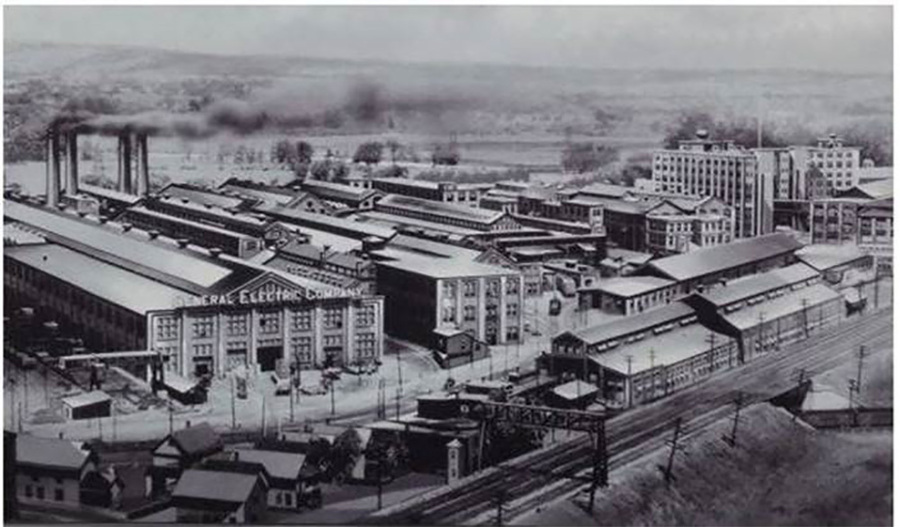
Two factories were purchased in 1886 by Thomas Edison to create what we now know as the main regional plant for General Electric. Over time the plant produced around 1.3 million pounds of PCBs that were discharged into the Hudson River, contaminating the water and surrounding locations. In 1987 the site was declared an inactive hazardous waste site, with over 40 years worth of unsafe discharges, spills, demolitions and dumpings found in the 640 acre plant.
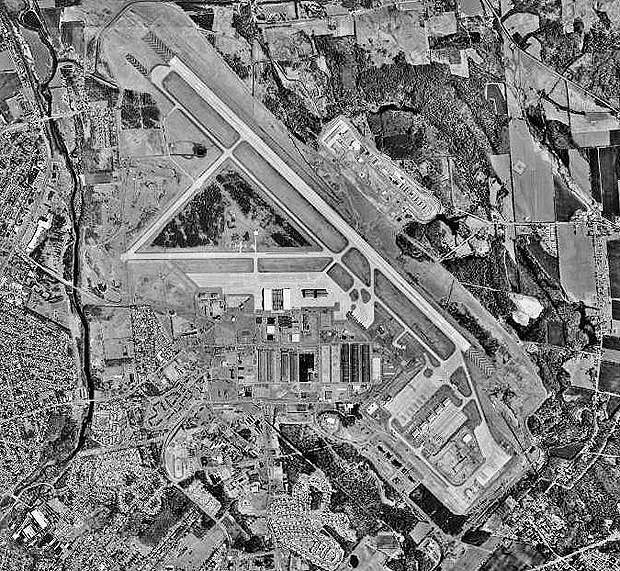
Griffiss Air Force Base (AFB) opened in 1942 in Rome. The base was used as a plane depot for the US military during World War 2 with no stationed planes. This changed into the 1950s as the Cold War came into full bloom. Griffiss slowly became a center for the Northeast Air Defense Sector with many reconnaissance and fighter units stationed here. Griffiss was decommissioned in 1993, 9 years after it was designated as a Superfund site in 1983. Presence of heavy metals and polychlorinated bisphenols (PCBs) were found in ground water.