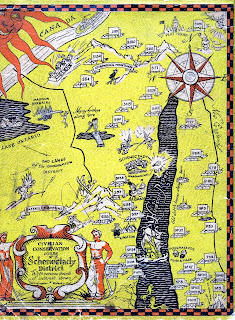
The Civilian Conservation Corps was a program that was a part of Roosevelt’s New Deal agenda to relieve young unemployed men from the depression by paying them to do conservation work around the country. The CCC was founded in 1933 and ended in 1942. CCC workers built trails, roads, campsites and dams, stocked fish, built and maintained fire tower observer's cabins and telephone lines, fought forest fires, and planted nearly 3 billion trees nationwide. This was so important as it really brought the younger generation who may have grown up in the cities to appreciate nature and understand the importance of maintaining the environment. It was also extremely popular with the people as the growing trend for conservation would continue thanks to the experience that a whole generation of young men received from the government.
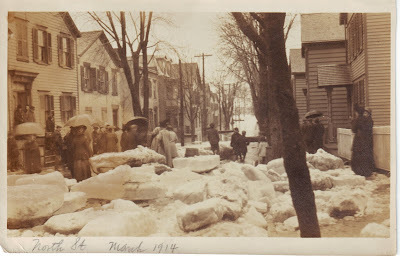
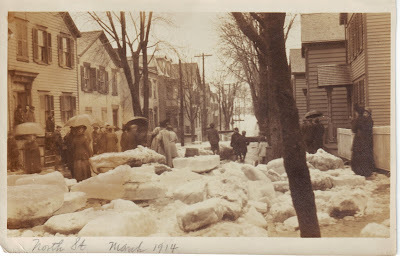
During 1914 Schenectady got 32 inches of wet snow in a span of 20 hours. Larry Hart ran a column reporting the flooding that occurred next. On march 24th the flood hit because of melting snow and heavy rainfall. Ice Jams formed on the river and destroyed bridges and flooded industrial areas. Onlookers described the ice slabs as twenty feet high and three feet thick. Workers were called home and had to get back to their houses on rowboats. Damages reached into the millions. However, most of the damages were to houses and local businesses and not the railroad or General Electric companies. There were a few deaths including two out of three workers trying to get cable over the Freemans Toll Bridge; as they hit submerged ice and two went under. Schenectady is prone to flooding due to the river and in recent years have experienced major flooding like during hurricane Irene. Since Schenectady's worst flood happened so long ago I wonder what another unlucky set of natural events would cause today.
During 1914 Schenectady got 32 inches of wet snow in a span of 20 hours. Larry Hart ran a column reporting the flooding that occurred next. On march 24th the flood hit because of melting snow and heavy rainfall. Ice Jams formed on the river and destroyed bridges and flooded industrial areas. Onlookers described the ice slabs as twenty feet high and three feet thick. Workers were called home and had to get back to their houses on rowboats. Damages reached into the millions. However, most of the damages were to houses and local businesses and not the railroad or General Electric companies. There were a few deaths including two out of three workers trying to get cable over the Freemans Toll Bridge; as they hit submerged ice and two went under. Schenectady is prone to flooding due to the river and in recent years have experienced major flooding like during hurricane Irene. Since Schenectady's worst flood happened so long ago I wonder what another unlucky set of natural events would cause today.
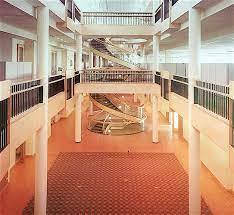
Similar to Teflon and Love Canal incidents, the Amoco Research Center in Naperville has been involved with death and lawsuits since 1989. Within the center's chemical research building, 19 people have died of brain tumors and cancer. Although at first the company did not acknowledge a threat, after investigations and lawsuits it was deemed a health hazard. The rooms were permanently shut down. Poor ventilation of toxic pollutants and chemicals have been the most plausible conclusion. However, like a lot of corporations, they fund and manage their own personal investigations.
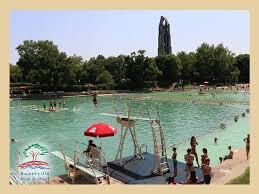
In 1833, limestone was first discovered near the edge of Naperville. For the next 80 years, a quarry was created. Steam pumps constantly worked throughout the day to keep out the pure spring water. This limestone was used to create a lot of the building foundations and architecture in the nearby downtown. For a while, it became an important export of the town. 100 years after limestone was first discovered, in the midst of the Great Depression, the quarry was filled with water and renovated to become a downtown beach. Both the town committee and citizens pitched in to help fund the project. Other quarries around the town have also been filled and utilized for recreational activities like kayaking and paddle boating.
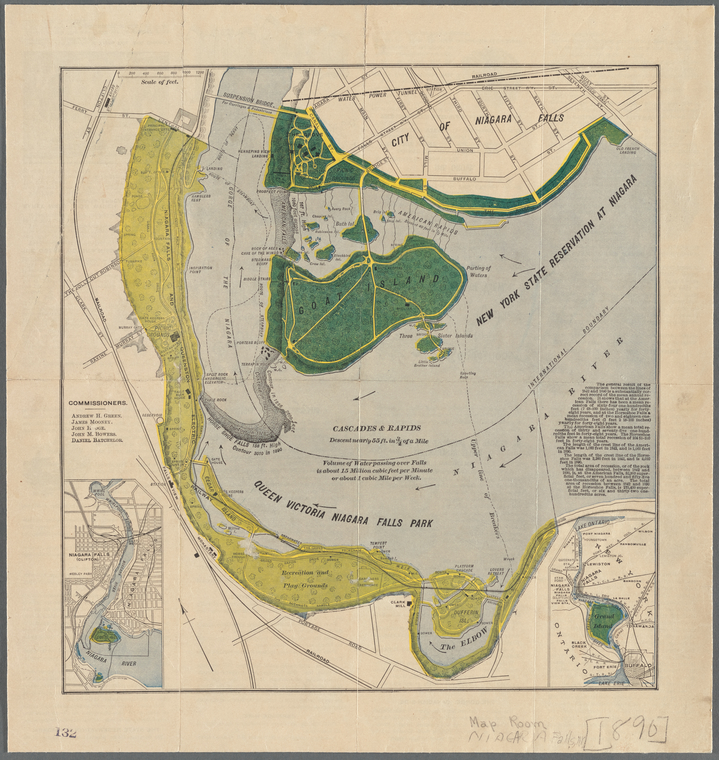
Prior to 1885, the land around Niagara Falls had been privately owned, and in the later half of the 1800's landowners in Niagara aimed to make large profits off of their strategic landownership. Thus, large fences were built along the gorge, preventing people from being able to see Niagara Falls without paying fees. Additionally, industry had set up along the river, which frustrated the public who wanted an unobstructed and unblemished view of the falls. In 1885, New York and Canada purchased a total of 520 acres through eminent domain in order to make the falls a public space for all to see, for free, which reflected the growing conservationist movement that natural wonders and examples of sublimity should be set aside and protected for Americans to see. Additionally, in the 1880s, as a member of the NYS Assembly, conservationist Theodore Roosevelt was a member of the Niagara Falls Association an organization dedicated to promoting public and legislative support for a state park protecting Niagara Falls. Niagara Falls is contested to be the first State Park in the US.
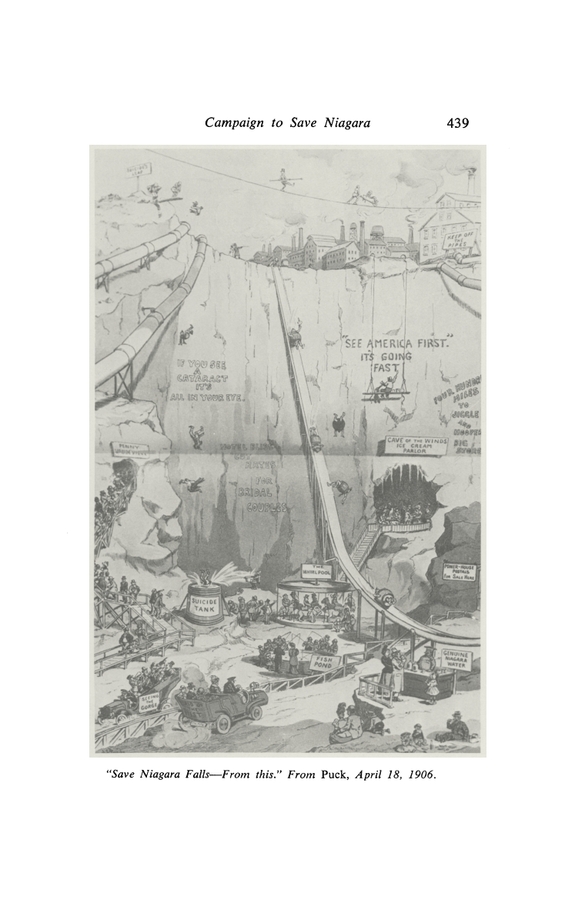
During the height of the conservation movement, Niagara Falls' tourism industry faced a lot of backlash from both Niagara inhabitants, and national advocates. This political cartoon from 1906, reflects the negative attitude that surrounded how the falls were being treated. The carnivalistic approach and atmosphere around the falls that had grown for the past century was seen as a disservice to the falls' natural beauty and value, and it detracted from the respect that the fall's deserved. During this time period there was a large political movement to protect the falls from this commodification and exploitation, not just from the tourism industry, but also from the newly established power plants. Public frustration grew in Niagara Falls due to the proximity that the power plant had to the falls, in addition to the amount of water that was diverted from the falls; and at the time, no governmental limits had been set that protected the falls from over-diversion of water. While the cartoon mocks the poor taste of the tourism industry, it make a bigger commentary when depicting the falls as completely dried up, with diversion pipes running through the gorge. The political movement to save Niagara Falls from the greed of commodification resulted in a 1909 treaty with Canada that moderately protected the falls from completely running dry by limiting water diversion to 20,000 cubic ft/s for the US, and 36,000 cubic ft/s for Canada, which was more acceptable to conservationists than no limits whatsoever, as the value in producing energy for many people outweighed the desires of the falls' advocates.