Origins
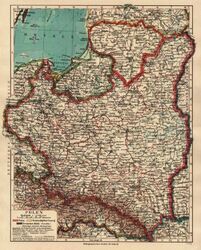
The origins of Ostforchung (eastern research) lie in the interactions between Germans and Slavs in the Medieval period. Countless differences including but not limited to language, religion, history and culture manufactured an atmosphere of enmity between the two groups. More specifically, the interactions between German knightly orders and Poles created the foundation for the industrialized racial hatred seen in the Second World War.
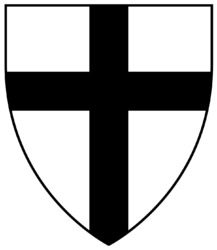
Germanic peoples, who had lived in Europe for centuries by the early Medieval period, witnessed the last great migration into Europe from the east. Slavic peoples spread throughout Eastern Europe and settled there, with the Poles being the closest to modern Germany. The religious differences between these Christians and Pagans lead to Northern Crusades. The Order of Brothers of the German House of Saint Mary in Jerusalem, better known as the Teutonic Order, campaigned throughout the Baltic States converting those who would and killing those who refused. While Mieszko I, Duke of Poland converted to Catholicism in 966, the Order continued its military works until the conversion of closely-linked Lithuania to Catholicism centuries later. This incessant conflict led to long-lasting enmity.
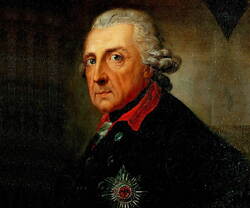
In the early modern period, notable Prussian figures consistently denigrated Poland. Frederick the Great, King in Prussia was one such figure. While the king was a tolerant one for his time, this progresive nature did not extend to the Polish kingdom nor people. He viewed the slavic state as not a nation but “an artichoke, ready to be consumed leaf by leaf.” Moreover, the king looked down on the nation’s people as “slovenly Polish trash” and compared them to the uncivilized Iroquois of North America. Most importantly, Frederick was idolized by Germany in the 20th century for modernizing the Prussian state and allowing it to compete with other European powers. Unconditional elevation of men Frederick manufactured a dangerous precedent for contemporary German politics.
This denial of Polish statehood continued well into the Interwar Period. Following the humbling conclusion of the First World War, Imperial Germany lost land and citizens to a new Polish nation. Decades before, the Polish-Lithuanian Commonwealth was consumed "leaf by leaf" by Prussia, Austria and Russia in multiple Partitions that resulted in the destruction of that Commonwealth. However, the hated Treaty of Versailles broke up Austria-Hungary and created many new Eastern European nations such as Poland. Germans despised this new neighbor. Moreover, academics "made an enormous effort" to discredit the new Polish nation as a backward, chaotic nation that repressed minorities. Beyond this, notable figures such as Hermann Aubin pursued euphemistic ideas such as the "regaining of the German East." This was naturally justified by the settling of the now-Polish lands by the "earliest forefathers" of the German people. In German eyes, neither Poland nor her people had any right to the land they now claimed.
In short, both pride and hate felt by Germans curdled into the 20th century field of Ostforchung and scientific ‘justfication’ of Nazi beliefs.