Erprobungsstelle Rechlin, NS Jet Engines, and how Germany overtook the UK in Jets
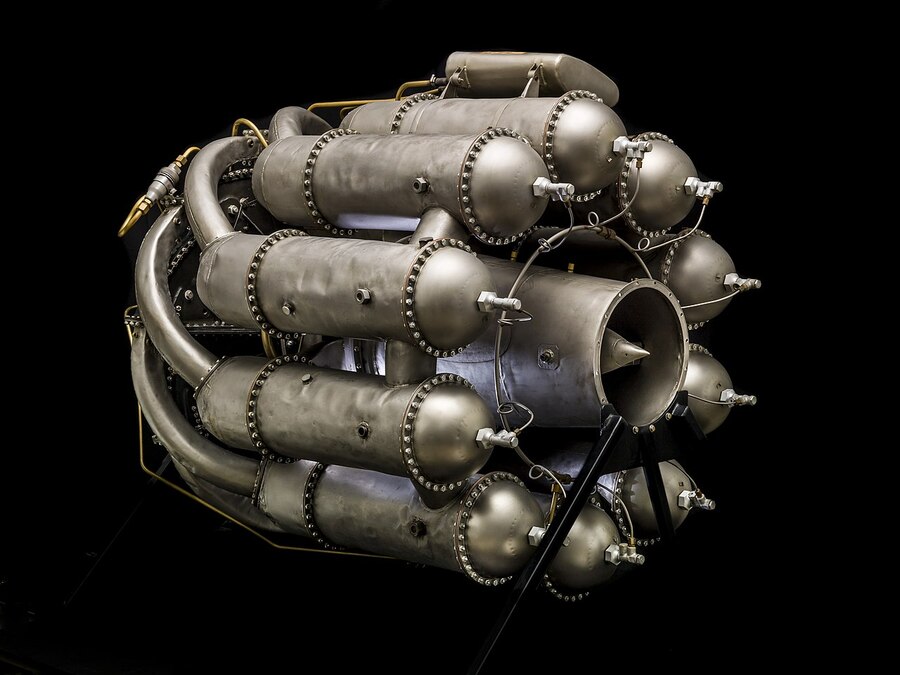
Jet Development and Production during the Second world war
Introduction
The most fascinating aspect of how the Nazis leapfrogged British Jet development is that in many ways they did not. The development of Jet Engines for both Germany and The United Kingdom can be roughly divided into short and long term development with the change between them being linked directly to each nations position in World War II. As the war progressed, Britain shifted from short term mass production to development aimed at the post war market while Germany shifted from post war oriented development to rapid mass production.
The history of Jet production under National Socialism
The early period of Nazi Jet development began before the war (1938) and was undertaken by the office of special propulsion systems (Sondertriebwerke) in the Technical Office of the German Air Ministry (Reichsluftfahrtministerium or RLM) and was focused on a 16-year long program. This led them to invest into more advanced designs based around axial compressors as they believed that Jet Engines would only be of service after they had won the war with early models such as the Jumo 003 and 004 being seen as unfit for active service. When the war began to shift against Germany (1942-1943), the Germans began to give more serious credence to potential jet designs. The late period of Nazi Jet development begins in 1943 when Erhard Milch (State Secretary of air from 1941 and head of the RLM’s Technical office) created a production order of the Jumo engines originally thought to be unfit for service shifting policy from development to production. In 1944, Speer’s armaments ministry took over Jet development and production from the RLM and shifted production to the underground Mittelwerk factory where it was produced by slave labor alongside German rockets. The first operational Jet fighters (Me 262) began to roll off the assembly line in April of 1944 and first saw combat in July and August of the same year. Jet production would continue in earnest until the end of the war and in fact replaced piston engine production entirely in March of 1945. The question remains on why the Germans spent so much effort on so called Wunderwaffe (Wonder Weapons), against popular belief it was not because of their apparent qualitative superiority but due to the materiel and technical shortages present in Nazi Germany – Jets were not Wunderwaffe but ‘engines of desperation.’
Why Nazi Germany focused on Jet Production
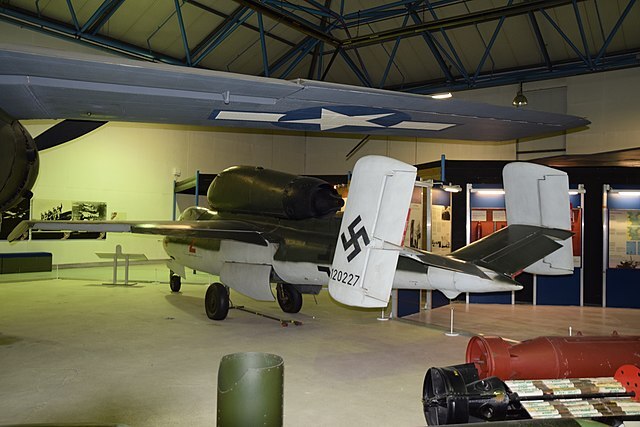
The issue facing the Germans was that allied piston engine aircraft were out pacing German ones in terms of horsepower by almost two to one and material shortages in high quality metals and high skilled laborers meant that piston engine production was becoming unfeasible; jet engines were ideal for late war production as they could be produced using scrap metals and unskilled labor while also helping to alleviate fuel supply issues as they could run on less refined fuel. The jet engines were then simplified in both terms of material and fuel consumption drastically sacrificing both performance and operational range, solidifying the idea that jets were not built for quality but quantity. Early planes such as the Me 262 were incredible pieces of engineering but were ultimately both economically and operationally unfeasible as it was expensive and while faster than Allied planes, it was less maneuverable and at a distinct disadvantage in the dogfighting based aerial combat of World War II. This led to the Speer ordering that a Volksjäger (peoples fighter) be built, a stripped down single engine fighter designed for cheap mass production ultimately culminating in the He 162. German Jet production was not based around technical superiority quality but was forced upon them as economic and war conditions forced the Luftwaffe to adopt an operationally inferior design. The rise of German Jets did not occur despite material conditions but because of them.
British Jet Development
The British Jet development was the opposite of German production as early in the war, the British focused on short term development and production but shifted to long term oriented development after they began winning the war. British goals for Jet production began in 1940, just under three years before Germany, and Britain’s first Jet Factory was finished by 1941. Britain’s designs were based around centrifugal compressors which were more familiar due to their use in power generation but inferior to Axial designs; however, by the time these projects came to fruition, the war had shifted in Britain’s favor leading manufacturers to develop more advanced and costly centrifugal engines rather than cheap ones designed around mass production. Although British Jet production began before the German production, they had substantially fewer models produced as they maximized quality over quantity. British Jets were more powerful than German designs by the end of the war as British aims shifted from wartime production to attempting to cement themselves as leaders in the post war Jet market. If Britain had better jets by the end of the war, why then did the myth of German Jet superiority arise?
Where does the myth of German Jet Superiority come from?
Following the war, British firms heavily guarded their intellectual property meaning that for years the only reliable information was that gathered from captured German equipment. Similar to how the myth of German military superiority was partially created due to lack of Soviet sources, the lack of British information combined with the apparent success of German production led to the creation of the German Jet myth; in the post war period American and Soviet engineers built their designs around British war models, not German models, highlighting the reality of British Jet superiority. While Germany was able to mobilize and produce tremendous results with less, the reality is that the British were able to produce better jets by war’s end.
The planning for a Flieger-Versuchs- und Lehranstalt at Rechlin started in 1916 but the test flights did not start until the summer of 1918.
After the signing of the Versailles treaty in 1919, testing stopped and didn't restart until 1925.
After the Nazi seizure of power in 1933, funding increased massively and by 1935 the new German Luftwaffe took control in Rechlin.
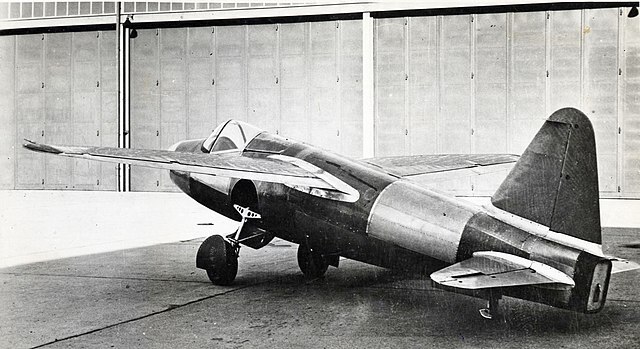
Rechlin was a main testing area for German planes before and during World War II and was the main test site for all German jet planes including Heinkel He178, Heinkel He 280, Messerschmitt Me 262, Arado Ar 234, and Heinkel He 162.
In addition to these tests, there were also tests and experiments with new weapons and technologies like ejection seats.
After 1939, slave labour from Ravensbrück concentration camp was used on the grounds, mainly for construction. Rechlin was not bombed until August 1944 and the airfield in Lärz was used to fight off U.S. Bombers and the Red Army which captured Rechlin on May 2. 1945.
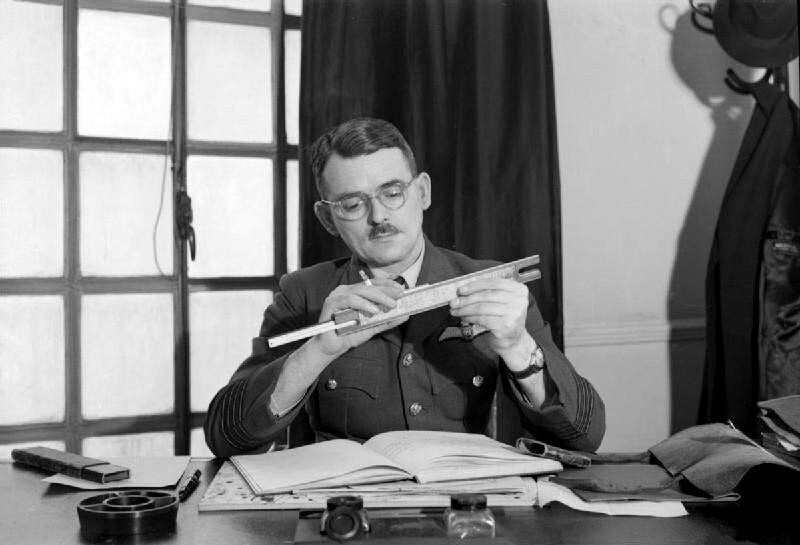
Frank Whittle
Born: June 1, 1907, Coventry, England
Died: August 8, 1996, Columbia, Maryland USA
Whittle joined the RAF in 1923 as an aircraft mechanic after he was rejected as pilot due to his lack of height and weight and it soon became clear that he was very skilled due to his proficiency in model making. He was recommended to RAF College Cranwell in 1926, opening the doors to a commision and a flying career; for his graduation he wrote a thesis on the development of aircraft, theorizing that piston engines would be replaced by motorjets - an afterburner powered by a piston engine. He graduated second in his class in July 1928.
Whittle continued to work on his engine idea but it received little interest as the Royal Aircraft Establishment (British equivalent to NACA) had already turned away A.A. Griffith for his idea of a turboprop. In 1929, Whittle was encouraged by his Commander to go to the Air Ministry with his concept but there was little interest as the general opinion was that the engine would not work.
On the 16th of January 1930, Whittle took out a patent for a jet engine (technically it was not the the first patent for a jet engine this was taken out by Maxime Guillaume in 1921 but never followed up on).
Later in 1930, a friend of Whittle arranged a meeting for Whittle with British Thompson-Houston (BTH) and while they were interested, the enormous cost of 60.000 pounds deterred them from building the engine.
Whittle continued working for the RAF but he was not able to continue his work on jet engines due to a lack of money, exemplified by the fact that in 1935 he couldn't afford the 5 pound renewal fee for the patent, letting it expire.
In 1935-36, he was contacted by old RAF comrades and friends and they convinced him to continue his work; together, they set up Power Jets Ltd. in the March of 1936 in Rugby, Warwickshire in rooms owned by BTH. Whittle, still a commissioned officer at the time, needed special permission from the RAF to work in his own company.
Power Jets built its first engine in April 1937, the WU (Whittle Unit), but the engine was unreliable and expensive which led to financial troubles for Power Jets Ltd.
Since there was little funding, progress slowed and Heinkel and v. Ohain overtook Whittle and Power Jets by 1938/39.
Whittle’s financial woes became so bad the Power Jets could barely keep operating leading to a decline in Whittle’s health (aided by his sever smoking habit and the abuse of benzedrine and sleeping pills); however, Whittles fortunes began to turn in mid 1939 as the Air Ministry began to inject cash into Power Jets. With this strong financial backing, the company was able to further develop engines resulting in the Power Jets W.1 tested for the first time on the 14 of December, 1940 and took its first flight in Gloster E.28/39 on the 15 of May, 1941 almost two years after the Heinkel 178; however, unlike Heinkel and Von Ohain, Whittle was not sidelined after his success but became an important part of the British jet program leading to the development of further Power Jet Ltd. engines and Planes like the Gloster Meteor.
Power Jets Ltd. was merged with the RAE in 1948 and Whittle had a successful career in Great Britain and the USA receiving many Awards, both military and civilian.
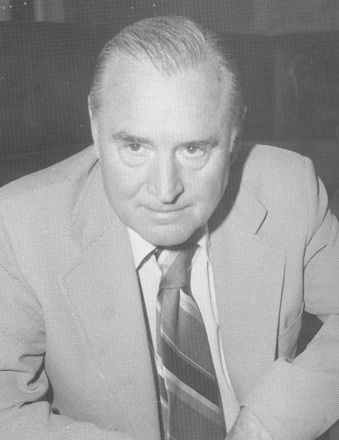
Hans Joachim Pabst von Ohain
Born: 14 December, 1911, Dessau, Duchy of Anhalt (today Saxony-Anhalt), German Empire
Died: 13 March, 1998, Melbourne, Florida, U.S.
Hans von Ohain studied at Rostock and Göttingen University receiving a doctorate in physics in 1935. Von Ohain worked at Göttingen until 1936 when he started working for Heinkel Flugzeugwerke in Rostock after Robert Pohl, his professor at Göttingen, recommended him to Ernst Heinkel (founder of Heinkel).This was significant because Heinkel provided the funding for this endeavor.
In Rostock, von Ohain started working on jet engines that he had theorized of during his last year at Göttingen; his prototypes failing until he used hydrogen instead of kerosene creating an engine - Heinkel-Strahltriebwerk 1 (HeS 1) - in the spring of 1937, half a year after Frank Whittle created a running engine in England.
Over the next year and a half, von Ohain overtook Whittle and built the HeS3, filing a patent in 1939. This would be the engine that powered the first Jet Plane flight on August 27, 1939 after a test flight under conventional powered in early 1939.
While a pioneer, von Ohain and Heinkel were soon overtaken by the German companies Junkers and BMW and Whittle in the United Kingdom.
Sources:
Theodor Benecke (Hrsg.) Die deutsche Luftfahrt. Band 27: Heinrich Beauvais, Karl Kössler, Max Mayer, Christoph Regel: Flugerprobungsstellen bis 1945. Johannisthal, Lipezk, Rechlin, Travemünde, Tarnewitz, Peenemünde-West. Bernard & Graefe, München u. a. 1998;
Förderverein Luftfahrttechnisches Museum Rechlin e. V.: Geschichte und Technik in und um Rechlin. Vom Propeller übers Strahlflugzeug zum Rettungsboot. Eigenverlag, Rechlin 2003.
Hermione Giffard, “Engines of Desperation: Jet Engines, Production and New Weapons in the Third Reich,” Journal of Contemporary History, 48/4, (2013), 821–844.
https://web.itu.edu.tr/aydere/history.pdf
https://www.imeche.org/docs/default-source/presidents-choice/jc12_1.pdf
https://web.archive.org/web/20130207131006/http://www2.eng.cam.ac.uk/~bcb/whittle/telgraph.htm
https://frankwhittle.co.uk/the-first-patent/
https://commons.wikimedia.org/wiki/File:Hans_von_Ohain_(USAF).jpg
https://commons.wikimedia.org/wiki/File:Frank_Whittle_CH_011867.jpg
https://en.wikipedia.org/wiki/Rechlin%E2%80%93L%C3%A4rz_Airfield#/media/File:Messerschmitt_Me_262_jet_fighters_at_Rechlin-L%C3%A4rz_Airfield_in_1944.JPG