-
Title
-
The Fall of Princes
-
Name
-
Greta Maurer, Tatum Perkins, Sarah Murphy, Ellinor Lagor
-
Abstract
-
Our group chose to work with the manuscript, The Fall of Princes, which is a 15th-century English poem by John Lydgate that tells the tragic stories of famous historical and legendary figures who lost their power. Based on earlier works by Boccaccio and translated through a French version, it was written as a moral lesson for those in power. We picked this manuscript because the illuminations were very impressive and caught our eye– pushing us to want to use this manuscript for our project. Even more so, we thought the dramatic stories and warnings about pride and ambition were really interesting and still feel relevant today.
-
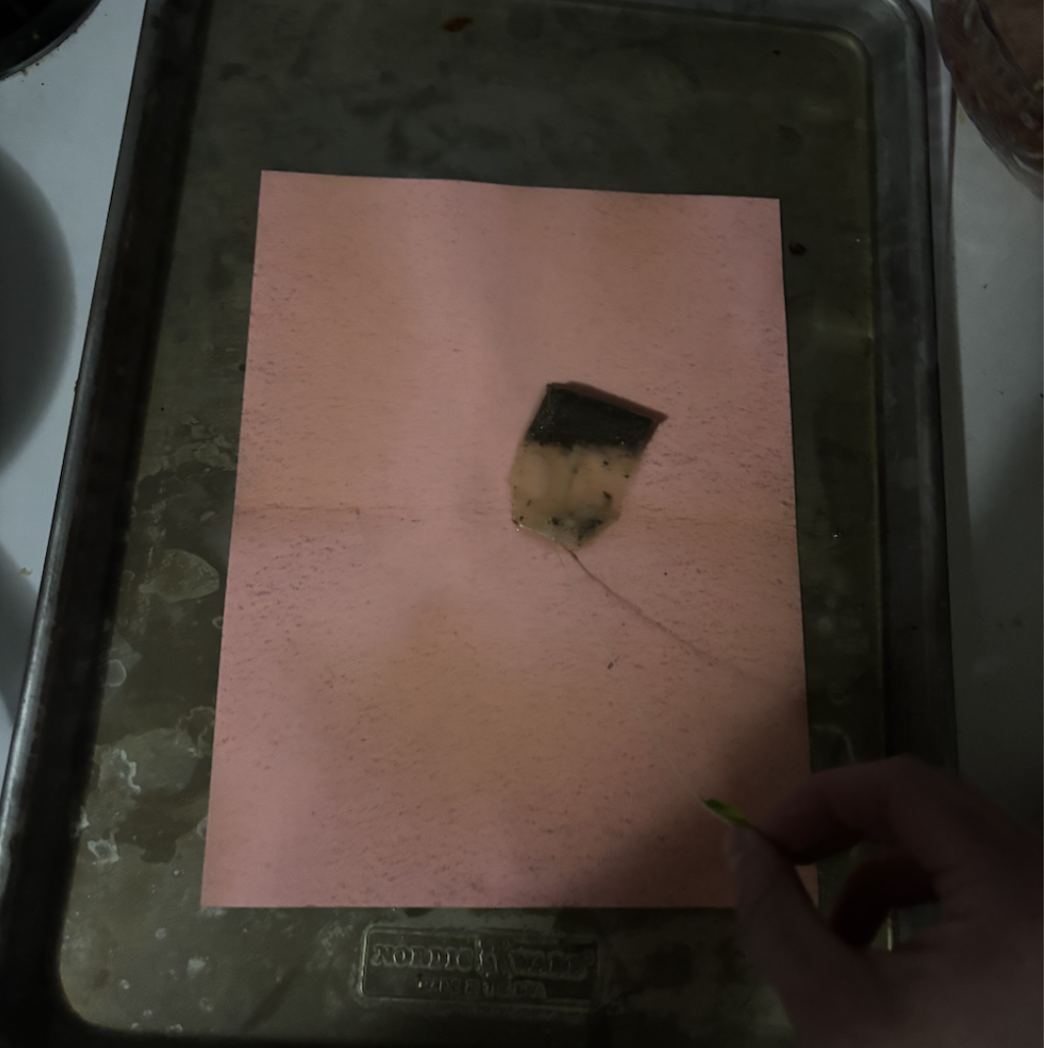
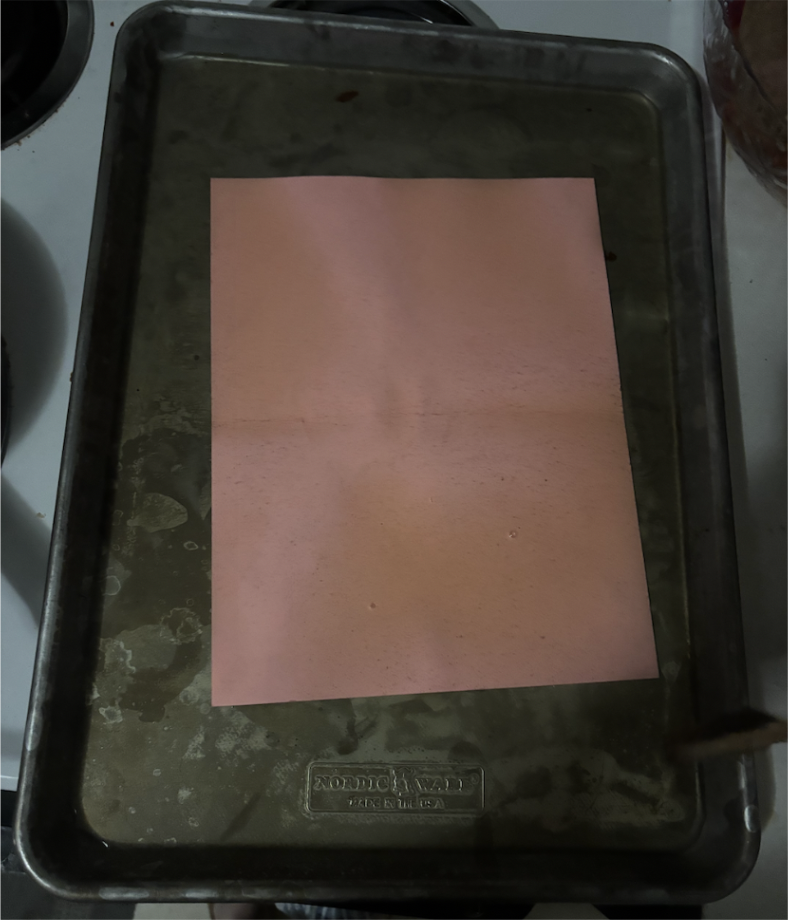
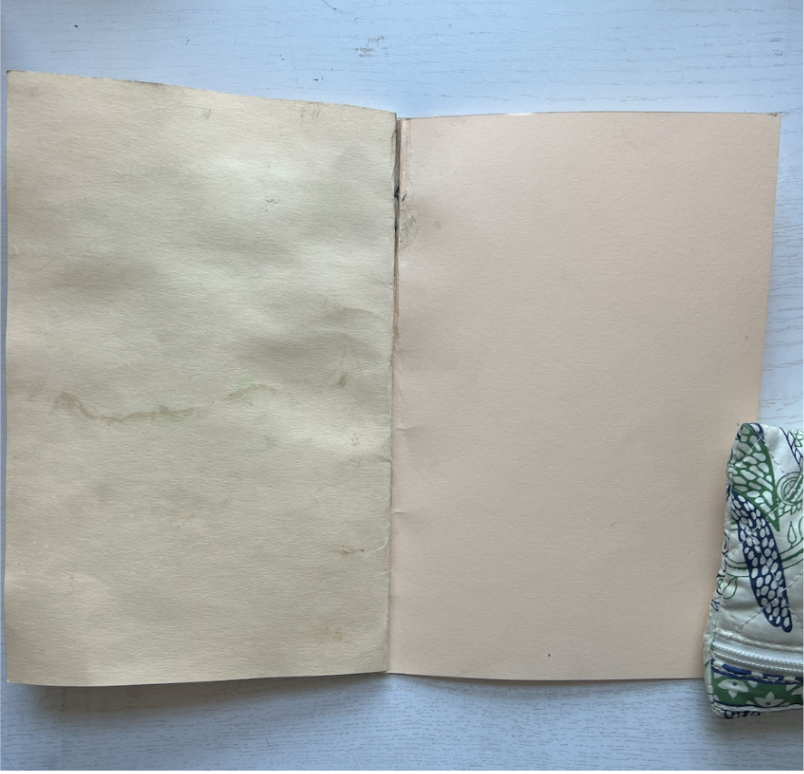
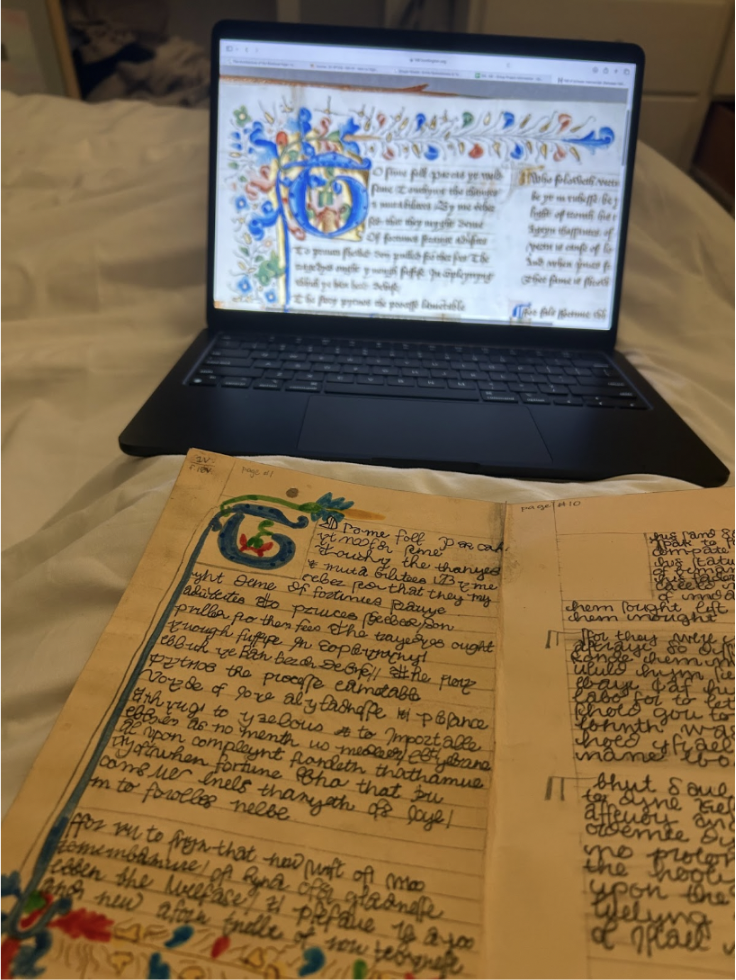
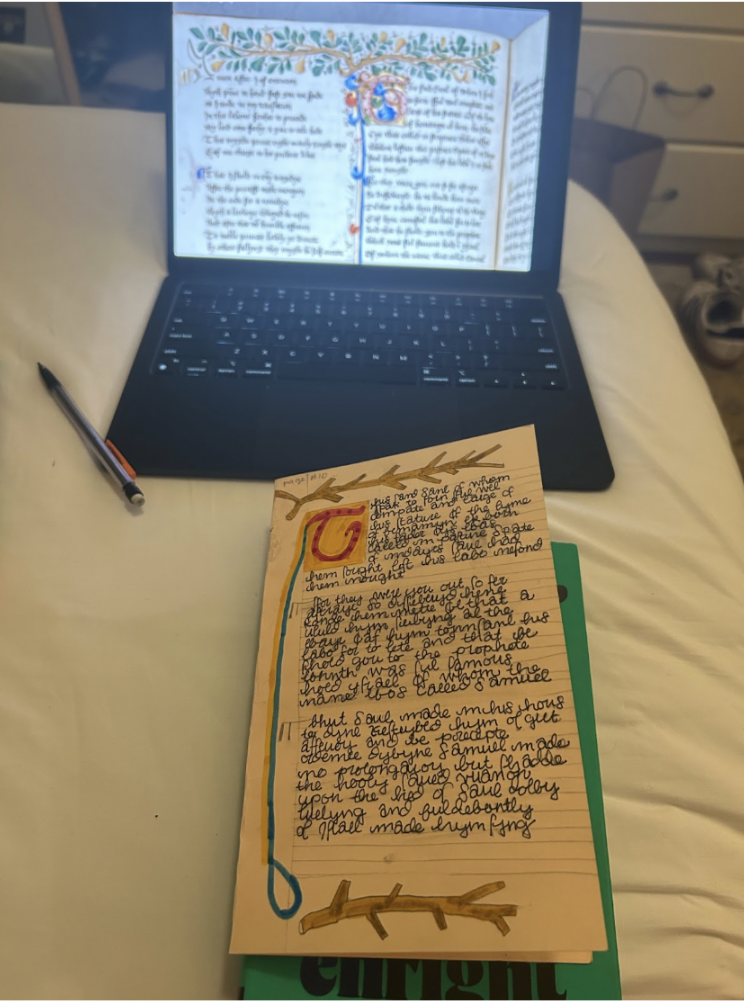
Paper Maker: As the assigned paper maker, I enjoyed taking creative ownership over the foundation of our manuscript. Drawing inspiration from The Fall of Princes, our group was drawn to the structure, vivid colors, and marginal illuminations of medieval texts, which I aimed to replicate in both look and texture. I dyed yellow paper with English Breakfast tea to give it an aged appearance, using the tea bag and coffee machine stains to create uneven tones that mimicked dried animal skin. Preparing the paper made me think about the labor-intensive nature of medieval manuscript production and how different it is from our smooth, modern paper.
Lining the pages and leaving space for illuminations made me realize how collaborative and precise the manuscript process had to be—especially when missteps (like my page numbering mistake) had ripple effects for the scribe. It made me reflect on how even small errors could have posed major challenges in the past. Overall, this hands-on experience gave me a deeper appreciation for the time, skill, and coordination involved in manuscript-making, and I’m excited to compare this tactile process with the digital version.
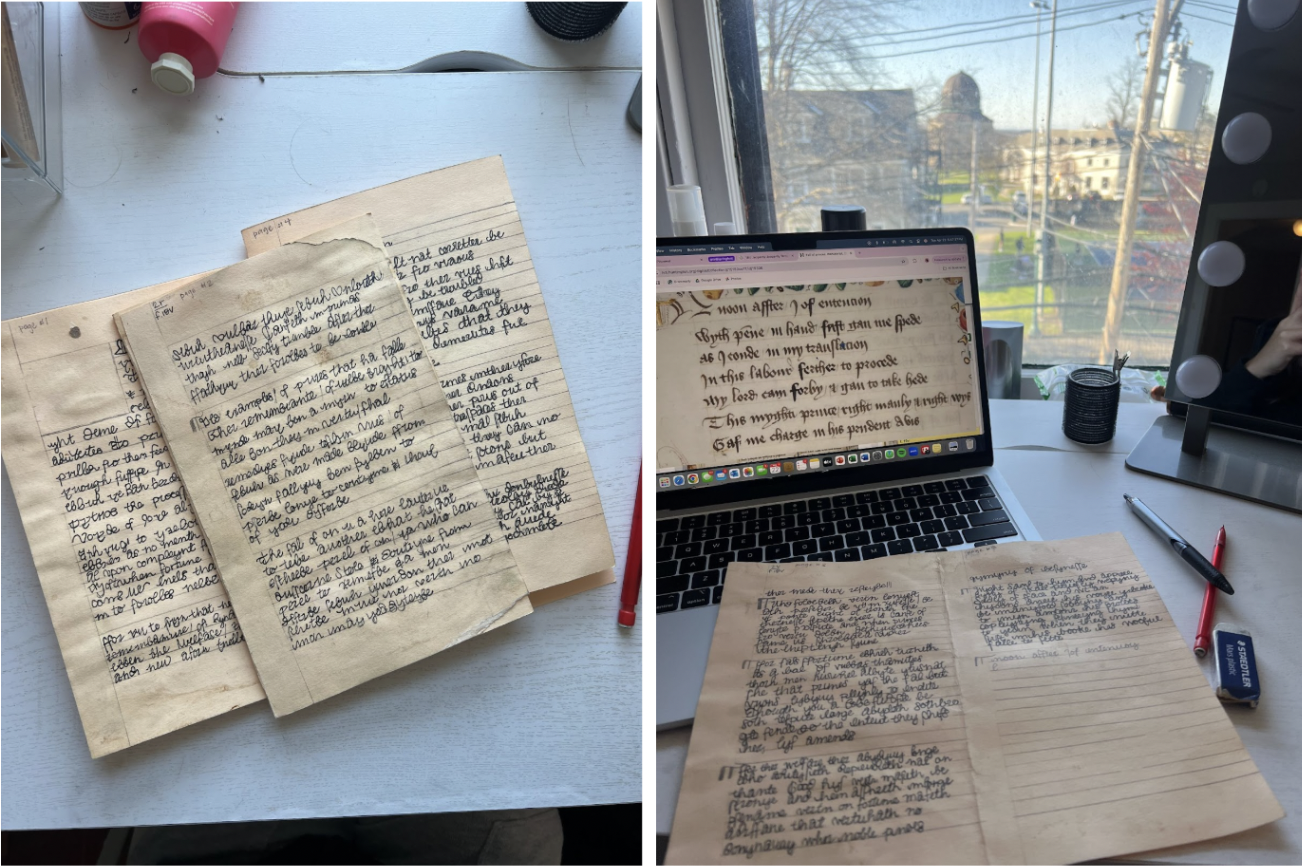
Scribe: The Scribe is a central, if not the most crucial, role in the manuscript process. I was tasked with copying the online version and trying to decipher the language that was written nearly 600 years ago. Typically, the Scribe is meant to number and line the pages as well, but for the purpose of this project, it was divided into two parts.
I was given the manuscript with the pages numbered wrong, and I made several mistakes of my own, which resulted in having to "Frankenstein" the pages back together. While I was writing, I found it hard to sit for long periods and became frustrated when I would mess up the lettering or lose track of what I was copying. Overall, it is a task that takes a great deal of time and effort. I received a manuscript with pages numbered incorrectly, and I made several mistakes of my own, which led to the need to "Frankenstein" the pages back together. While I was writing, I found it challenging to sit for long periods, and I became frustrated when I mismanaged the lettering or lost track of what I was copying. Overall, this task requires a substantial amount of time and effort. The commitment involved in transcribing the few pages I wrote took me around four days to complete. Writing an entire manuscript would understandably take years. From my experience, a scribe must be detail-oriented to effectively keep track of and organize the structure of a manuscript.The commitment that goes into transcribing the few pages that I wrote took around 4 days for me to complete. To have written an entire manuscript would understandably take years. From my experience, the Scribe must be a detail-oriented person to keep track of and organize the structure of a manuscript.
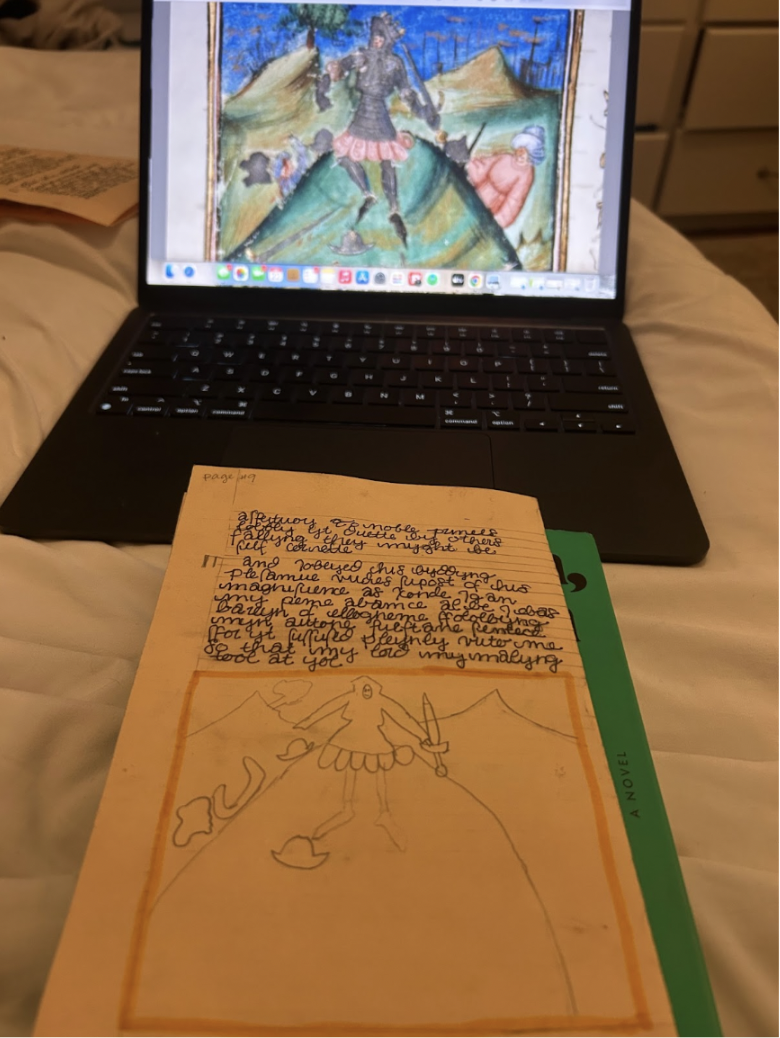
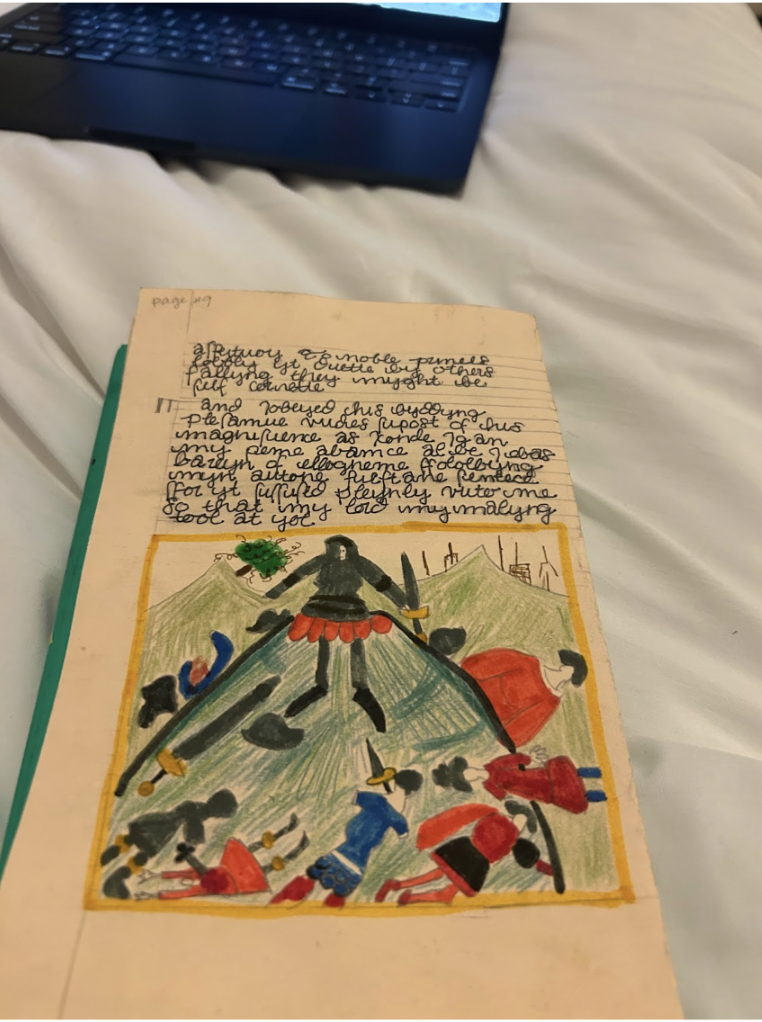
Illuminator: I am fairly happy with the way in which my group went about this project- we really did not speak to each other aside from a timeline perspective, and I was happy to receive a manuscript to illuminate with pages recorded and spaces drawn out for me to do my illuminations. There were a few issues that arose, the largest of which was that some of my markers ran out! So you can see some areas that are a little bit less colored in than others, or in some cases- mostly with the adornments on each new paragraph- I had to pursue completely new writing utensils (colored pencils instead of markers). My ‘innovation’ or thought process with this is just that I can pretend that some of the ink has just faded with time! Another issue that arose is that I am not that much of a skilled artist- I took the job of illuminator before I realized that I was supposed to COPY the manuscript, I had originally intended to do my own designs and try to stay in my own wheelhouse. The way in which I tried to work around this was pretty simple- I just put a lot of effort into my illuminations. I zoomed in on the parts of the illuminations I was working on, and did them piece by piece in pencil before going over them with markers. I tried to copy each illumination as exactly as I could, and there are some aspects where the vision does not align with the finished product, but I am happy with my efforts as a whole.
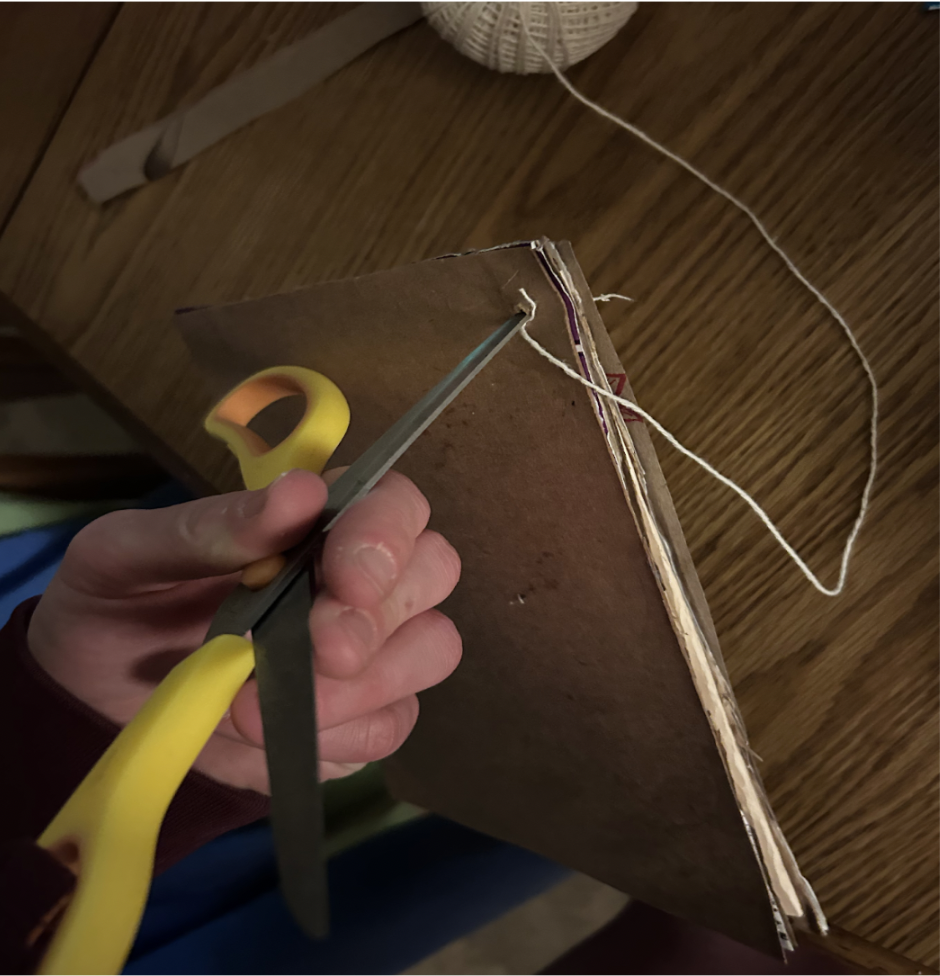
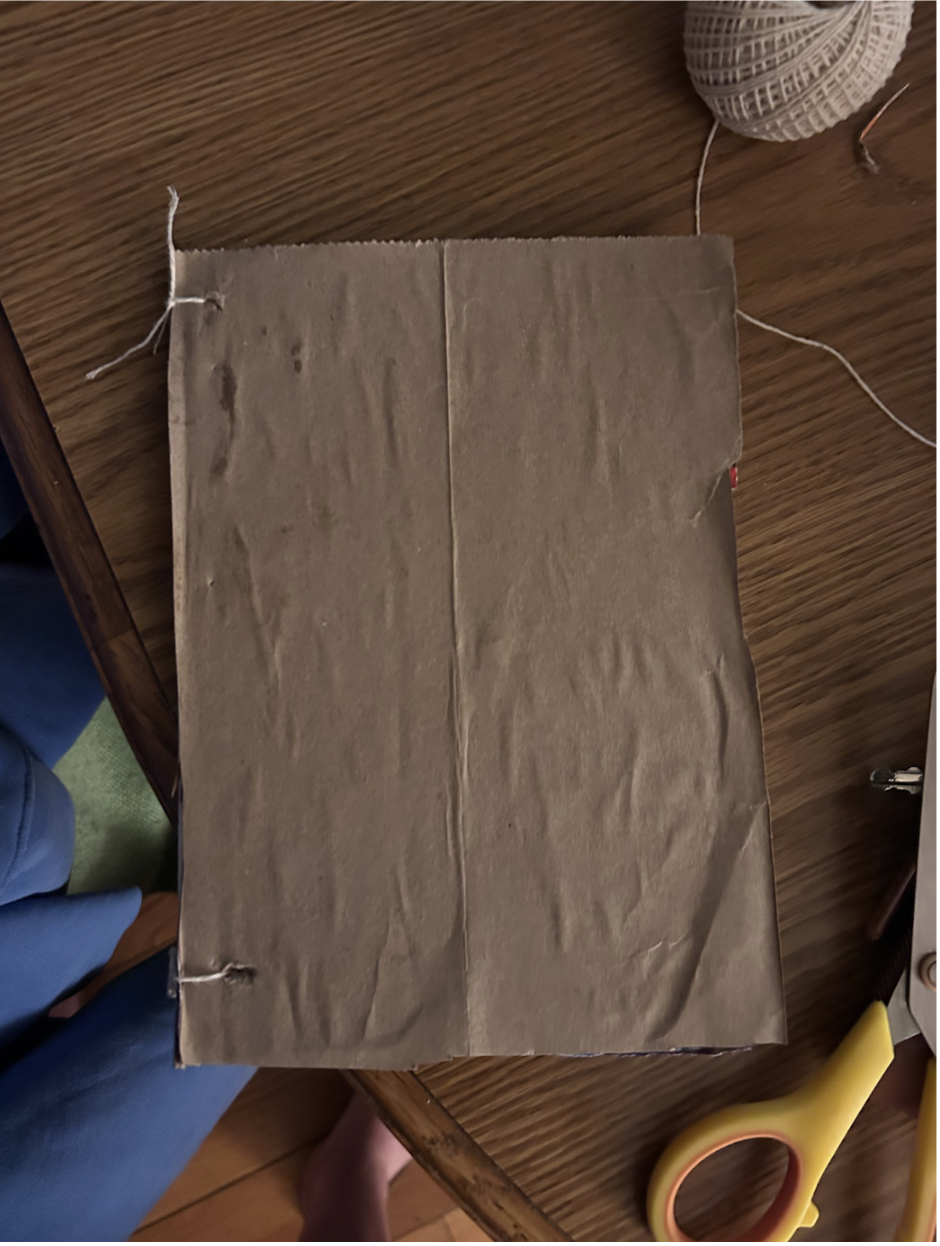
Binder: While our group aimed to work independently, doing so without constant communication led to issues—particularly as the binder. One major problem that I faced was that the writing extended too close to the edges of the folios, leaving little space for me to insert binding holes without damaging the text or illuminations. I was able to adapt by placing holes at the top and bottom margins, carefully avoiding the middle. Creating the hard cover posed its own challenges, such as finding cardboard that was sturdy yet puncturable, and threading string without a needle, which required improvisation using scissors. Although the binding was initially too tight, it eventually loosened with use, allowing the pages to turn more easily. Reflecting on the process, it gave me insight to how vital communication is in collaborative work and how historical manuscript makers likely faced similar issues over longer periods and distances.