-
Title
-
The Canterbury Tales
-
Name
-
Nathan, Ben, Kristina, Megan
-
Abstract
-
Below you will find our process for adapting out physical manuscript to a digital format.
-
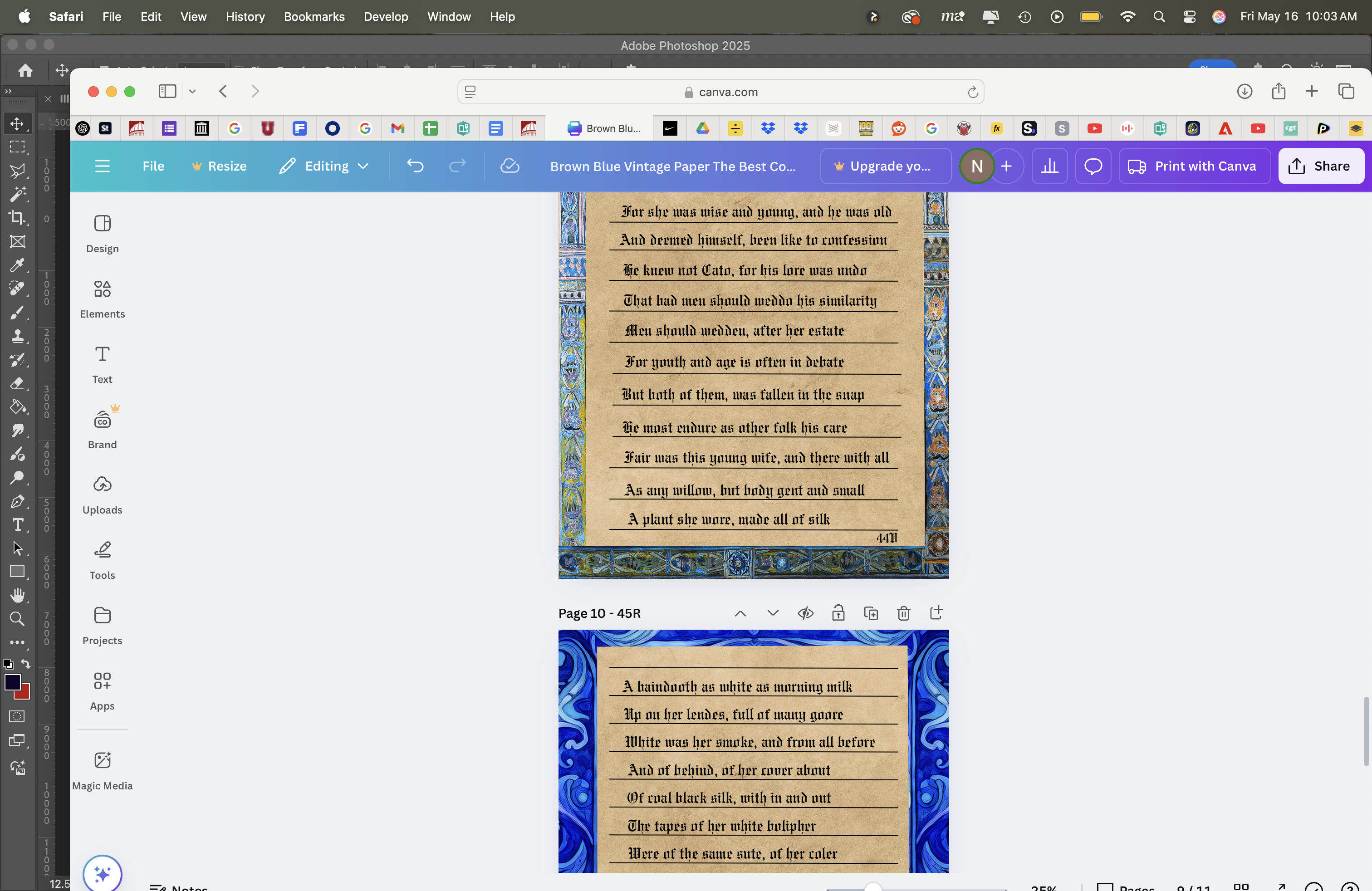
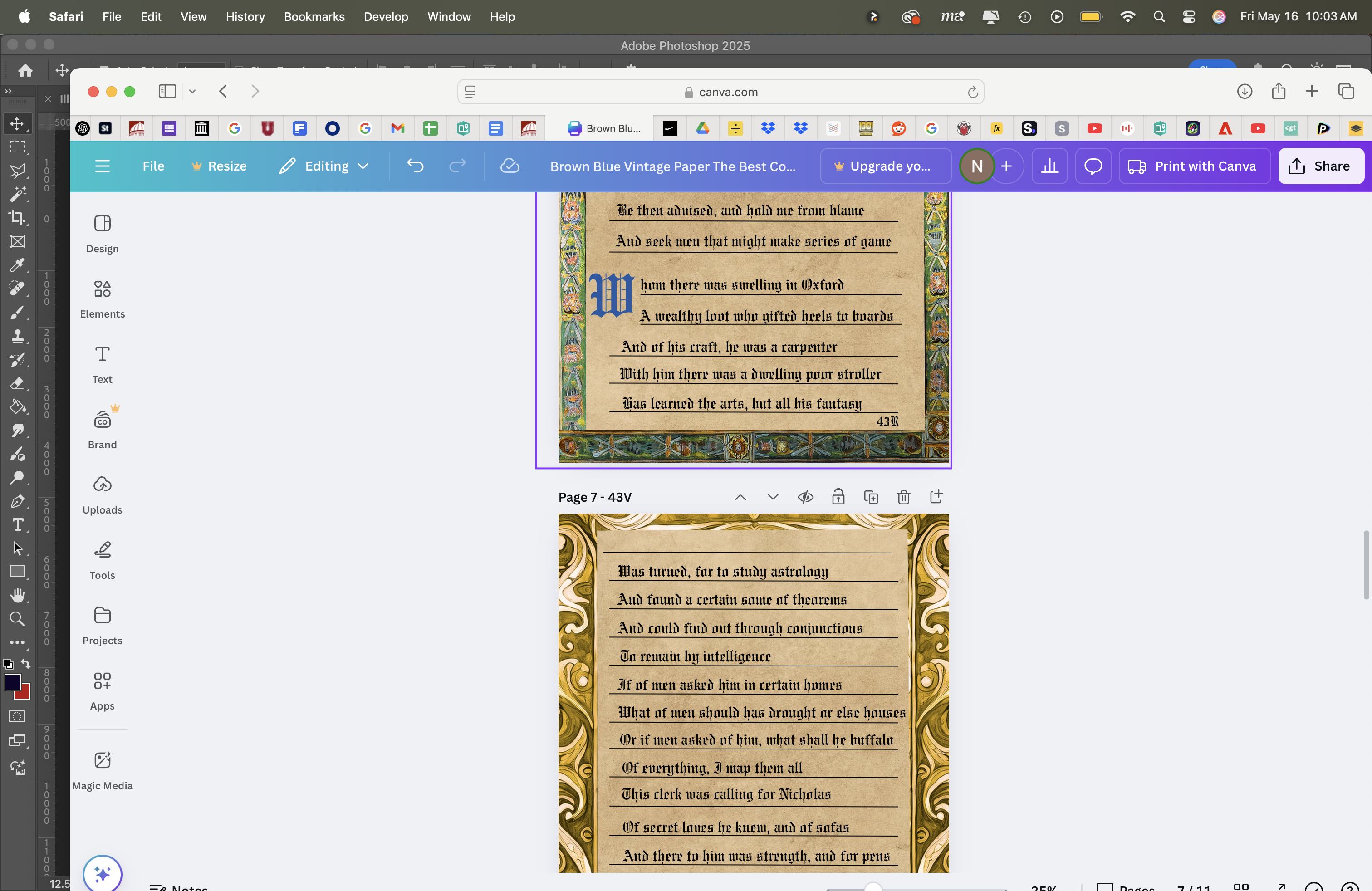
Meg, Scribe: My role was writing the script for the digital manuscript and it took a lot of time and focus(about six hours in total). At first it was pretty difficult to understand the Middle English words. I had to spend a lot of time figuring out what each word meant and how to write it in a way that made sense. Sometimes I wasn’t sure if I was doing it right and it took a lot of thinking to decide what looked best. But as I kept working I started to notice words repeating and it got a lot easier. I learned that scribes had to make a lot of choices, and those choices changed how the text looked and felt. One big difference I noticed between the physical and digital versions was how people experience them. The physical manuscript was cool because you could hold it, flip through the pages, and really feel like you were looking at something old. It felt more artistic and each page was a little different. But the digital version made it easier to fix mistakes, format the text, and change things around. It was more flexible even though it didn’t feel as personal as making something by hand. I liked being able to zoom in, move things around, and make sure everything lined up perfectly on the screen. Overall, this project taught me a lot about how hard it was to create manuscripts in the past and how different it feels to use digital tools today.
Ben, Paper Maker: As the papermaker, I did not have to spend as much time as I did on the physical manuscript, where I was the scribe. To create the paper, I searched for “medieval paper” on Google and copied an image that I liked. I then pasted it into Canva and copied 12 pages for Megan to type on. I also made lines on the paper to make it easier for her to know where to type. Overall, there were not many challenges I personally faced in crafting the digital manuscript. I do think that making the digital paper was much easier than it would have been if I were making the physical paper, but at the same time, I think that some of the elements of making a manuscript was lost by just copying and pasting an image. While making a physical manuscript is much more time-consuming and tedious, there is a feeling of hard work and connection to the manuscript when you are done. In making the digital copy, that feeling was lost. Finally, when we finished the physical manuscript, we were able to hold and flip through the book. We were also able to smell all of the different scents that were in the book. Both of these elements contributed to the connection to the manuscript. On the digital version, we can only flip through the PDF copy of a computer-generated book. Overall, I felt that while the digital manuscript was easier to complete, it did not have the same feel and connection as the physical copy.
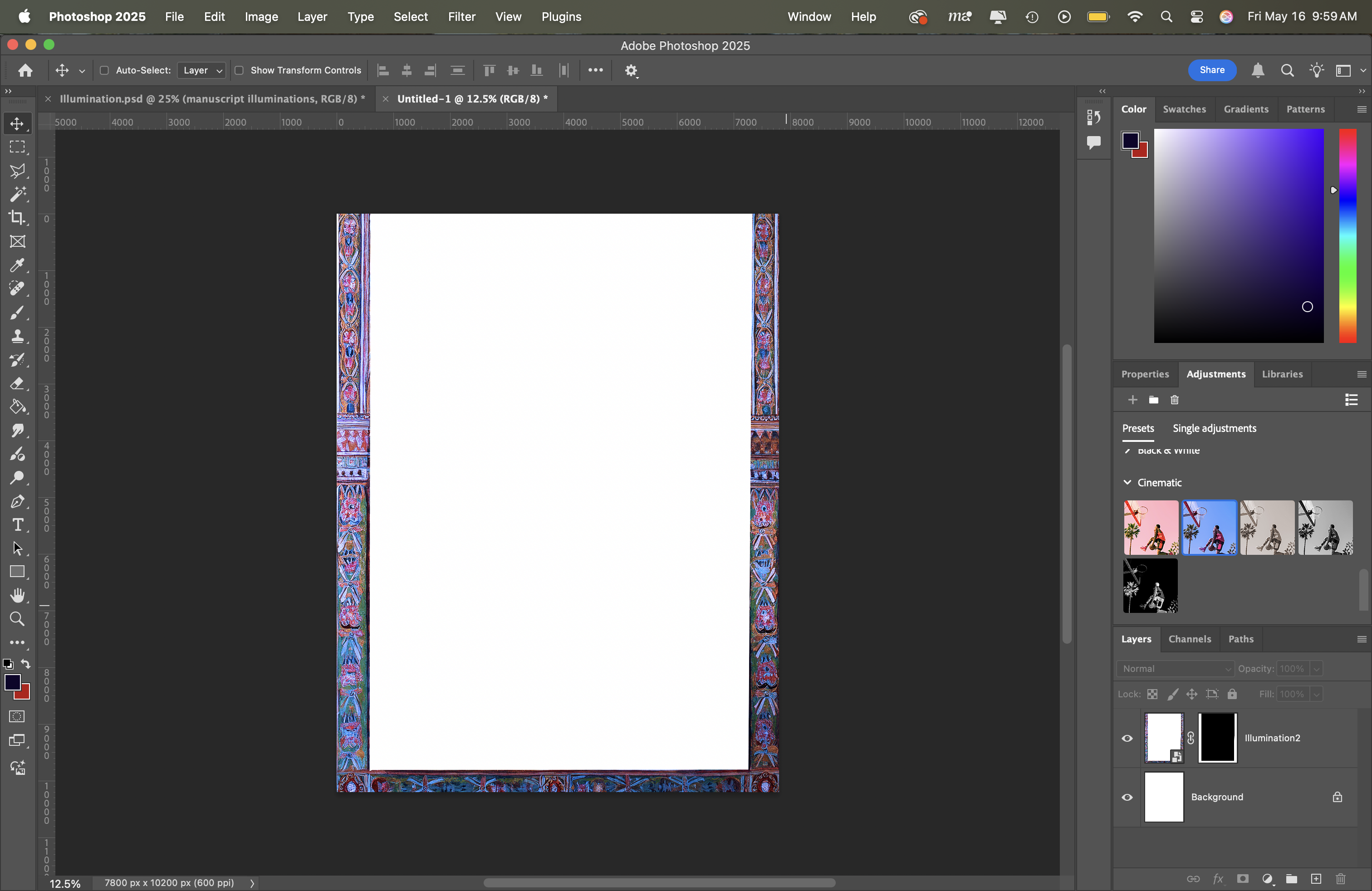
Nathan, Illuminator: For the digital portion of the manuscript project I utilized a couple different resources in creating an interesting and visually appealing manuscript. My specific job required me to create illuminations for the digital manuscript but I also assisted one of my group members with the cover, as I had the digital resources and knowledge to help. The programs I used included, photoshop, canva and an ai background remover. I used photoshop to create a mixture of ai images and graphics, then I oriented it to fit an 8x11 page and increased its resolution to make it look better. In total I produced 3 designs in photoshop. Now onto canva, I used this site to put together all my illuminations in conjunction with the scribal work and custom paper. I also used canva to recolor and touch up my illuminations making them more interesting and fresh each time a new page was opened. I used primarily yellow/gold, blue and red colors along with a few more complex patterns, this helped me negate the need to make an entirely new design each time as I could just change the color within canva. Using the background remover was extremely important as when generating ai images it cannot do the illuminations strictly around the edge of the page, instead it covers the whole page with the image, something that we didn’t want as it would cover up the writing. In summary, what I did was I took the images I made from photoshop, ran them through the background remover then proceeded to put them into canva, aligning them with the page and the text and changing the color. Overall, I really enjoyed this project and it allowed me to use a wide variety of skills, both physically and mentally.
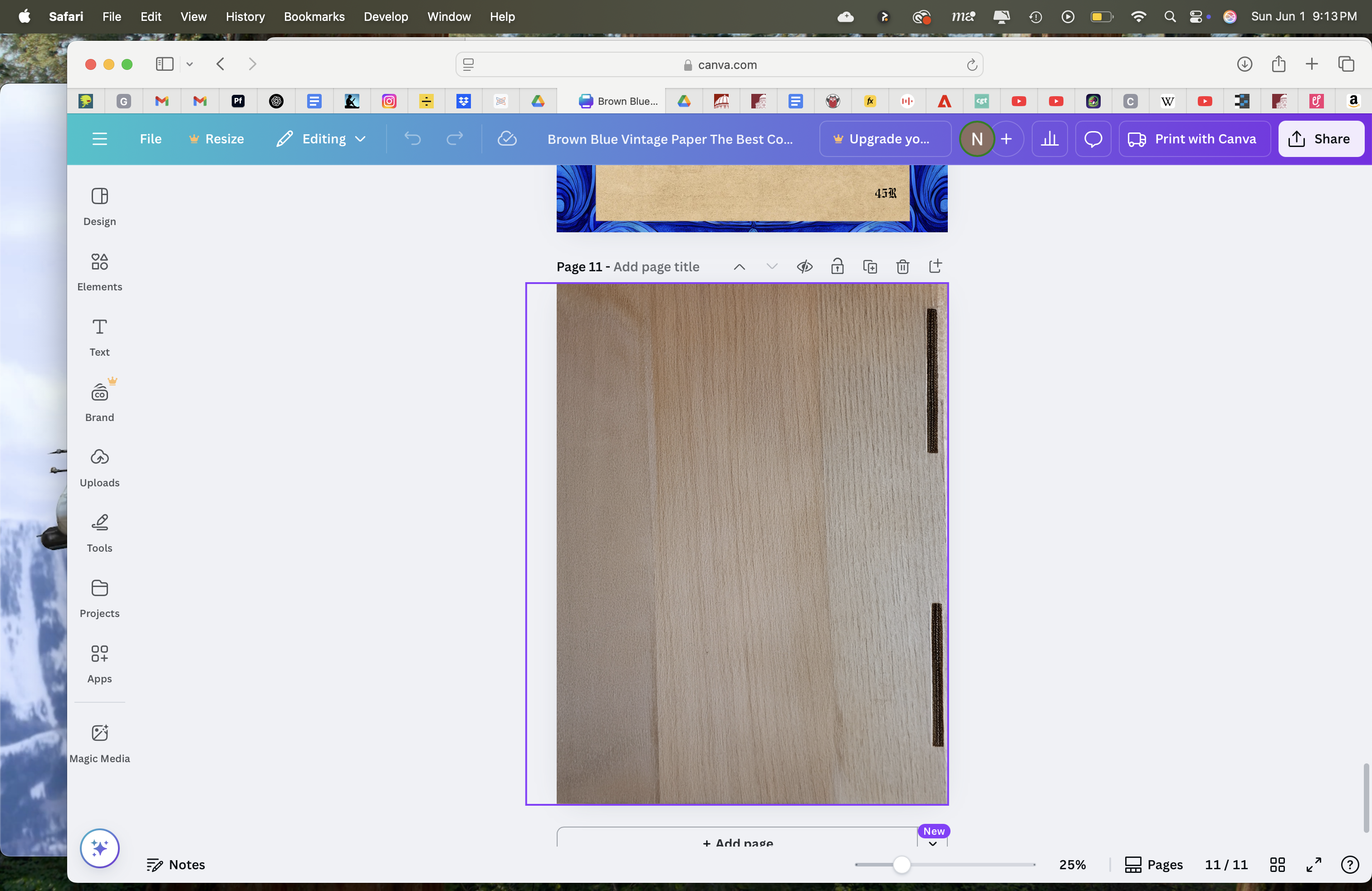
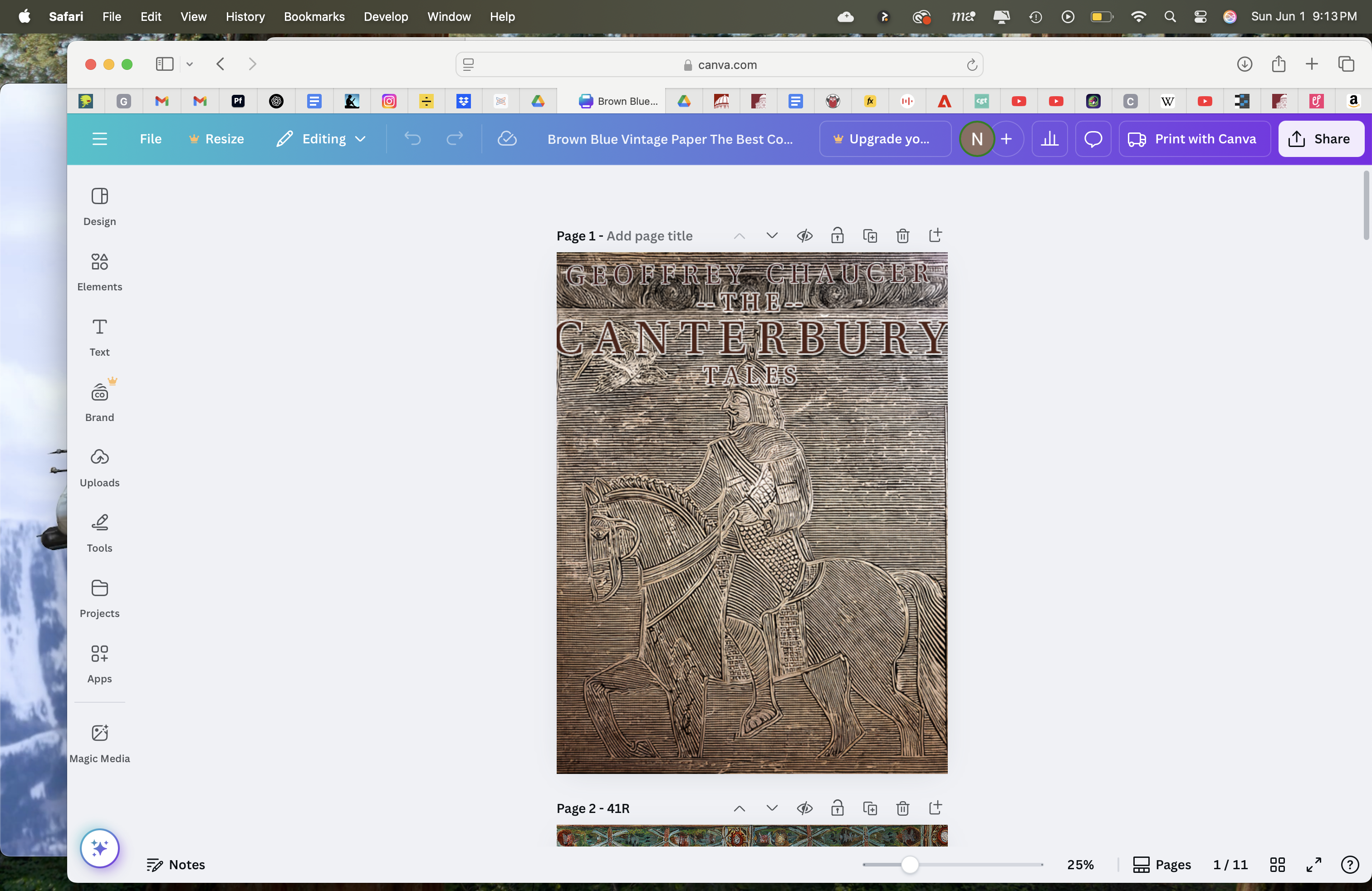
Kristina, Binder: For the online portion of the Manuscript assignment, I was assigned the Binder task, which is something very new for me!! Looking back at my two roles, I would have chosen to be the illuminator in both aspects, although I enjoyed the task of being a Binder during the online portion of this assignment. I preferred making the hardcover, in-hand manuscript to the online version. I think this is mainly because I enjoy coloring, arts and crafts, and trying to mimic the original work with tracing, colored pencils, and markers. The tasks heavily rely on copying and pasting already generated online content for the online version of the manuscript. For example, my work relied heavily on working with Canva and Photoshop’s online AI generator to construct an etched wooden hardcover and try to make something similar to Nathan’s original cover. Also, a bunch of issues arose when trying to get Photoshop to mimic the same images on wood, for example when prompting the AI to “please add in the title “The Canterbury Tales,” and the author Geoffrey Chaucer,” the AI generator was not able to add in words or exact titles and often put in a sort of gibberish. Instead, I had to add a text box for both the title and author, and tried to match the outlining colors to what the original wood looked like. As for the back cover, getting AI to ‘understand’ what a “maroon leather binding” is and where the leather strings are supposed to go was equally challenging. Unfortunately, I wasn’t able to show the binding on the front cover of the manuscript, after finally rendering it to its current copy/form, and I had trouble getting the photoshopped image to fit into the Canva format that my group had already selected. I enjoyed both of my roles, and am happy in which the order that I was able to do them as I greatly enjoyed the illuminator task for the in-person copy, allowing me to color and use my ‘artistic’ abilities, and the binding task for the online version as it allowed me to explore AI technology and photoshop– which is something I had never done before!