-
Title
-
The Canterbury Tales
-
Name
-
Nathan, Ben, Kristina, Megan
-
Abstract
-
Each of the excerpts below will detail each group members role is producing our physical manuscript.
-
Meg, Paper Maker:
In the role of the paper-maker, I was excited about this part because I had an idea to make the paper look medieval by staining it with tea bags. I grabbed regular white computer paper from the library printer and got to work. I began by making the tea, laying down some paper towels and using a paintbrush to apply the tea to the paper. I quickly realized it wasn’t working as the color of the paper wasn't changing, it was just becoming wrinkled. After letting it sit for an hour with no improvement, I found that only black tea creates the antique effect I was going for and I had been using green tea the whole time. I looked around for alternatives and spotted my roommate’s soy sauce in the fridge. I figured it was worth a shot, so I painted a page using that. It actually worked and gave the paper a darker tone. However, I had used quite a bit, and it wasn't my soy sauce. My roommate also pointed out that our room now reeked of soy sauce so that was not ideal. Back to square one, I turned to Google and found that coffee was the most recommended method. I didn’t have any, so I texted my sorority house group chat to see if anyone could help. Thankfully, my friend Anna replied and said she had a Keurig. When I went to get it, she asked what kind of coffee I liked and assumed I needed it for an all-nighter essay. We both laughed when I explained it was actually for a manuscript project and I wouldn’t be drinking it. Back in my room, I brewed the coffee and got to work painting it onto the pages. This time, the effect showed up well but drying the paper became a challenge as there wasn’t enough space in my room to dry more than a few pages at once. To speed things up, I pulled out my hair dryer and used it to dry each side before moving on to the next. Eventually, I stained all 16 pages this way. The next morning, I started writing page numbers and drawing guidelines to structure each page. Overall, the process ended up taking longer than I expected, but I’m proud of how the pages turned out.
Ben, Scribe:
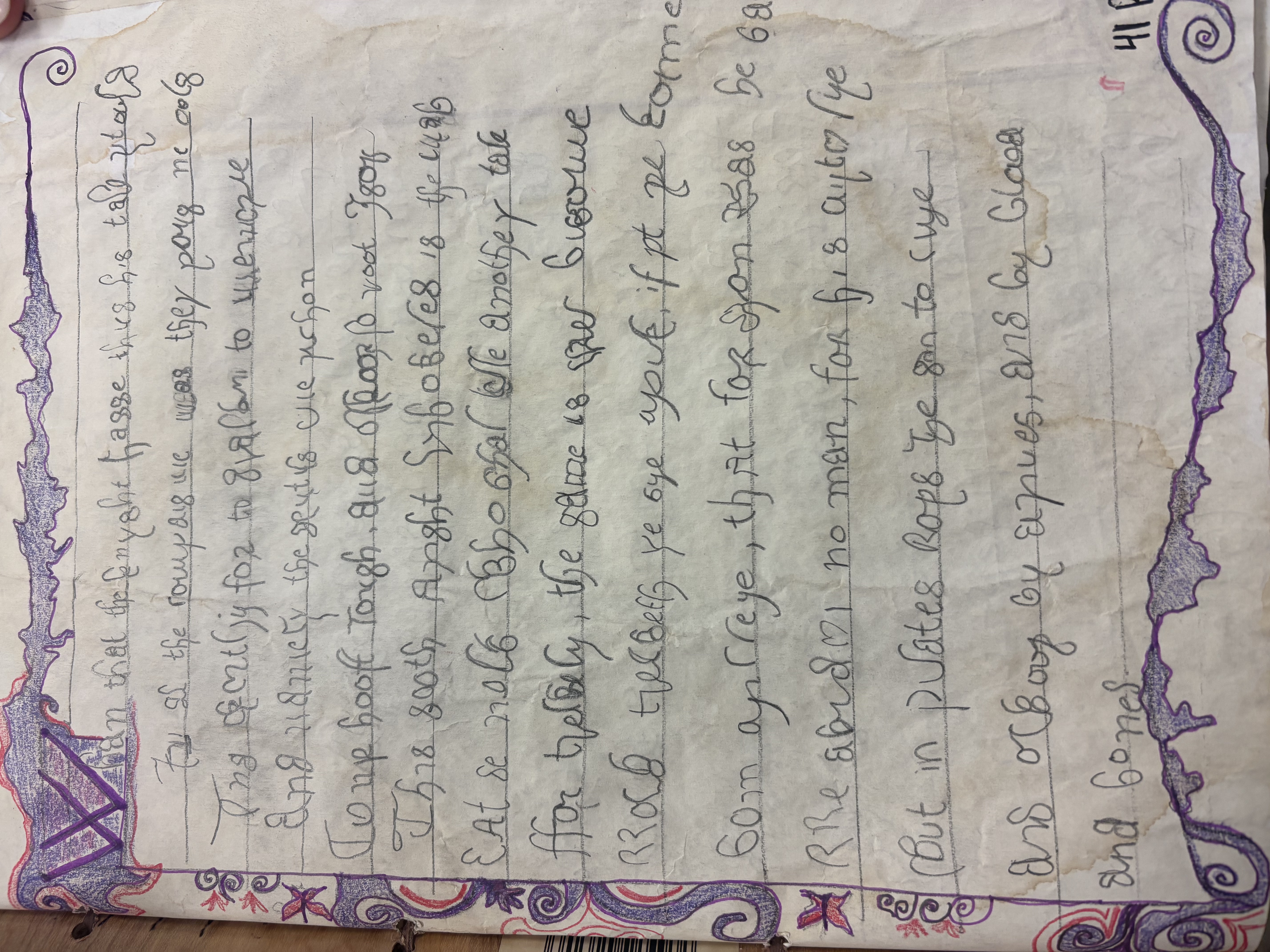
I was elected as our group's scribe due to the fact that I am not a very great artist. Originally, I thought that the scribe would be an easy job, but quickly I learned that it would not be that simple. First, when we were looking through the different manuscripts, many of them were blurry and hard to read. In addition, many of the manuscripts were written in a very small font. As the scribe, I wanted to find a manuscript that was easy to read and clear enough to copy down. After two days of deciding, we chose the Canterbury Tales. This manuscript was clear and easy to read, making it perfect for copying. I started by using a folder to create the lines. I am typically a very horizontal writer, so I was worried that I would have trouble staying straight. Luckily, the lines were helpful, and I was able to stay on track with my writing. The overall writing process took a lot longer than I had originally expected it to take. I had trouble figuring out what some of the letters were and how I should copy them down. Although after a while, I began recognizing the letters and how I should be drawing them. Another issue that I ran into was the space that I had on my paper. I tend to have larger handwriting, so there were some instances where I was unable to finish the sentence and had to go to the next line to complete it. Finally, the last issue that I ran into was that I did not copy down the page numbers when I was copying down the literature. As a result, I had to search back through the online manuscript and find where I had started copying. This was an annoying task for me, but I was able to successfully find it.
Nathan, Binder:
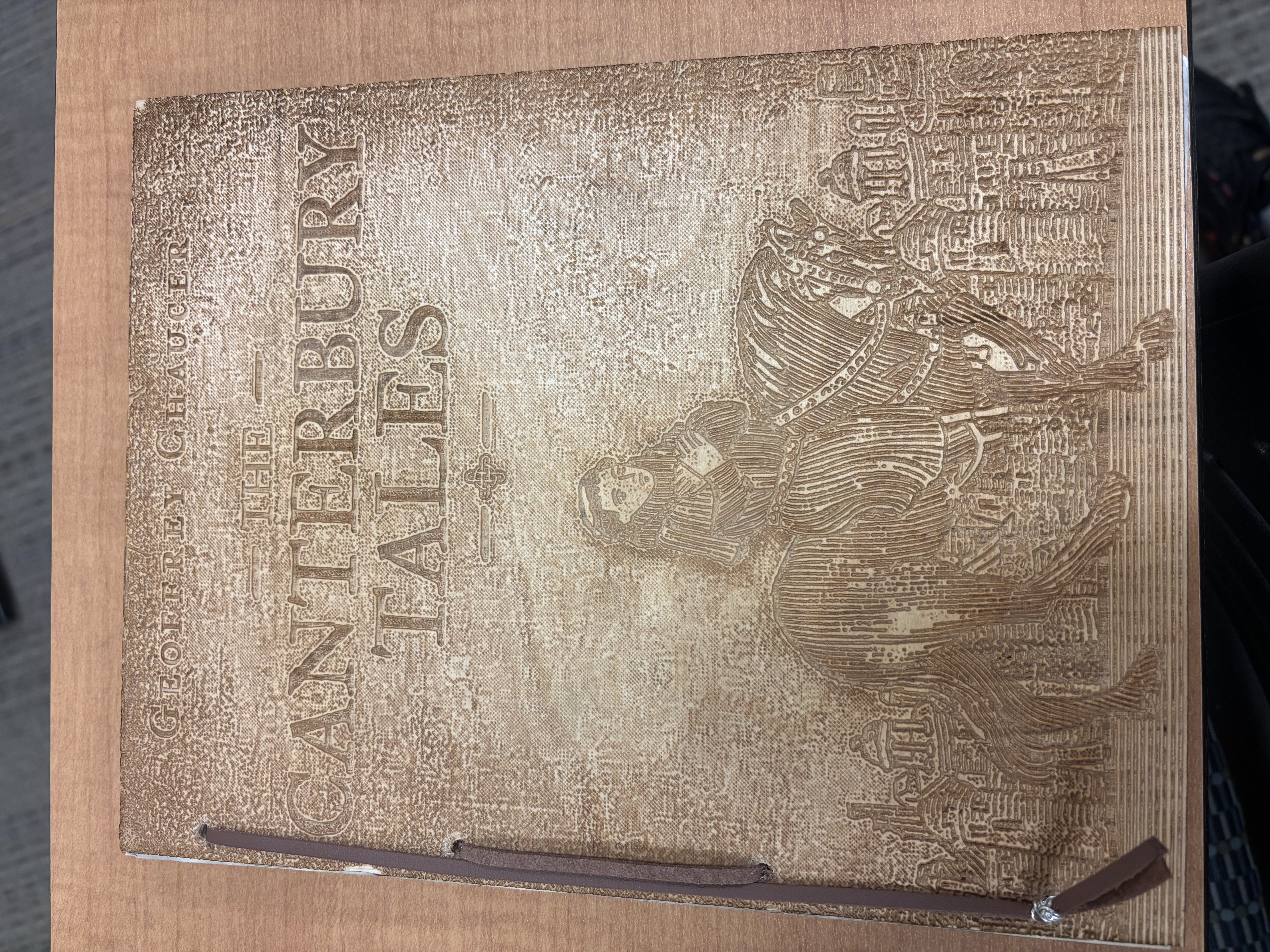
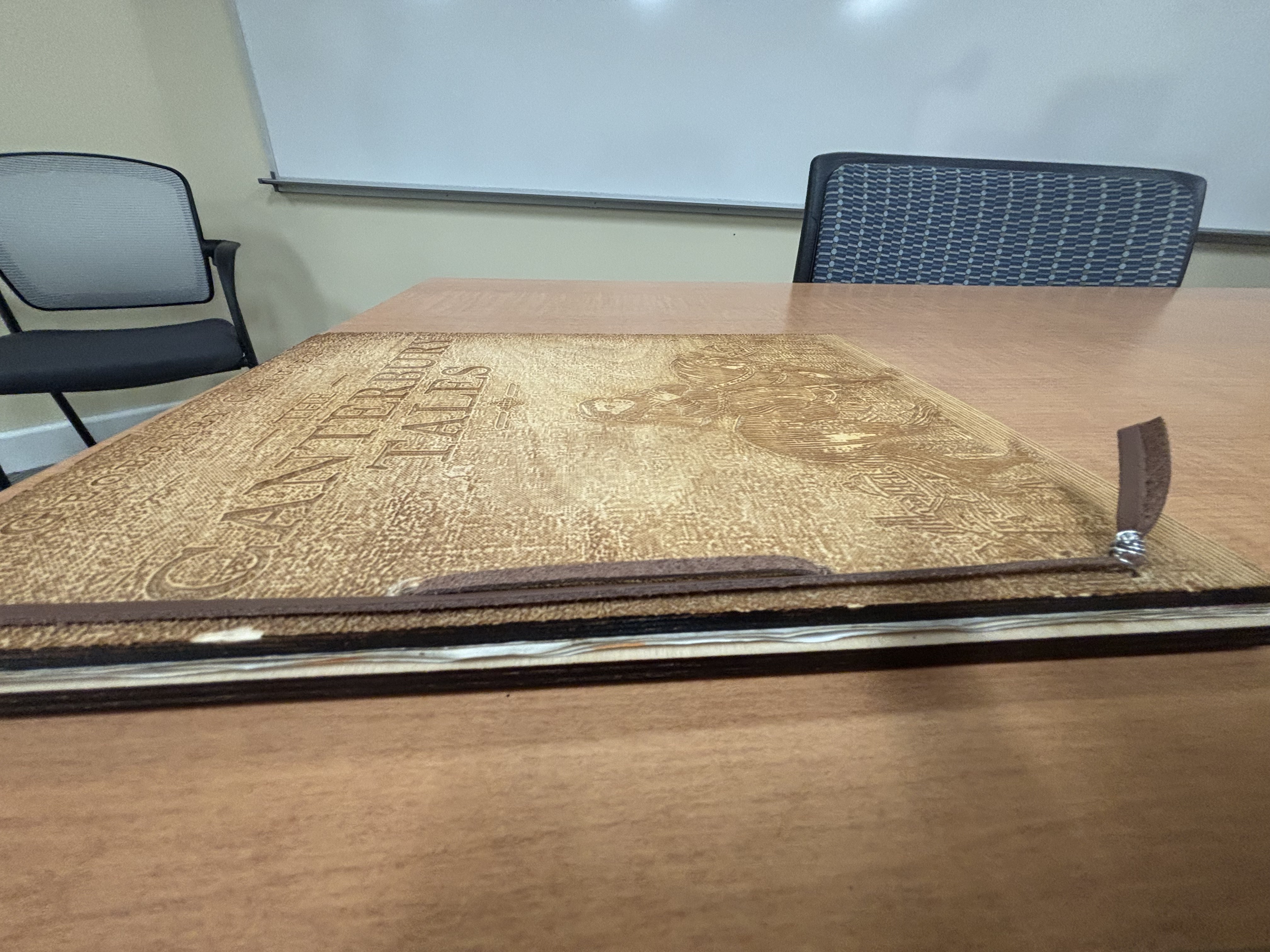
Throughout the binding process I had to think outside the box to make my vision come to life. I knew I wanted to create a nice looking hardcover out of wood but I wasn’t sure how I would actually go about binding it through the paper. I eventually came up with the idea to laser engrave the wood with an image of Chaucer. I experimented with different power and speed settings of the laser, combined with different types of wood to achieve the desired effect. Then to actually bind the manuscript together I drilled holes through the wood and paper simultaneously and threaded a leather string through them like a shoelace. This resulted in a study, durable and good looking manuscript with a lot of effort put into it. If I ever go about this or a similar process again I will just want to make it larger and make the binding, especially at the sides, more elaborate.
Kristina, Illuminator:
I was designated the Illuminator task for the first part of this project/assignment and was the third person in my group to receive the manuscript. As I began, one of the initial challenges I faced was trying to ensure that the majuscules, miniatures, and marginalia matched or reflected similar themes to the original manuscript. Once I got through the first couple of pages, I started by only outlining my pencil lines and then went over them in colorful pens. However, I had some trouble lining up the illuminations on the margins to the lines of scripture on the pages due to the pages of the manuscript not precisely matching the lines on the digital copy. After the outline, I filled in the drawings with colored pencils and some markers, which was my favorite part, as I felt it started to come to life here. From here, I mirrored and mimicked some previous designs, such as the knight seated on the horse or the main spiral details on the majuscule on the first page. For my part of the project, I wanted to keep some of the colors and designs consistent; however, the original copy lacks grandeur and detail in the illustrations, so I added little designs or extra spirals and color in the margins.