-
Title
-
Fall of Princes
-
Name
-
Kyle Zaslaw, Sam Strazza, Dan Sheeran
-
Abstract
-
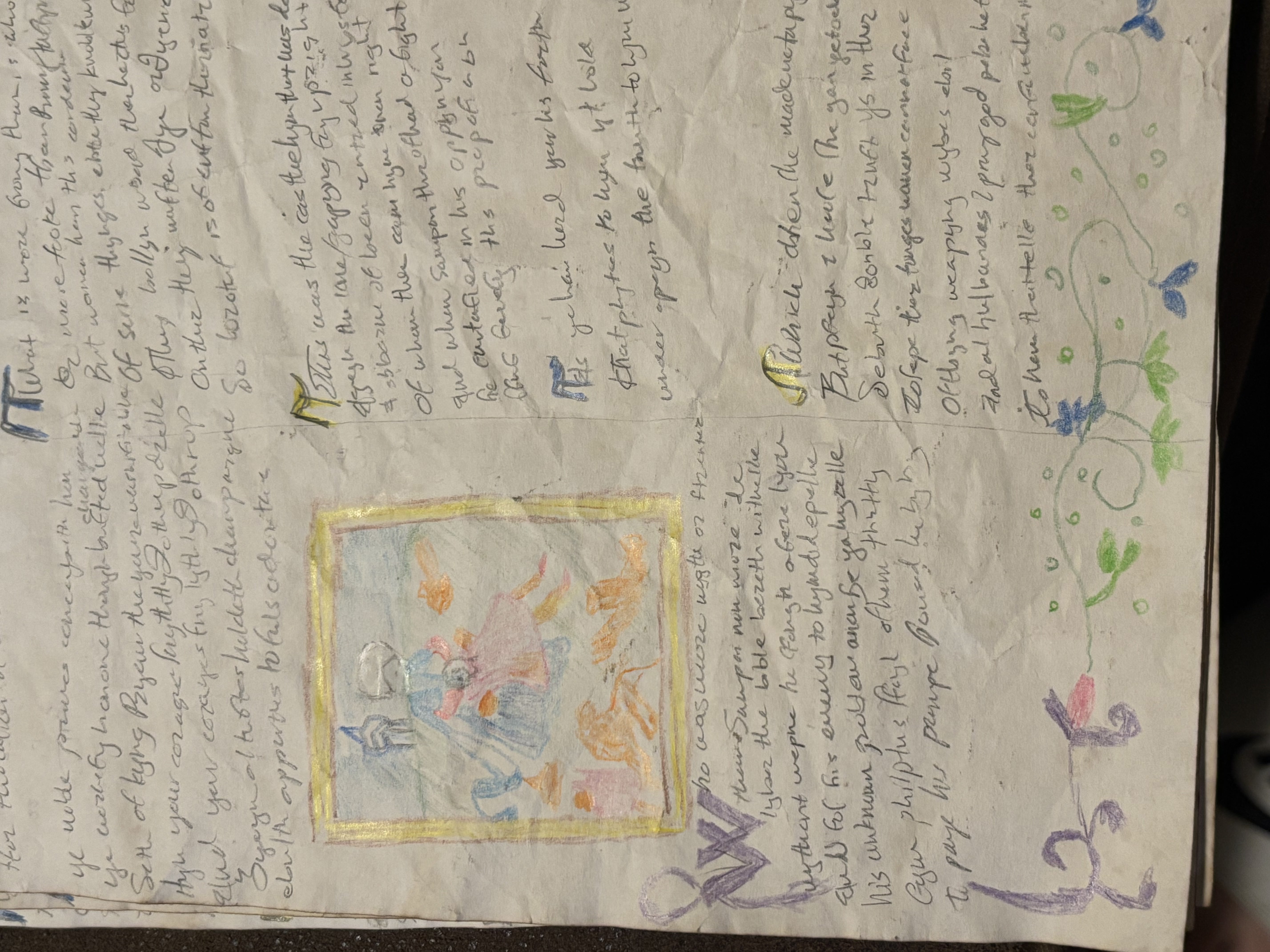
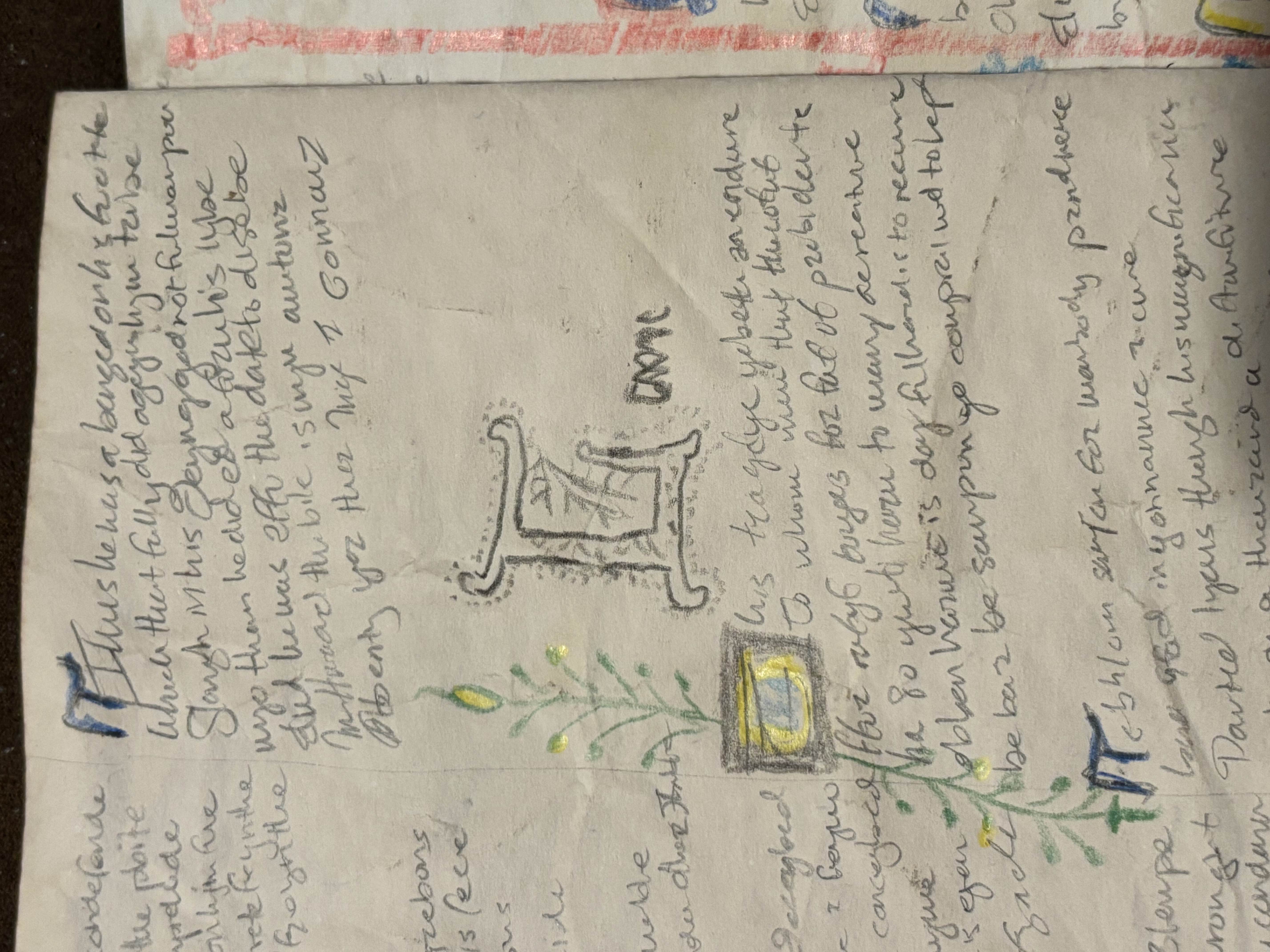
The original manuscript our group decided to use is titled Fall of Princes, dated between 1440 and 1460. We located this manuscript on the Huntington Library website and is written in Middle English. This manuscript stood out to our group based on its detail, cursive and images. Gold accents and illuminated letters highlight the time and efforts that went into making it. This version of Fall of Princes is a long poem written by John Lydgate. He based it on an older Latin book by a writer named Boccaccio. The poem tells the stories of famous historical and biblical figures who rose to power but eventually fell from grace. Overall the color, detail and appeal of the manuscript was a big reason why we wanted to use it for our project.
-
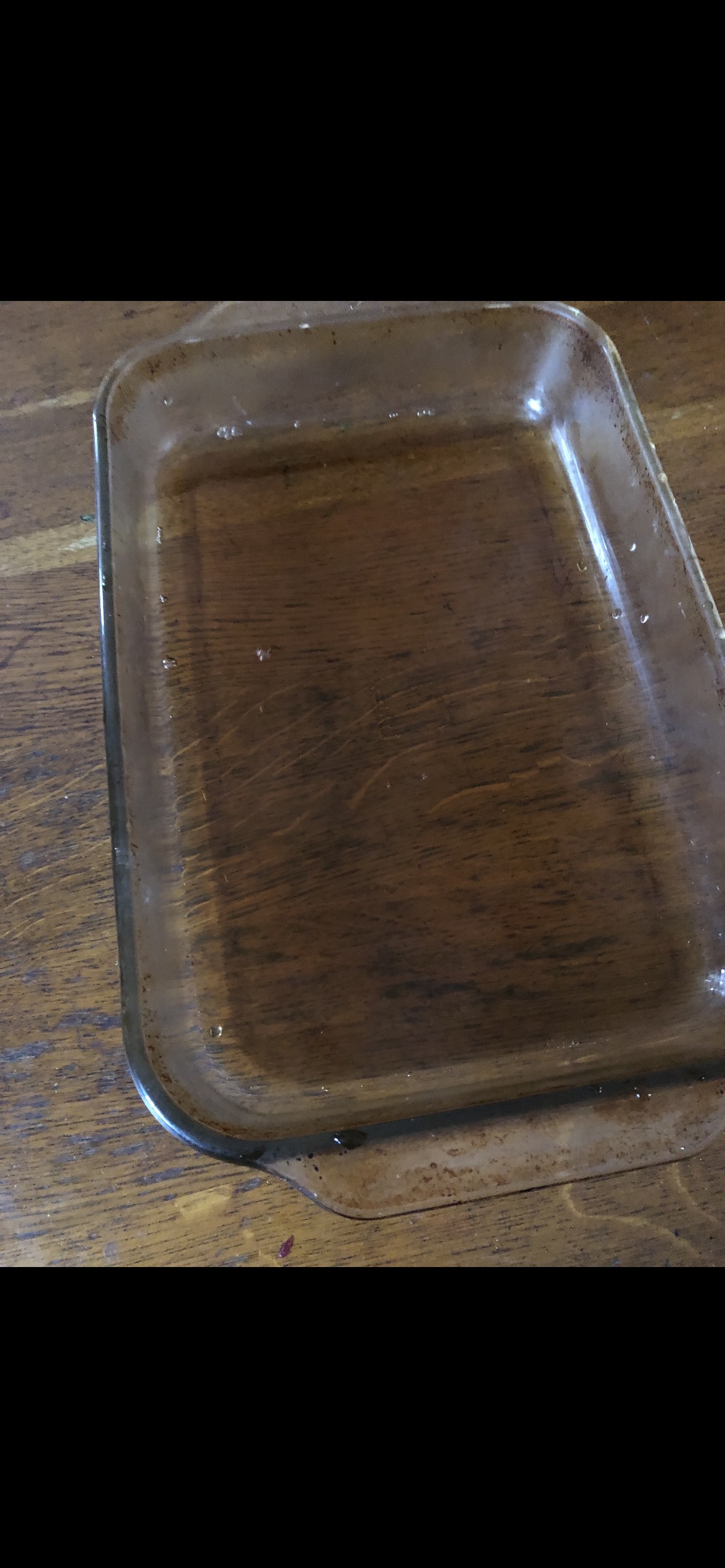
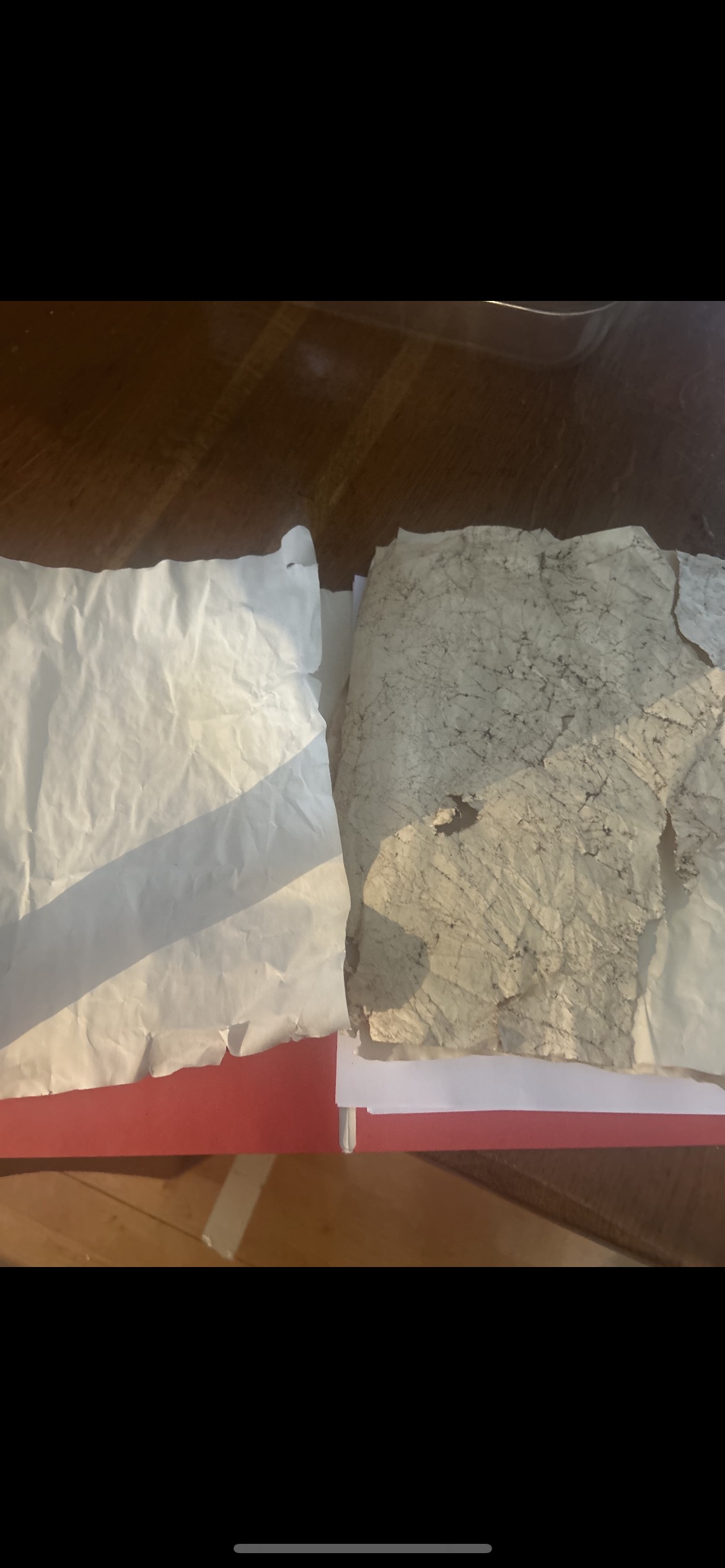
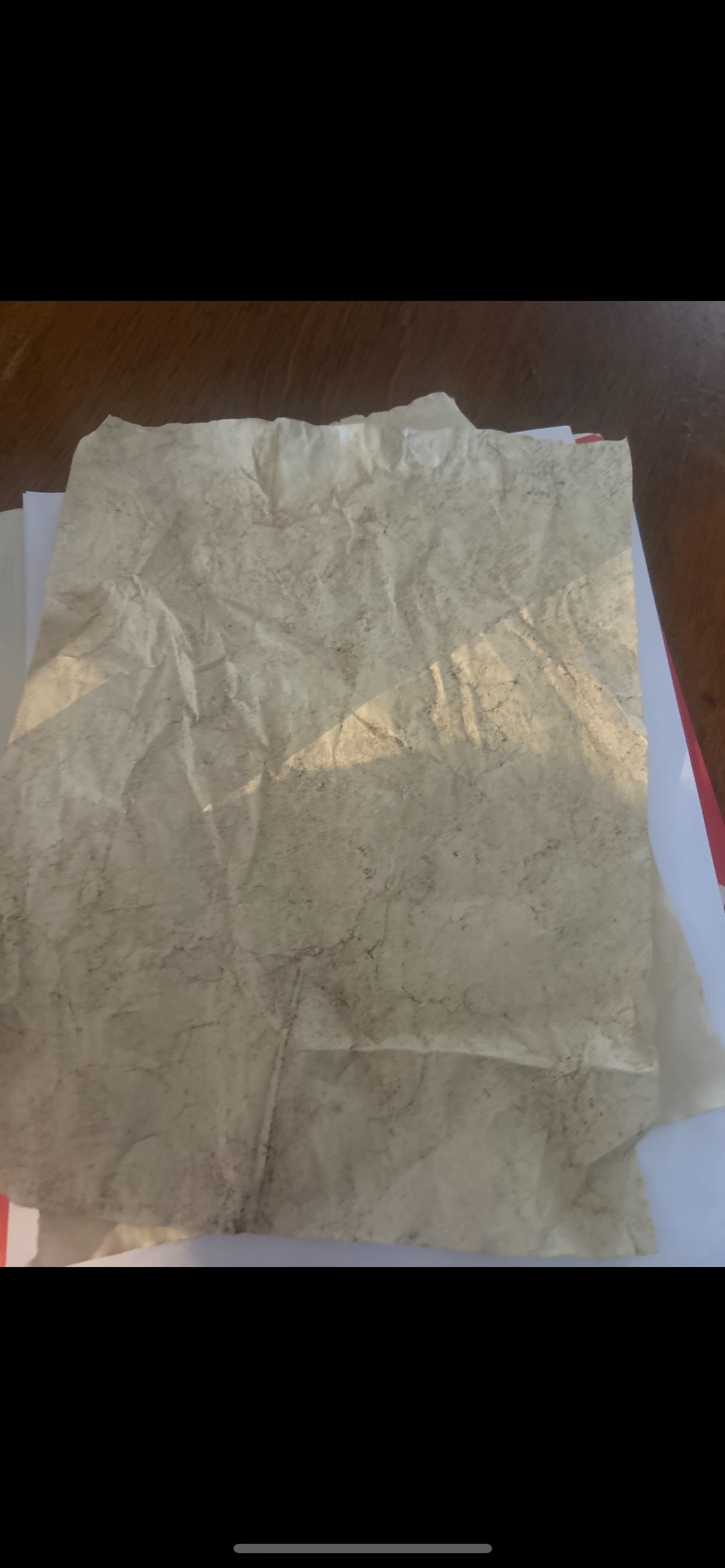
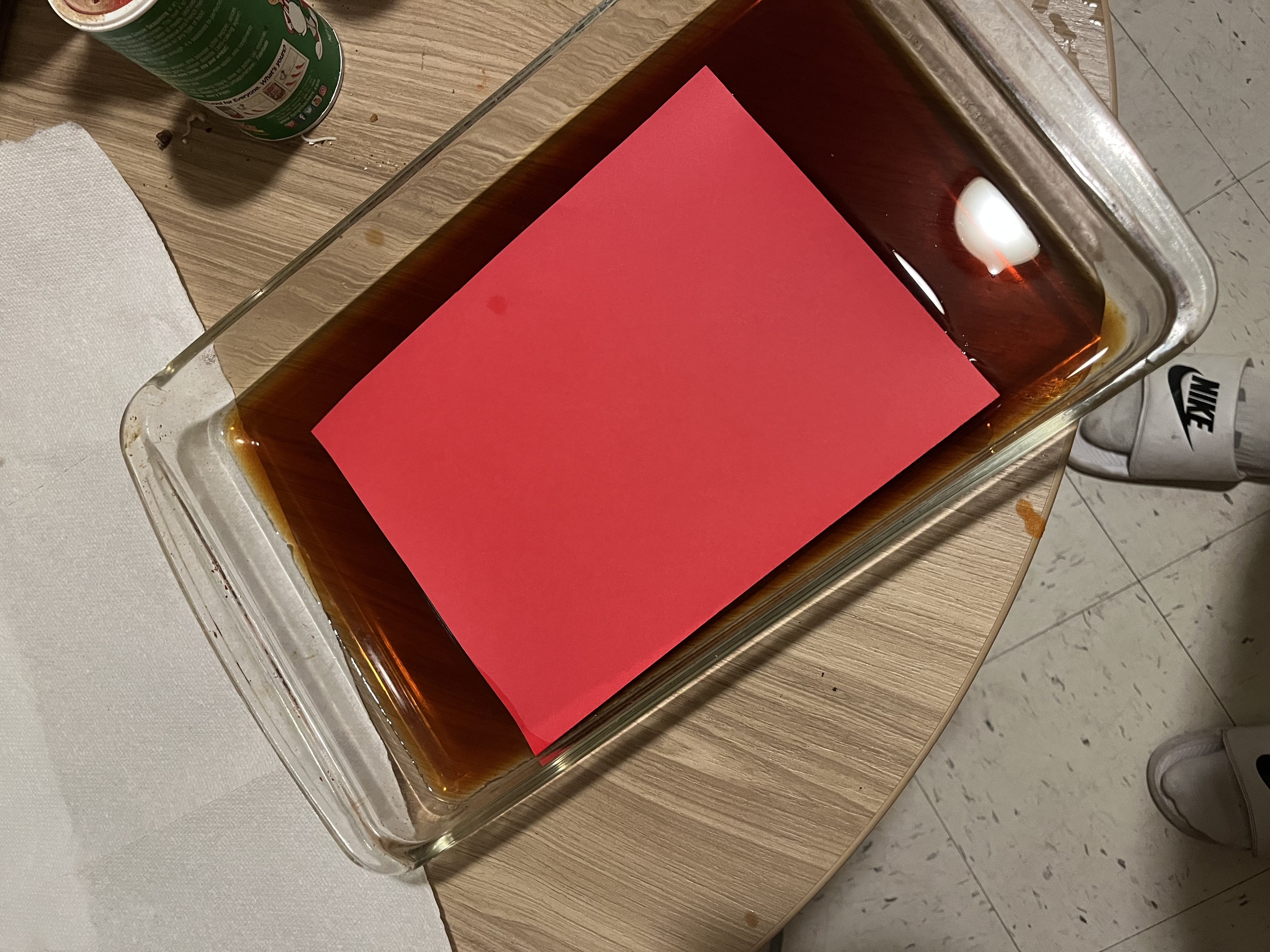
For part 1 I was assigned to be the paper maker. The light tan paper and vibrant colors used in the writing and picture made me appreciate how much time and effort it must have taken for people to make a medieval manuscript. This is not just a book or document, but to me a piece of art. The process of making a manuscript is not easy, it takes time, effort and dedication. Our group met a few times to discuss how we would complete our paper copy and I knew I wanted to make the paper. Being tasked with the paper maker I had a job to make the pages as close to the same size, color, and shape as the one from Huntington. Once I have completed this I then had to mark the margins of the pages, correctly number and organize them, and rule lines for the scribe to write on. It would have been easy to look for or just buy tan paper, but I wanted to be creative when making the paper for our project. I started off by going to our school library and asked for several pieces of printer paper. I went and got a tall black coffee. I thought of the idea that I could soak the paper in the coffee to make a nice tan and appealing look. I went to my house and poured the coffee into a glass baking pan. I then crumpled up the paper and placed it in the coffee. I crumpled up the paper because I thought it would look more interesting and cool. Fall of Princes did not have crumpled paper so I apologize for this, but wanted to put my own twist on it. I then took the coffee covered paper and tried to dry it on my porch. However, this made some of my paper rip and took a while, so I also dried the paper using a hair dryer. After my pieces of paper were dry I labeled the page numbers and organized it to be able to pass it on to the scribe.
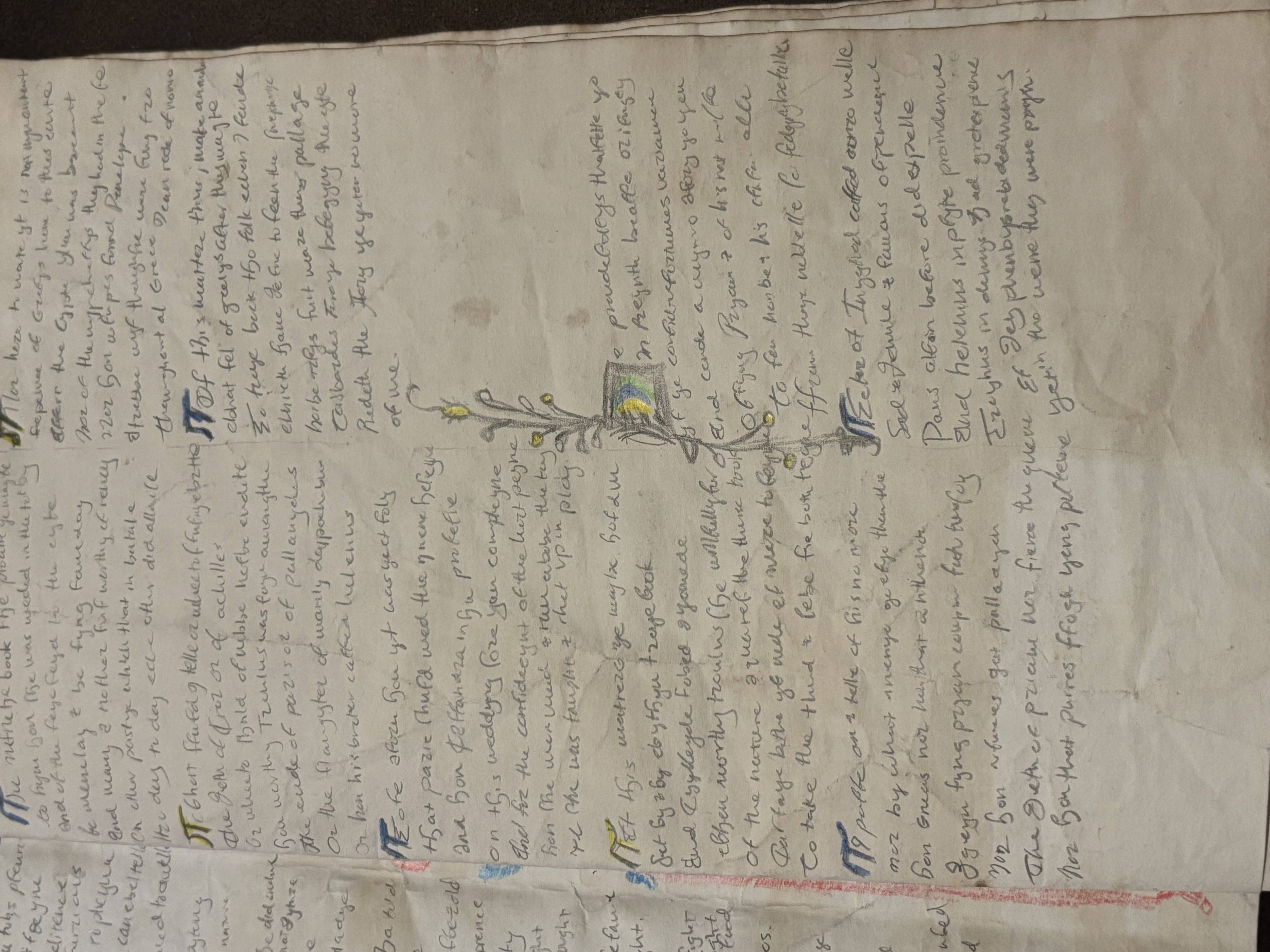
Several challenges arose when the manuscript was handed to me as the illuminator. First off was the lack of space in the margins due to the script being too close to the sides of the pages, and in between paragraphs as well. This was an issue because there were several details and images that were left out because there was not enough space to complete them on the sides of the pages without having to go over the script. Second, at the beginning of each paragraph the first letter was either yellow or blue. Our scribe wrote those letters in, so the yellow letters did not stick out, while the blue letters had no issue. Thirdly, the struggle with the details of drawing faces on humans. With two images in the manuscript that were needed to draw, I struggled completing the details. In addition, the white faces and hair were very difficult to complete with the colored pencils used and the light colored paper. This was an important aspect of details that were left out, due to the significance of how white the women were made to be at the time.
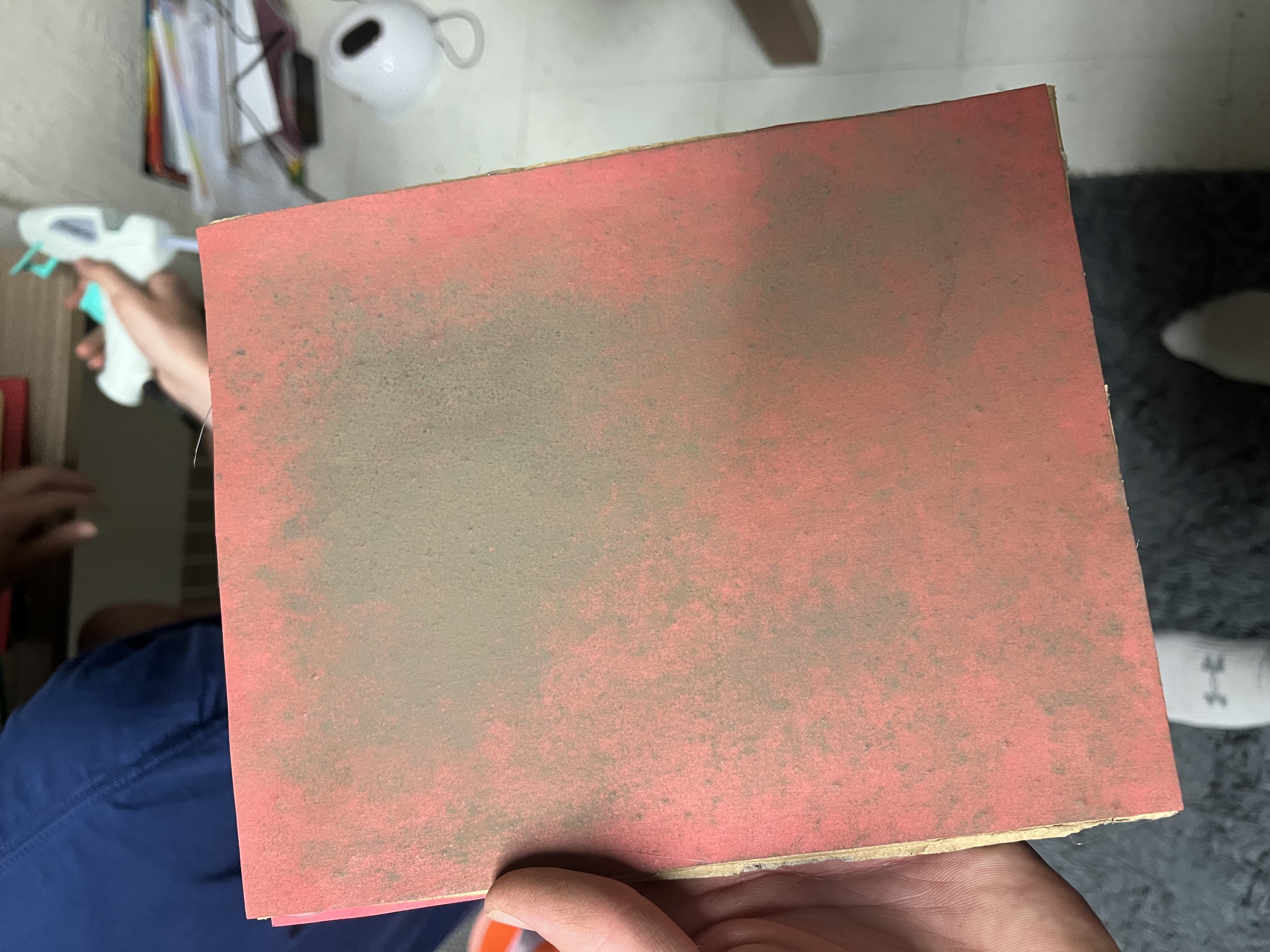
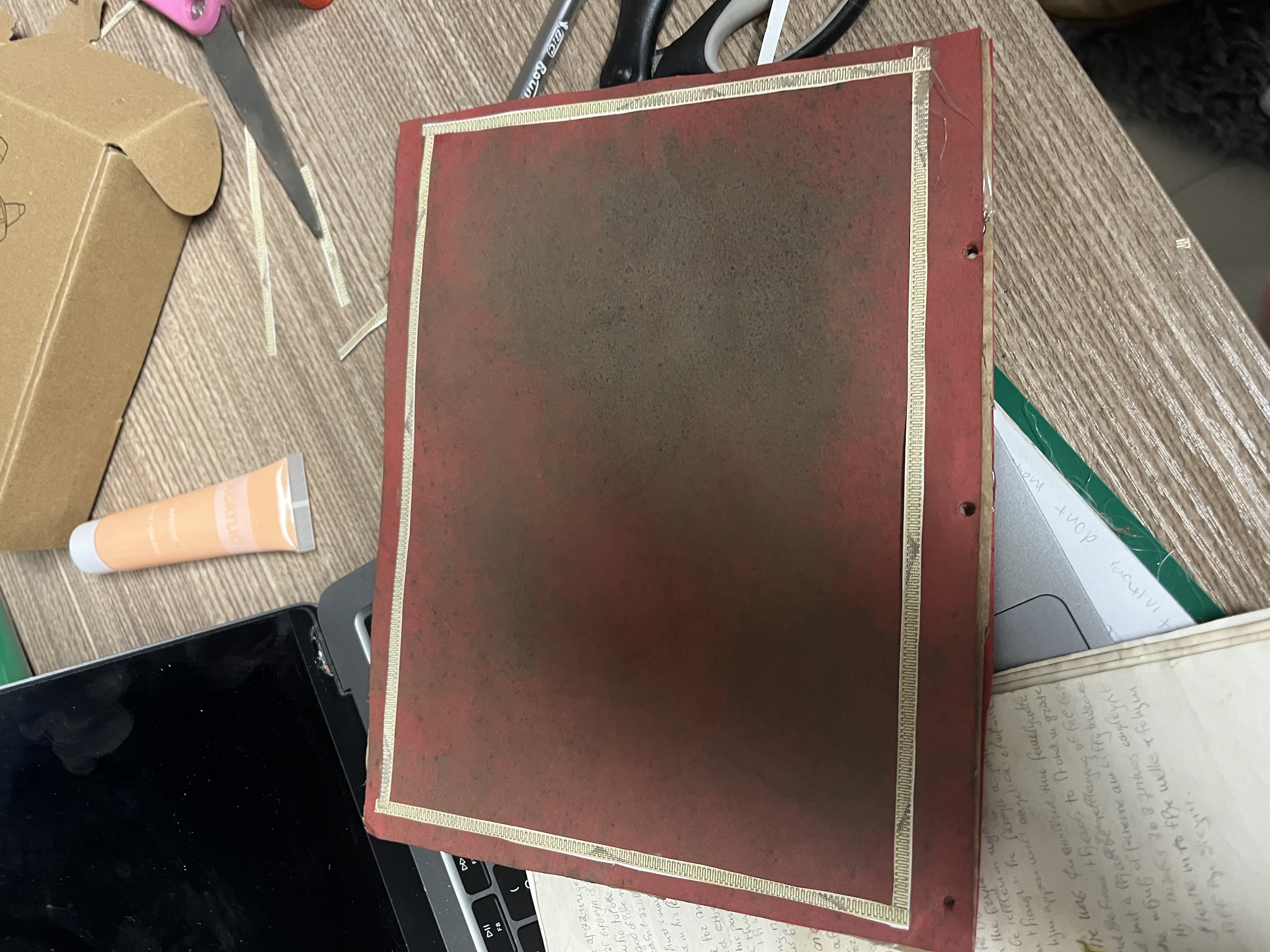
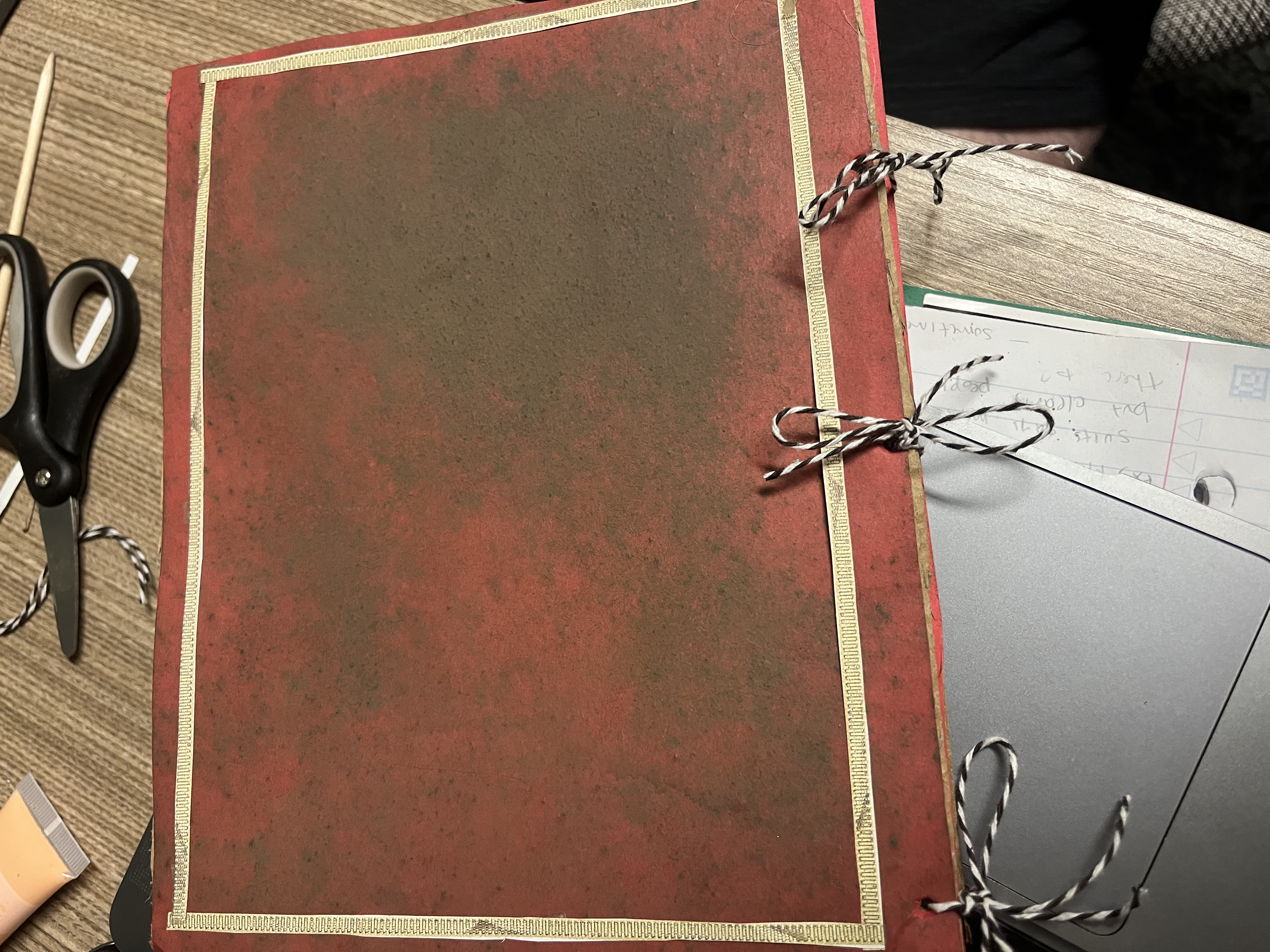
My role was the binder, so I was responsible for binding the manuscript together and creating a hardcover. There were a few issues that I ran into in this role. The hardest task being to bind the pages together. This process was difficult as I had to poke symmetrical holes in each page and cover. At first, I was unsure of what materials or technique to use in connecting the pages, but after careful thought and some advice from Professor Juarez, I decided on using a q-tip and yarn. My other option was to use staples, but figured I wanted to make the manuscript as accurate as possible, and understood that staples were not used back then. Another issue that I ran into was creating an accurate texture for the covers. It was time consuming, but allowed me to utilize some cool innovation techniques. To make the hardcover as accurate to the model, I chose to use red stock paper hot-glued onto cardboard. To get the old, worn features of the model manuscript, I soaked the paper in black coffee. I also cut strips of a design that was fairly similar to the border detail on the cover of the model, and glued these on along the edges of the manuscript. The coffee did not really give the cover the look that I wanted, so I decided to rub the paper in dirt outside. This process allowed me to employ innovation techniques that utilized natural resources.