Returning the Stone Lion from “Idol” to Cultural Artifact
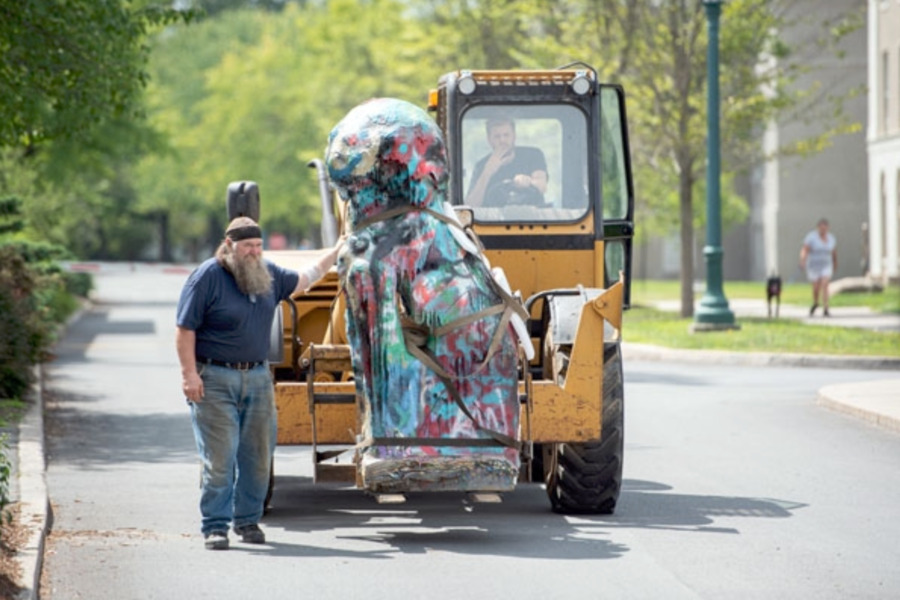
Removing the Chinese stone lion from campus, July 2021.
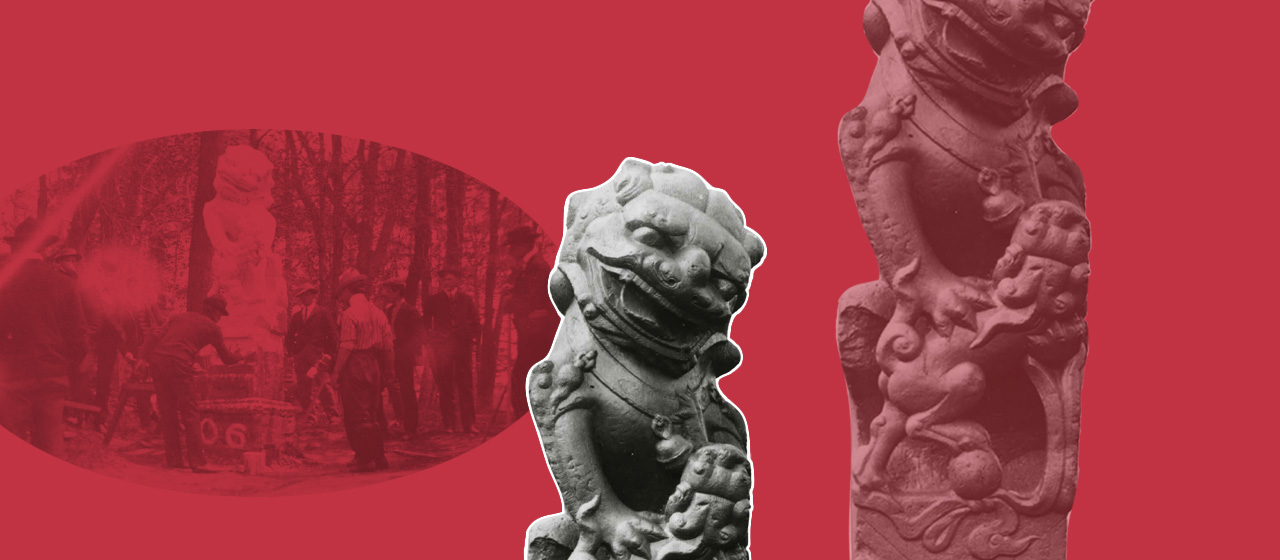
In a letter published in February 1943, H. Earle Furman, Union Class of 1894, proclaimed of “the Idol”: “There is a priceless relic on the campus of Union College and we know it not.” 1 By this time, the Chinese Stone Lion—donated by alumnus the Rev. John M. W. Farnham—had long been concealed by layers of colorful paint and had suffered repeated acts of damage and vandalism: it was toppled on several occasions and, as early as 1921, the cub was chiseled off, purportedly by students of a rival school. Mr. Furman was part of a larger group of alumni from the Class of 1894 who proposed a plan to restore the sculpture and bring an end to the painting traditions. However, because painting the lion had become such a cherished student ritual, the alumni’s efforts were ultimately overruled, and the class traditions continued largely unchanged into the early 21st century.
The efforts of the Class of 1894 were revived in 2020 with the creation of the “History and Symbols Committee,” a group of students, faculty, alumni and staff chaired by Dr. Deidre Hill-Butler and established at the request of then-President David R. Harris. The committee’s task was to research the visual landscape of the Union College campus and assess its impact on creating an inclusive learning and social environment. The Chinese stone lion was given high priority, with student perspectives considered first.
Although the painting traditions had continued as bonding rituals among students, many were unaware of what lay beneath the layers of paint and were surprised to learn they had been covering an authentic sculpture from China. Some felt strongly that more information about the work’s history should be shared with students. Students of Asian heritage along with those from China felt disheartened that they were unable to share this important piece of cultural heritage with the broader campus community. Also significant were the opinions of those who manage the college’s Permanent Collection, who like the Class of 1894, wish to practice proper stewardship of the work by protecting its physical integrity and displaying it as a valued gift.
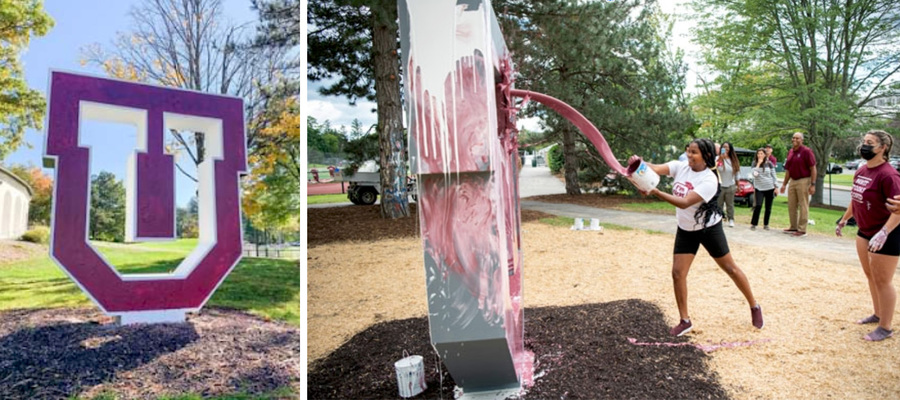
The stone lion was removed from campus in July 2021 and a sculpture of a “U” was installed in its place between the old Achilles Rink and Frank Bailey Fields as a new focus to carry on the legacy of painting traditions.
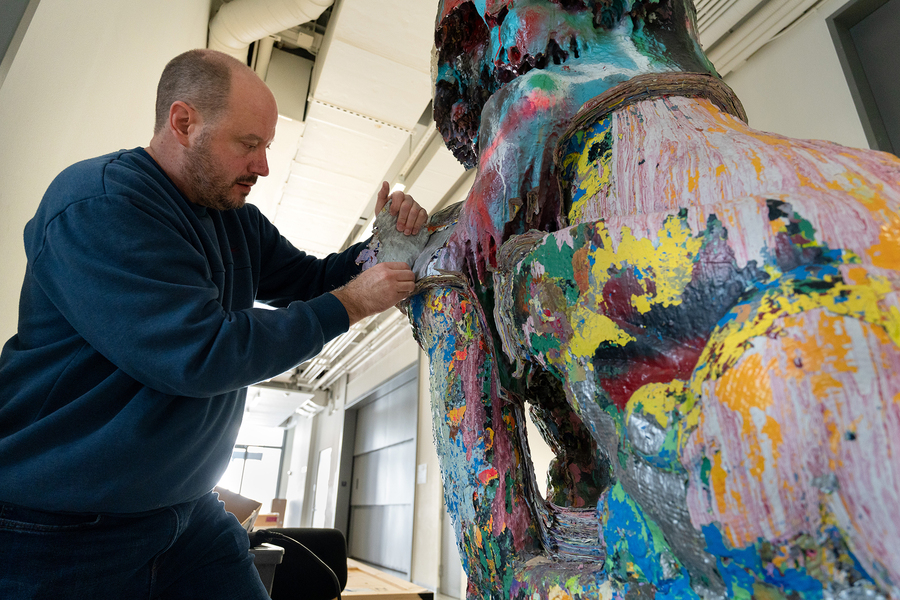
Removing top layers of paint at the WACC.
For nearly four years, the Chinese stone lion was in the care of conservators at the Williamstown Art Conservation Center in Massachusetts. The process involved careful testing and analysis to determine the safest method for removing the paint while preserving the sculpture’s integrity. Conservators first removed the uppermost layers of paint using controlled applications of heat. They then treated the layers closest to the original surface with chemical poultices, carefully lifting them with surgical scalpels and gently removing any remaining residue with cotton batting and soft brushes.
This meticulous work revealed original incised details, including the fine lines of the lion’s mane and tail, patterned and floral ornamentation at the base, wings on its back, and the 1876 inscription by Rev. Farnham. Further, Professor of Geology, Kurt Hollocher, analyzed a stone fragment and determined that the sculpture is made of marble with quartz inclusions. The work weighs just under 3,500 pounds.
So long shrouded in countless layers of paint, Union’s majestic stone lion is now displayed at this prominent campus crossroads as an honored work of Chinese cultural heritage.