-
Title
-
Hung Liu
-
Description
-
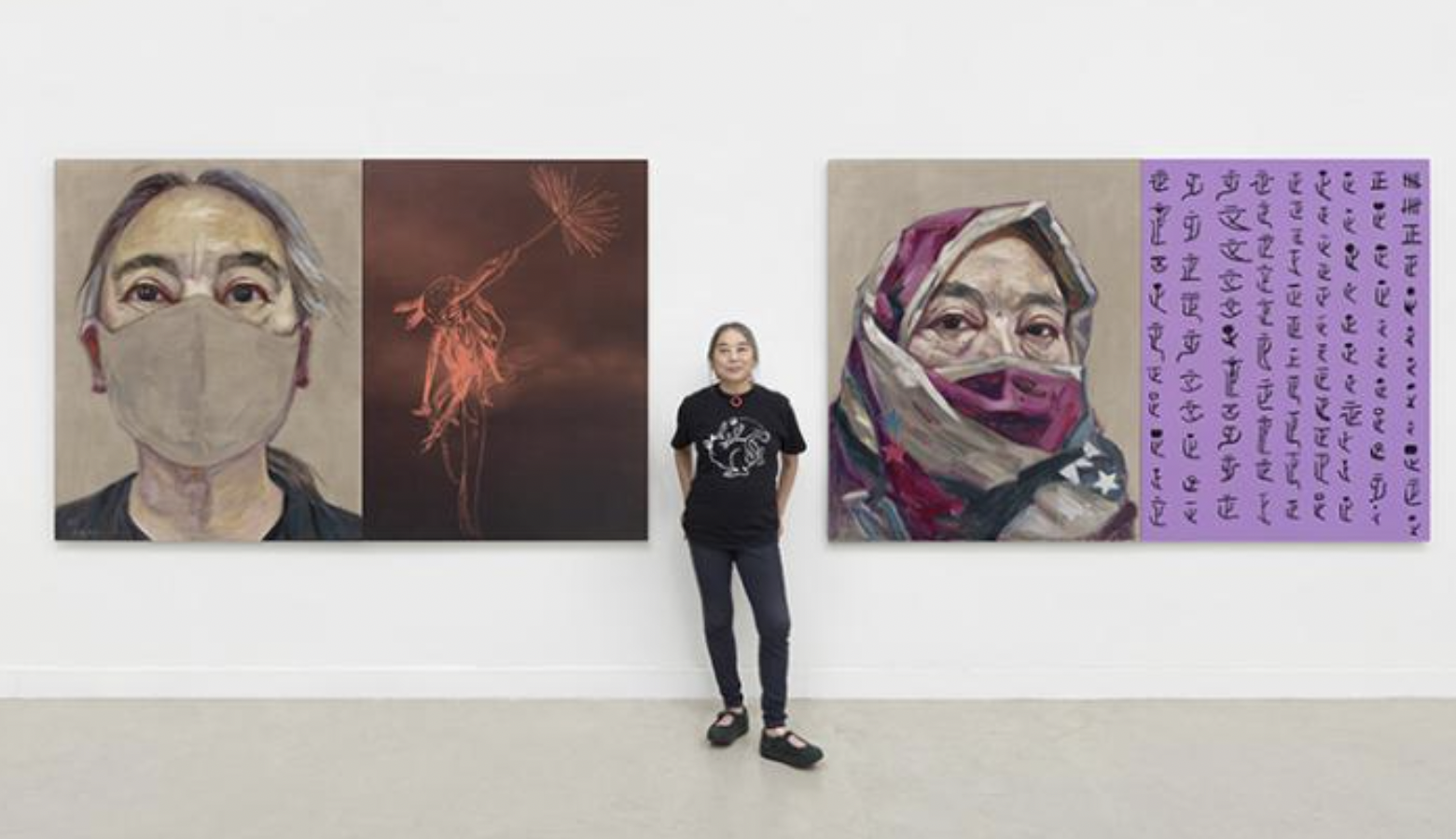
Hung Liu (1948–2021) was born in Changchun, China, and was alive during the Cultural Revolution (1966-76), a time that was one of the most intense political and social periods in Chinese modern history. This time shaped the way Liu approached her artwork. During her early twenties, Liu was forced into manual field labor as part of Mao Zedong’s reeducation campaign. These personal experiences of political oppression and displacement influenced the way Liu thought about art and storytelling (National Museum of American History 2021). Liu moved to the United States in 1984 to attend graduate school at the University of California, San Diego. Liu’s artwork focuses on honoring the lives of people who have been forgotten, oppressed, or erased from history. Many of her paintings are based on old photographs of Chinese laborers, refugees, and oppressed women. These are people whose stories were often ignored or disregarded. She used oil painting as her main medium, with a signature technique of dripping paint to symbolize the softness of memory and the passage of time. Liu learned this under Mao’s rule, but uses it to subvert the homogenizing ideals of socialism. Dorothy Moss explains that Liu’s layered paint acts as a veil, separating the viewer from the subject and reminding us of the complexities of history and remembrance (National Museum of American History 2021). Liu uses both Eastern and Western artistic traditions while highlighting immigrant experience and gender oppression. Her work not only recalls these stories but also challenges people to reflect on how history is told.
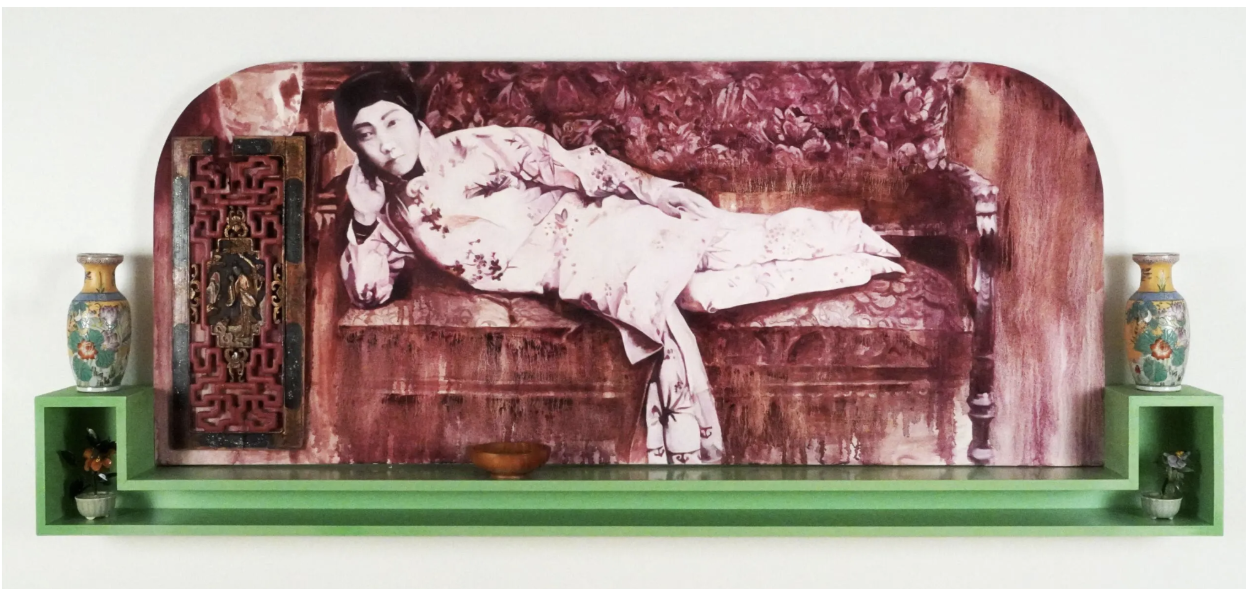
One of Liu’s most powerful pieces is Odalisque (1992), which is based on an old photograph of a young Chinese prostitute. The French term odalisque refers to a female slave or concubines depicted in western traditional paintings. Liu’s choice of this title is important because she links this Chinese women to Western art tradition that viewed women as sexualized objects. It is clear in this work that the woman is stuck, emotionless and put on display. Instead of letting the woman remain stuck as just an object in someone else’s photo, Liu brings her to life on a huge canvas, redirecting the viewer's gaze. Art historian Griselda Pollock explains that in doing this, Liu “opens up a window into the complex processes of perception and representation in the history of the relationship between China and the West” (Pollock 2003, 121). The woman isn’t nude like in those traditional Western paintings, but fully clothed in traditional Chinese garments. The use of dripping paint is also important, which softens the image and gives the sense that memory is always fading or changing. Liu even adds a shelf at the bottom of the painting with Chinese vases, emphasizing Chinese culture and turning the painting into what Pollock calls “a kind of updated altar to an ancestor” (Pollock 2003, 121). Through Odalisque, Liu isn’t just retelling history, but in a sense forces us to look deeper into why she is important. The painting honors this woman not as a nameless figure in a photo but as a human being and individual who deserves to be remembered.
-
Alternative Title
-
Odalisque
-
Source
-
Moss, Dorothy. “Hung Liu’s Art Keeps History Close.” National Museum of American History, Smithsonian Institution. Accessed April 2025.
https://womenshistory.si.edu/blog/hung-lius-art-keeps-history-close.
Pollock, Griselda. 2003. “Painting with Memory: Hung Liu’s Art of Recollection.” In Fresh Talk, Daring Gazes: Conversations on Asian American Art, edited by Elaine H. Kim, Margo Machida, and Sharon Mizota, 119–121. Berkeley: University of California Press.
ArtAsiaPacific. 2021. “Hung Liu’s Pulse (1989–1996).” ArtAsiaPacific. June 22, 2021. https://artasiapacific.com/shows/hung-liu-s-pulse-1989-1996.
-
Name
-
Daniel Sheeran