-
Title
-
Nam June Paik
-
Description
-
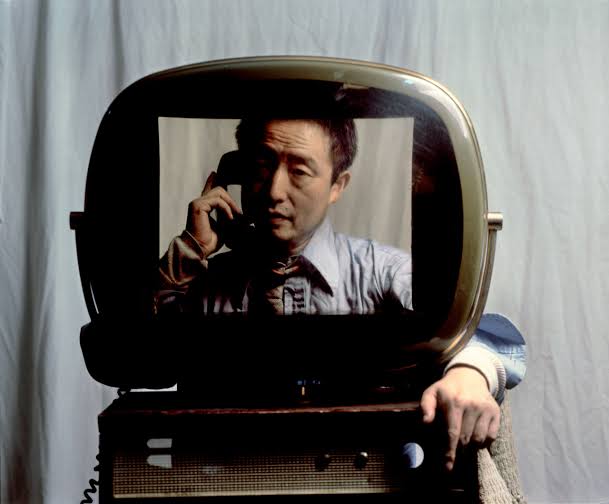
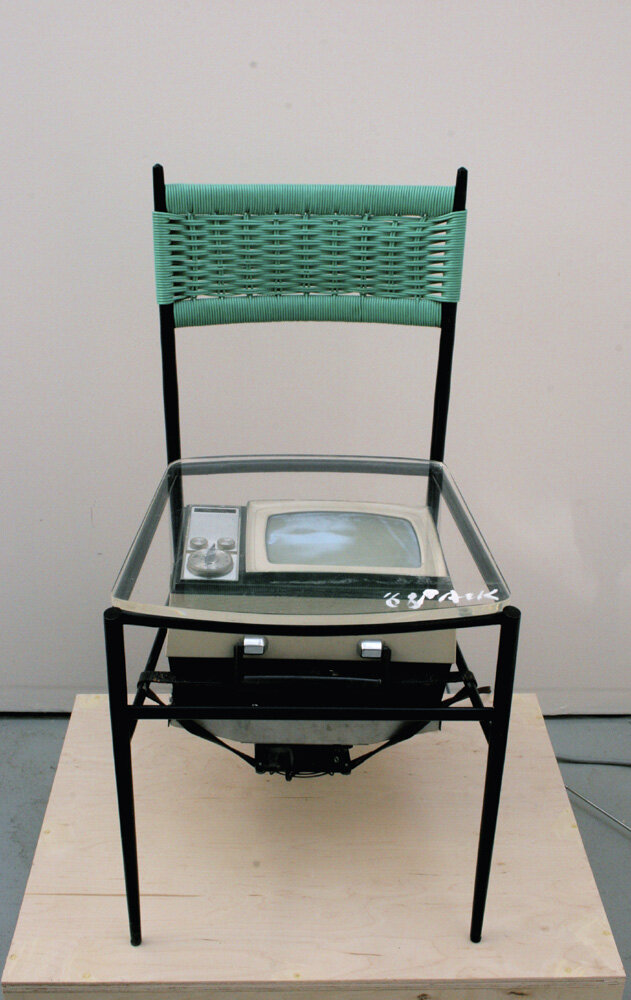
Nam June Paik was a groundbreaking artist who focused his work mostly around visual/video arts which he made popular. He was born into a wealthy industrial family in Seoul, Korea in 1932. Due to the Korean war his family fled to Hong Kong and then Japan in 1950 where he was until Paik came to the United States in 1956. He was widely known as the “father of video art” (Smithsonian, 2009) as he was the first one to make works of his kind. Paik graduated from the University of Tokyo in 1956 where he studied music and aesthetics, sparking his interest in art. Most of the training and early work that he was involved in in the United States was regarding music but the little bit of art connected to it is what made him get into the more visual side of art. Another motivator for him was working with people such as the very unorthodox musician, John Cage, which is what inspired him to make his untraditional pieces(New Yorker, 2013). As previously mentioned he was revolutionary in the electronic film-art industry and most notably known for one of his works named the “Electronic Super Highway” (1995), which he made to show the future of the US and where it was headed with technology. He often incorporated a television and video cameras into his art as it represented the future of surveillance and eyes being everywhere. Another one of his famous pieces was named “TV Chair,” which was simply a tv monitor underneath a chair with a glass seat. He made it in 1968 and is known for saying, “If you sit on it, you're in the image, but you couldn't see it!” (Smithsonian Mag, 2013) This was because there was a camera pointing at the chair and the live feed was underneath. His message was to show how media and real life are merging and in scary fashion. He was also commenting on how television and surveillance were starting to influence how people viewed reality and that when you were in it, you were truly unable to recognize this. He sadly passed away in Miami Beach, Florida in 2006.
-
Alternative Title
-
TV Chair
-
Source
-
Davis, Ben. “How Nam June Paik’s Past Shaped His Visions of the Future.” The New Yorker, October 10, 2023.
Maron, Melissa. “Photos: The Wit and Genius of the Father of Video Art, Nam June Paik.” Smithsonian Magazine, March 2, 2012.
Smithsonian American Art Museum. “Nam June Paik.” Smithsonian American Art Museum.
-
Name
-
Patch Flanagan