-
Title
-
Chiura Obata
-
Description
-
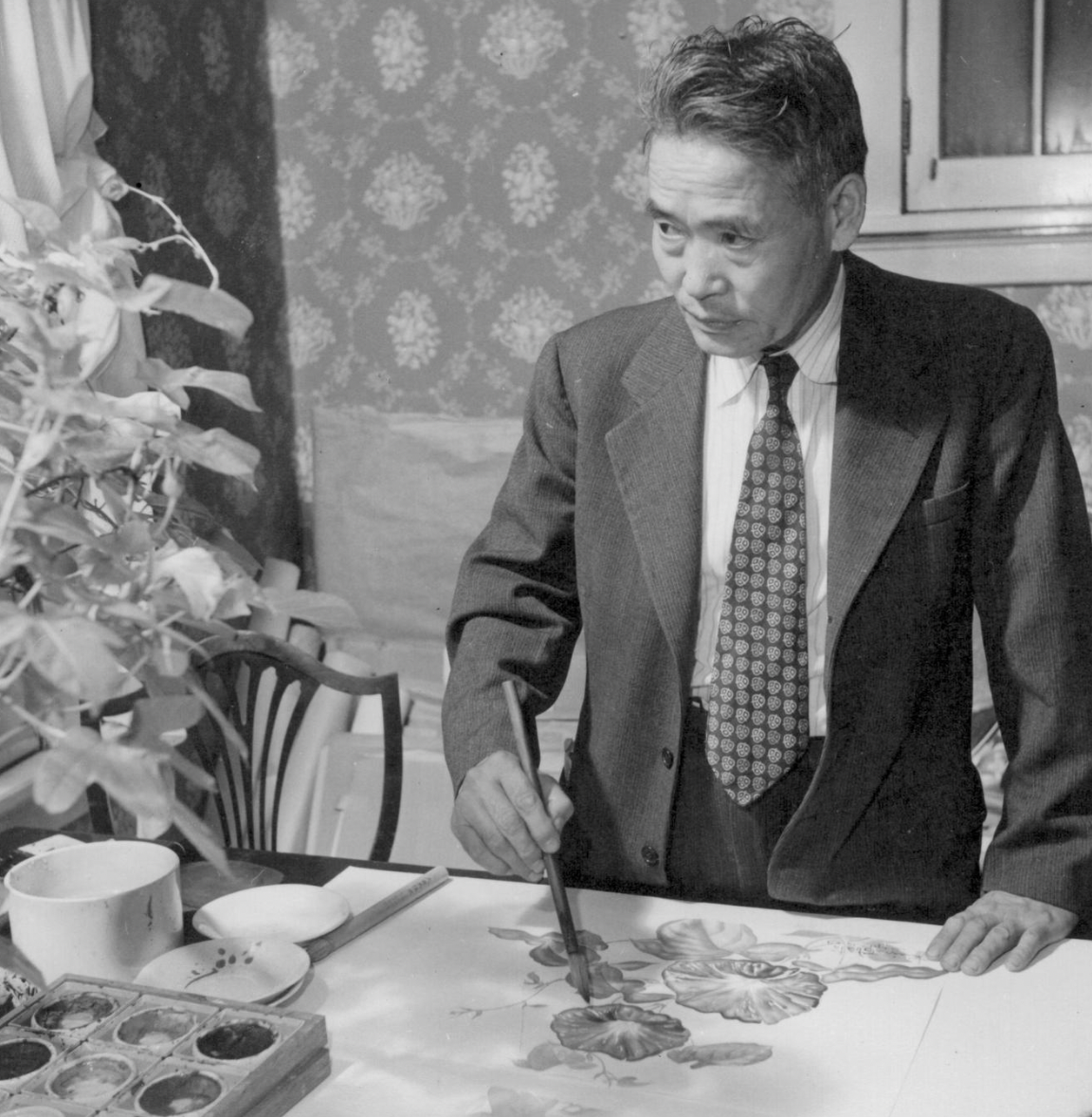
Chiura Obata was born on November 18, 1885 in Okayama, Japan and died on October 6, 1975 in Berkeley, California. Obata received elite art training in Tokyo, Japan before he emigrated to the United States in 1903. (Wang 2018, 10). Obata was instrumental in bringing Japanese brush-and-ink techniques to the West Coast. In Japan, he worked for seven years as an apprentice where he was forced to paint without resting his elbows. After he mastered those lines and circles, he was able to paint freely. During his early life, Chiura Obata was adopted and mentored by his older brother, Rokuichi Obata who was known for his Western-style of art. When he was 14, Obata’s older brother enrolled him in military school, but Obata fled to Sendai to work as an artist instead. (Landauer 1993, 18). In the United States, Obata became active in artist communities in California and became a professor of Art at the University of California, Berkeley from 1932-1954. After Japan’s attack on Pearl Harbor, Obata was incarcerated from 1942-1945 with 120,000 other Japanese Americans. Obata established art schools in the Tanforan detention center in California and the internment camp in Topaz, Utah. (Wang 2018, 10).
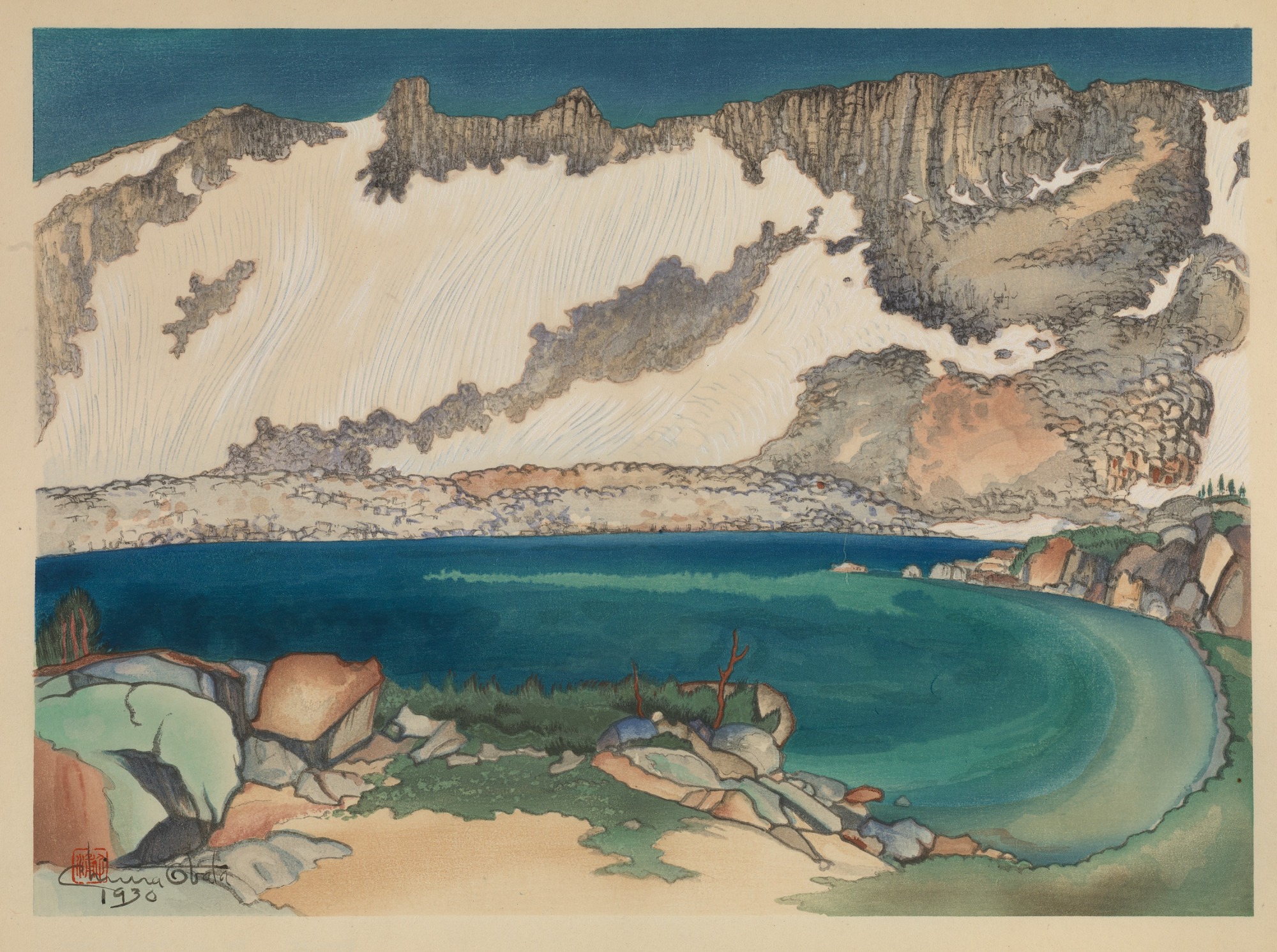
Obata is well known for his paintings and woodblock prints of Yosemite National Park, where he made many trips in the 1920s and 30s.. Obata spent about six weeks camping in the park where he sketched and painted everything. His work combines a sense of poetic expression and an eye for natural beauty. (Landauer 1993, 18). In Obata’s woodblock print titled, Lake Basin in the High Sierra, he started off by applying a pale base color, and then laid down the block in gray. This first step made sure that the entire paper surface would receive ink. The key block had the important linear outlines of the composition and mimicked brush strokes. Each layer was carved and transferred adding more color and detail in each addition. (Driesbach 1993, 60). Rather than painting the mountains exactly how he saw it, Obata aimed to capture how he interprets the experience of being surrounded by nature. This approach is aligned with East Asian art traditions of depicting nature. Obata’s use of bright colors, movement, and form shows that he can put his own spin on a site that had been visually captured hundreds of times before him.
-
Alternative Title
-
Chiura Obata, Lake Basin in the High Sierra, color woodblock print, 1930.
-
Source
-
Artist Image: “Chiura Obata.” SFMOMA, May 13, 2024. https://www.sfmoma.org/exhibition/chiura-obata/.
Art Image: Obata, Chiura. “Lake Basin in the High Sierra.” Smithsonian American Art Museum. https://americanart.si.edu/artwork/lake-basin-high-sierra-54549.
-
Name
-
Georgia Baer