
Items
-
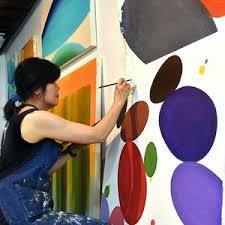 Yeachin TsaiYeachin Tsai is a Taiwanese artist who practices calligraphy and brush painting, starting her artistic career in her home of Taiwan. However, Yeachin Tsai moved to New York for her MFA. Here she is listed to have “developed a unique, colorful expression that retains its roots in Chinese paintings and embraces the playful and interactive energy and forms of Western abstraction” (Tsai, Info). She currently lives and works in Upstate NY. In an interview from her artist webpage, she describes her style and also comments on some of the deeper themes she encapsulates in her art. She has said that her style is “Modern/traditionalist. My work is deeply rooted in my culture, especially in Chinese calligraphy training” (Tsai, 2024). Regarding her artist journey, she states, “While growing up in Taiwan, I had the fortunate opportunity to study traditional Chinese brush painting and calligraphy with several accomplished masters. Since I moved to NY three decades ago, I have incorporated that training into my experiments with modern materials and idioms.” (Tsai, 2024). Yeachin Tsai’s paintings impressively combine facets of abstraction and color theories associated with Western Modernism with traditional Chinese approaches to painting, which are also exercises in abstraction. She achieves smoothness and a sense of unity with her brush strokes. In doing so, her art conveys what she describes to readers as a balance between the Chinese philosophical forces of yin and yang. Tsai has also stated: “Traditional Chinese calligraphy and brush painting are like classic Chinese poetry, it requires a certain form, and a lot of discipline. However, the most crucial point is the “spirit”, the Chi (energy) of the artist, which will be truthfully manifested on the paper, or any painting surface. The practice is very meditative.” (Tsai, 2024). All of these elements converge in her series of paintings titled “Naga Myth.” These are large, bold compositions that contain fluid strokes in a range of colors that fill up the page, vividly reminiscent of naga, or serpent bodies. As Tsai notes, Naga are powerful deities in Hindu and Buddhist cosmologies. They represent growth, regeneration, and are associated with “transcendent wisdom” (Tsai, 2024). These pieces also incorporate negative space, as she mentioned in her interview, the elements of the yin and the yang, and notions of how everything is intentional as well as connected. Yeachin Tsai’s art combines traditional and modern elements, with vibrant color and deep cross-cultural themes.
-
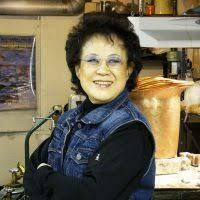 Komelia Hongja OkimBorn 1939, Seoul, Korea Komelia Hongja Okim is a Korean-born artist whose distinguished career bridges tradition and innovation in metalwork. Komelia Hongja Okim trained under the renowned metalsmith Alma Eikerman at Indiana University. “...her work reflects her national heritage and her use of Korean inlay, and keum boo, attatchments of fine gold foil to a fine silver surface by burnishing/heat to create a transparent effect that still permits the matrix to show through. Her more Western jewelry shows the influence of her mentor.” (Exhibition Reviews, 2017). Okim has developed a practice deeply rooted in her Korean heritage while also embracing the technical and conceptual influences of Western contemporary art. Her work blends ideologies from different cultures from the West and the East, bringing to light the differences and the harmonies. Okim immigrated to the United States in 1963 and has been a prominent figure in the metalsmithing community for over three decades. One scholar's review of her exhibit lists that “large and small sculptures, vessels and boxes, as well as jewelry, reflect the artist's maturity and skill, both in its quality of design and impeccable craftsmanship” (Isaacs 1994, 49). She is listed to use materials of silver, gold, and copper. As well as making jewelry, vessels, and sculptures. When exhibited together, these three bodies of work create a compelling dialogue, highlighting the continuity and refinement in Okim’s artistic language. One piece of work to highlight from Komelia Hongja Okim is her food container titled “One Fine Day”. This dry food container is divided into nine sections and is made out of fine and sterling silver using “mild steel setting construction oxidizing,” with a “sumac ottchil coating finish.” (Komelia Okim, 2020). Fine and sterling silver, mild steel” depicts the description of her fine craftsmanship with the addition of her heritage, combined with modern refinement. (Komelia Okim, 2020). Komelia Hongja Okim’s art celebrates form, texture, and heritage, revealing a mature vision that unites East and West.
-
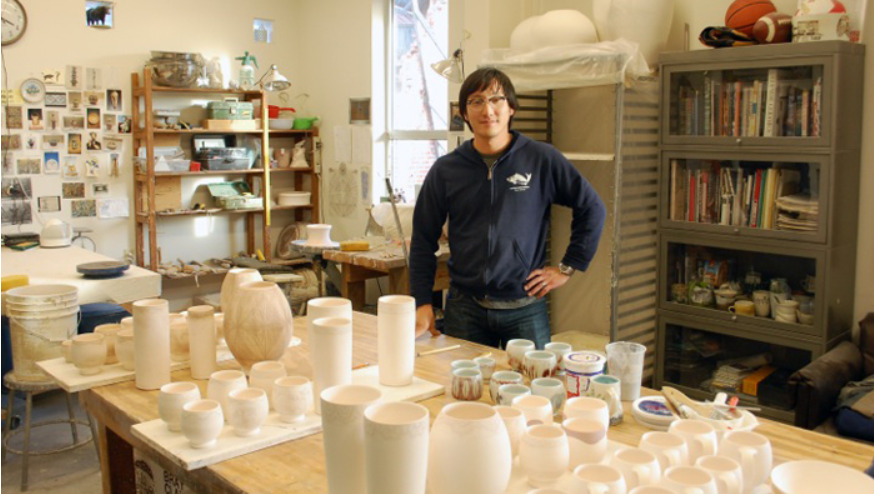 Steven Young LeeSteven Young Lee was born in Chicago in 1975 (Grace Kook-Anderson, 2021) as the son of first generation Korean immigrants. In an interview with the Smithsonian American Art Museum, Lee attributed his passion for ceramics to a high school art class where he was mentored by a great instructor, quickly becoming interested in the ceramic material and how it worked. Post high school, Lee continued his ceramic work at Alfred University in New York state, making straightforward pots for use at home. Over time he began attempting more intricate techniques crafting vessels that emphasized aesthetics over function. In graduate school he gained a passion for making artistic fragments that were abstract and had historical ties to Asian ceramic traditions (Smithsonian American Art Museum, Interview, 2016). After graduate school Lee moved to China in 2004 to lecture at universities in part of an exchange program in Jingdezhen, the ceramic capital of China. He also worked in Shanghai and Beijing, and spent two months in Seoul, South Korea, where he continued his study of ceramic technologies and aesthetics (StevenYoungLee.com, Biography Section, 2025). Since his experience with the exchange program, Lee moved back to America and currently resides in Helena, Montana. He has continued lecturing and ceramic making, and his works can be found in many prominent art collections, including the Smithsonian American Art Museum (StevenYoungLee.com, Biography Section, 2025). Most of Lee’s work in ceramics revolves around the creation of traditional forms of jars, vases, pots, cups, and platters that he often deconstructs (intentionally damages) (StevenYoungLee.com, 2025). Lee attributes his style of work to his mixed feelings of his cultural identity as neither fully a Korean or American, growing up in a household of first generation American immigrants (StevenYoungLee.com, Artist Statement Section, 2025). Lee also credits a Chinese influence on his work because of China’s historical and economic importance in ceramics. Specifically in his deconstructed pieces he emphasizes the value of failure, admitting that these damages are often unintentional (Smithsonian American Art Museum, Interview, 2016). Finally, Lee approaches topics of belonging, patriotism, and race-dependent culture in his work through color (StevenYoungLee.com, Artist Statement Section, 2025). “Vase with Landscape and Dinosaurs,” Steven Young Lee, 2014, porcelain with pigment and glaze. Sourced and displayed by the Smithsonian American Art Museum. Lee’s work “Vase with Landscape and Dinosaurs,” 2014, is made with porcelain with pigment and glaze and is on display at the Smithsonian American Art Museum. Lee uses blue and white pigment and glaze to reference traditional Chinese and Korean pottery. The deconstructed form contrasts with the perfection that can be seen in the rest of the vase increasing the tension between perfectionism and disruption. Within the blue landscape are unconventional motifs of dinosaurs, which is an interesting take on themes of time, and cultural survival. Similar to how ancient art traditions which Lee pulls from are reminiscent of the past, here he brings in dinosaurs to refer to values of cultural and historical preservation. Thus, “Vase with Landscape and Dinosaurs,” reflects upon and alters ceramic traditions through themes of perfectionism, deconstruction and historical coloring.
-
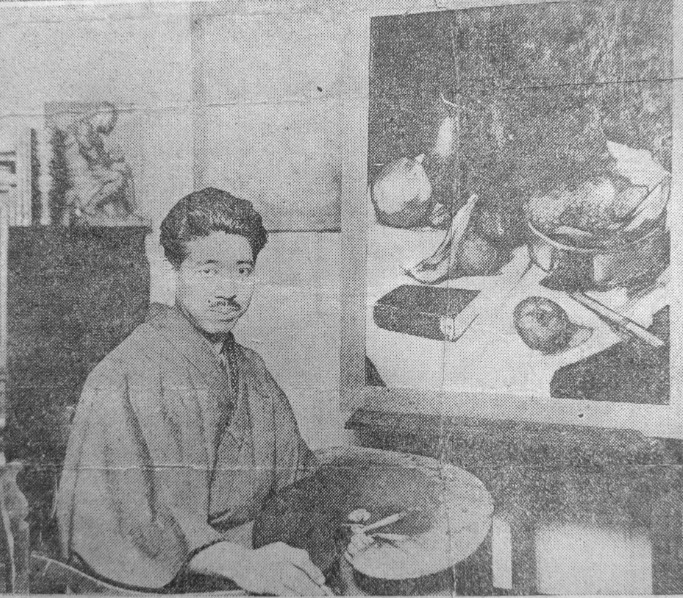 Eitaro IshigakiEitaro Ishigaki was born in 1893, and passed away in 1958 (Wang 2010, 7). In 1909, when Ishigaki was 16, he emigrated to the US to join his father, who was a migrant worker in Bakersfield, California. Upon arrival, Ishigaki worked low-wage jobs such as a fruit farmer, busboy, and hotel cleaner in Seattle, Bakersfield, and San Francisco. This experience developed his passionate support for the working class and unemployed veterans who became laborers after WWI, which can be seen through his work (Wang 2010, 12). After moving to San Francisco to live with his aunt in 1912, he was exposed to tensions between Japanese residents, specifically between those who promoted American values and those who advocated for Japanese nationalist views. Ishigaki sided with those who promoted Japanese Marxist ideologies (Wang 2010, 12). Two critical influences on Ishigaki’s work were his mentor Sen Katayama, who was regarded as “Japan’s first Bolshevik” by historian and pioneer of Japan’s first Social Democratic Party, Hyman Kublin, and John Sloan, who was Ishigaki’s art instructor during evening classes at the Art Students League in New York where he moved to work in 1915. Ishigaki took Marxist ideologies from his friendship with mentor Katayama, specifically Marxist views on labor and wages. From instructor Sloan, Ishigaki took an artistic focus on the representation of ordinary people surviving their daily lives through heartfelt portrayals of the vast differences in socioeconomic status (Wang 2010, 12-13). Eitaro Ishigaki produced politically charged, Social Realist oil paintings that focussed on themes of racial injustice, economic inequality, and labor struggle, often portraying African American subjects as heroic proxies for his own experience as an Asian immigrant in the United States (Wang 2010, 10-11). Ishigaki took an “interpretive realism” approach, a style that combined documentary representation with critical political commentary (Wang 2010, 10). Ishigaki’s political activism linked him with publications such as New Masses and the John Reed Club, both of which showcased revolutionary art advocacy for working-class causes (Wang 2010, 17-20). Ishigaki’s work was particularly impactful on American Art through its challenge of racial norms prior to WWII. Many similar works portrayed African Americans as passive victims. Ishigaki depicted them as central figures who confronted oppression, juxtaposing mainstream narrative (Wang 2010, 9). “The Bonus March,” Eitaro Ishigaki, 1932, Oil on canvas. Photo sourced from Wikimedia Commons. These aims can be seen in one of Ishigaki’s most prominent works, The Bonus March (1932), an oil on canvas piece standing 56.9 inches tall and 41.7 inches wide (Wang 2010, 8). The painting presents a moment during the demonstration of WWI veterans who marched in Washington, D.C. for advanced payment of promised bonuses during times of economic struggle. The painting centers on a towering, heroic African American holding up a lighter-skinned figure, who while limp in his arms, raises a clenched fist in resistance. In the background authority figures such as military generals and policemen are on the left, and are being opposed by the working class on the right, and tanks and the Capitol Building can be seen in the far distance. This painting conforms with Ishigaki’s leftist ideologies which he learned through personal experience as a minority. The painting depicts a theme of the demand for fair wages for the working class, and highlights systematic racism and economic exclusion, through the inclusion of an African American man as a powerful figure (Wang 2010, 10).
-
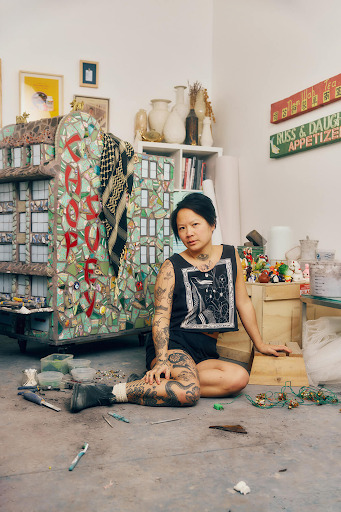 Stephanie H. Shih“I look backwards more than I look forward” (Shih, 1). Stephanie H. Shih, a Taiwanese-American artist born in 1986 in Philadelphia, Pennsylvania, was raised by Chinese-Taiwanese parents. While she was born on the East Coast, Shih grew up in New Jersey and earned her BS in Journalism from Boston University (AMOCA, 1). Shih is now based in Los Angeles, where she works as an artist and professor at the University of Southern California (Shih, 1). Growing up, she developed an interest in photography, starting with her father’s half-frame camera during childhood road trips. She later pursued photography more seriously in graduate school (Shih, 1). Her work has been featured in solo and group exhibitions at venues such as Hashimoto Contemporary in Los Angeles, USC Pacific Asia Museum in Pasadena, and the Royal Photographic Society in the UK (Shih, 1). Despite her success across the United States, from the East to the West Coast, Shih’s art remains focused on exploring the concept of "home." Known primarily as a ceramist, Shih’s work delves into the “contemporary and historical cultural dynamics of the diaspora” through her still-life creations, often centered around household items and foods common in Asian American families’ kitchens (Shih, 1). Shih recalls, “Growing up, sharing meals was extremely important to my mother. She was very strict about us all sitting down as a family every night for dinner. And so I think that gave me a certain appreciation for sharing food as a form of communication” (Budds, 1). This deep appreciation for food, combined with the simplicity of home life, is a theme that is vividly brought to life in her now-iconic ceramic sculptures. Shih’s ceramic style is rooted in the concept of Asian pottery, which she feels has not been fully explored, despite the importation of many Asian vessels, such as vases, to the United States (Hostetter, 1). Everyday items like Skippy peanut butter, Spam, Asian vinegar and condiments, and rice have been central to her ceramic collections (Atkins, 1). Shih has transformed the Eurocentric tradition of still life art by incorporating Asian elements into her work. She explains that Asian American still life art creates an “overdue dialogue between the symbology of Eurocentric still life style with that of Asian traditions,” highlighting the complexities of assimilating into American society (Shih, 1). One of the central themes of Shih’s work is the transformation of ordinary objects, such as condiments, into permanent art pieces. This sense of permanence is vital to her artistic ideology, as she believes that the meanings of objects can have a transformative impact on communities (Atkins, 1). The reinterpretation of these objects, especially in the context of moving between homelands, allows for the creation of new emotional memories, which are acknowledged through their "ceramic form" (Atkins, 1). One of Shih’s most significant works, which helped launch her career, is her dumpling piece, in which she molded 30 identical dumplings by hand using clay. She recalls that while making the dumplings, she could hear her ayis, or aunties, teasing each other about the quality of each other's dumplings (Kirts, 1). When Shih posted a photo of the dumplings on Instagram, she was overwhelmed by the support from Asian Americans who shared a sense of nostalgia, despite coming from diverse backgrounds and living in different parts of the United States (Kirts, 1). This response prompted Shih to reflect on these interactions, which led to the creation of other works, such as “Gold Plum Chinkiang Vinegar.” The dumplings piece not only sparked conversation among those with similar backgrounds but also became a powerful representation of cultural experience in the United States. By elevating the dumpling—a seemingly ordinary food item—into an art form, Shih bridges the Eurocentric still life tradition with her Asian heritage. This transformation of an emotional memory into art provides a social commentary on the intersections of heritage and assimilation, made even more poignant by the feedback she received from her social media followers. In an interview with Cultured magazine, Shih notes that Asian culture will never be mainstream, which is why Asian America remains such an emotional and shared space (Hostetter, 1). What began as an image of porcelain dumplings—often “fetishized” as part of Chinese culture—unintentionally reinforced stereotypes. For instance, in response to her dumpling post, some white commenters suggested, “You should make them look like they’re dipped in soy sauce” (Shareff, 1). Shih reflects that soy sauce has itself become a trope in the way Chinese food is viewed in America (Shareff, 1). The mixed feedback prompted Shih to reevaluate her ceramics and sculptures, further exploring her Asian heritage and using her art to bridge the gap between her identity and her creative work (Shareff, 1). Shih currently resides in Brooklyn, New York (Berggruen, 1). She recently launched a solo exhibition in San Francisco, focusing on the cultural history of the city's Chinatown, and continues to work in Los Angeles (Shih, 1).
-
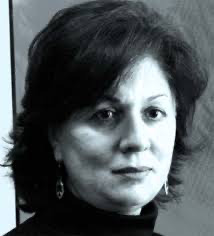 Lubna Agha“My inspiration stems from visual images that were once seen daily but are now part of history” (Art in Embassies, 1). Lubna Latif, also known as Lubna Agha, was born in Quetta, Pakistan, in 1949. Her family had moved from Delhi, India, when her father decided to work in the newly created country of Pakistan. She came from a well-educated and respected family and inherited her love of art from her mother. Her mother would draw and replicate pictures from magazines and was also talented in making embroideries. After graduating high school in Karachi, Agha enrolled in the newly opened Mina School of Art in Karachi, where she earned several awards, including the Ghalib Gold Medal for her watercolor work (News Line, 1). She later taught painting at Ali Imam’s Central Institute of Art for a year and held her first art exhibition at the Pakistan American Cultural Institute in 1969 (Pakistan Link, 1). Agha eventually migrated to the United States, where she enrolled at Sacramento University, California, where she focused on printmaking. In addition, she adopted painting small watercolors in her home as well (Sirhandi, 1). Her life in California turned out to be a “turning point” of sorts. Her drawings eventually captured the alienation and sadness over the political, social, and economic conditions developing in Pakistan, particularly how Pakistan was becoming increasingly dependent on foreign institutions. Some of Agha’s work, however, was also a political statement. Her concern for this was expressed through her work in the “Ja-namaaz” series, in which she printed prayer rugs that mocked allegiance to institutions (Sirhandi, 1). Lubna Agha’s work also emphasized her connection with Islam. As depicted in Art in Embassies, oftentimes she will paint mosque pillars, a pen box and “rehel” which is a Quran holder. These connections with Islam are connected through the element of “mark- a dot” or “brush stroke no-lines” (Art in Embassies, 1) is another piece of work that showcases her reconnection to Islam, and heritage expressed through handmade objects that required her to use repetitive designs (Sirhandi, 1). Much of Agha’s work is inspired by her travels around the world, including trips to Turkey and Morocco in the 2000s. Old-world Islamic abstract art, in particular, caught her eye. Her inspirations included “minarets, domes, muqarnas, motifs, calligraphy, and lattice work” which she reproduced in her own style (News Line, 1). In addition, each art piece was crafted with individual dots of paint. According to “Art in Embassies,” Agha would describe her work as “modernist” while still capturing residues of the older world she had encountered in her life (Art in Embassies, 1). The work featured here is an image from one of her famous series called the “White series.” This painting is described as a minimalist piece, “with cotton ball shapes delineated by calligraphic lines and sweeps of black and red paint” (Sirhandi, 1). The “White series” from 1971-1980s not only saw the maturation of abstract style, but also showed a shift in how she interpreted her own work. For instance, she stated, “My work dealt with the inner world; the world of the subconscious” (Khawaja, 1). Therefore her work not just within her art, but her approach on life shifted from the outside perspective to one more of subjective expression. This series represents her “abstract” phase of art, in which she was highly sensitive of her surroundings from her travels. Agha was described as highly sensitive to the outside world as well as the inner world, in which she would she would capture “...the aspen trees of Colorado rendered in broad brush-strokes, the winters of Boston, the Arabesque-patterned symmetry of Moroccan screens — all attested to an open-minded approach to life and art” (Khawaja,1). This signifies a bridge between external observation of the world with the internal world of finding a connection within herself. Through combining modernism with Islamic art, she showcases her evolving understanding of herself, while finding unity between her outer and inner worlds. Agha tragically passed away on May 6, 2012, in her home in Boston, Massachusetts, after battling cancer (Pakistan Link, 1).
-
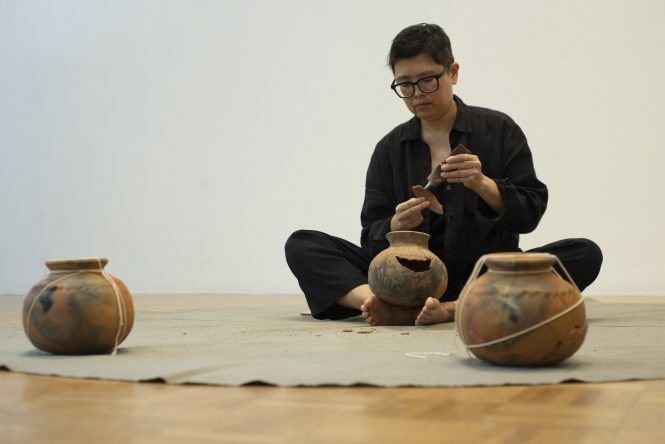 Amy Lee SanfordAmy Lee Sanford is a Cambodian-American sculptor and performance artist who uses her work to explore the intersection of trauma and healing. She was raised in the United States by her Swedish-American mother and gained a degree from Brown University in Visual Arts specializing in biology and engineering. Sanford also studied at the Rhode Island School of Design, University of Massachusetts/Dartmouth and Harvard University. She has art all over the world in places like Munich, Amsterdam, UC Santa Barbara, Australia and Denmark (Sanford 2019). Her father disappeared in 1975 after being imprisoned by the Khmer Rouge, and her mother passed away suddenly when Sanford was fifteen (selfportraitsofcolor 2018). This work featured above is an image from a clip titled Cascade which is an 11 minute video from 2014. The work was displayed at the Bathurst Regional Art Gallery in New South Wales, Australia (Sanford 2019). In this work Sanford moves around pieces of a reproduced letter from her father who was persecuted and killed during the reign of the Khmer Rouge (Lyno 2025). She uses the pieces as a metaphor for the elusive process of reconstructing personal historical narratives (Lyno 2025). As she rearranges and assorts the pieces, we can see how complicated the idea of personal history can be and that there really isn’t a singular definitive history for one person (Lyno 2025). Cascade is similar to her other works where she engages in an approach of breaking and repairing, which is meant to represent the process of trauma and healing (Stranger 2015). This can be seen in a similar work, Full Circle in which she systematically broke and mended Cambodian clay pots over multiple days to symbolize cycles of destruction and restoration (selfportraitsofcolor 2018). Overall, Cascade serves as a space where personal history intersects with broader themes of cultural displacement, the reconstruction of memories, and resilience.
-
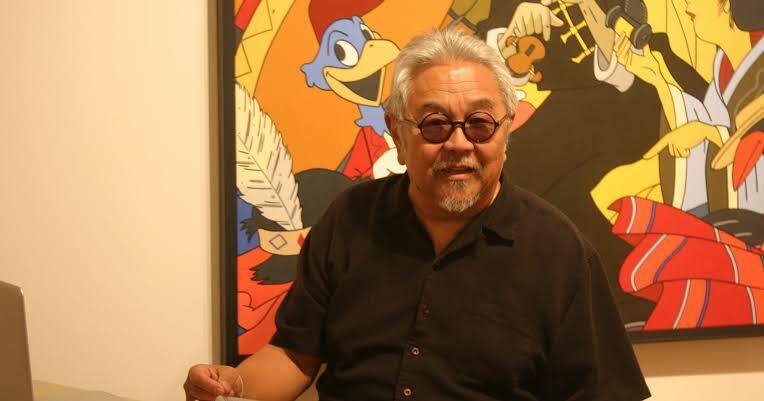 Roger ShimomuraRoger Yutaka Shimomura was born in Seattle Washington on June 26, 1939 and is a third generation Japanese-American (“Roger Shimomura” 2019). He was born three years before the executive order that mandated the internment of 120,000 Japanese Americans during WWII (“Roger Shimomura” 2019). Following his release from the camps, he lived for a time in South Chicago and later returned to Seattle in 1945 (“Roger Shimomura” 2019). He lived in a district with many other Japanese Americans. Shimomura attended the University of Washington and earned his graduate degree from Syracuse University (“Roger Shimomura” 2019). He taught at Kansas University beginning in 1969, where he was known for being very tough on his students. He retired in 2004 (“Roger Shimomura” 2019). Shimomura’s art combines American pop culture images, like superman, with Japanese woodblock prints that are inspired by his own experiences with racism. He also draws from the diaries of his grandmother which she kept over a fifty-six year period (“Roger Shimomura” 2019). His work has been known to explore the emotional and psychological hardships of internment experiences (“Roger Shimomura” 2019). While he was a professor he looked at the complexities of American cultural identity and the challenges of being Asian American in the U.S. (SisumD 2019). This portrait is of Shimomura as George Washington crossing the “Delaware” with Samurai soldiers. The original work is the well-known American painting, Washington Crossing the Delaware, by Emanuel Leutze (1851). Traditionally this body of water is the Delaware River, however Shimomura decided to make it resemble San Francisco Harbor, and the Angel Island immigration station is part of the background (SisumD 2019). He uses the traditional, Japanese Edo period ukiyo-e woodblock print style (although here, he paints the image in acrylic on canvas), common since the 17th century. Shimomura uses this work as a way to “discuss Americanism and patriotism and how the two ‘isms’ apply to all Americans across racial and ethnic lines (SisumD 2019)”. It is possible that Shimomura is exploring the idea that Japanese Amerians and other immigrants perhaps made equally meaningful contributions to America than a figure like George Washington.
-
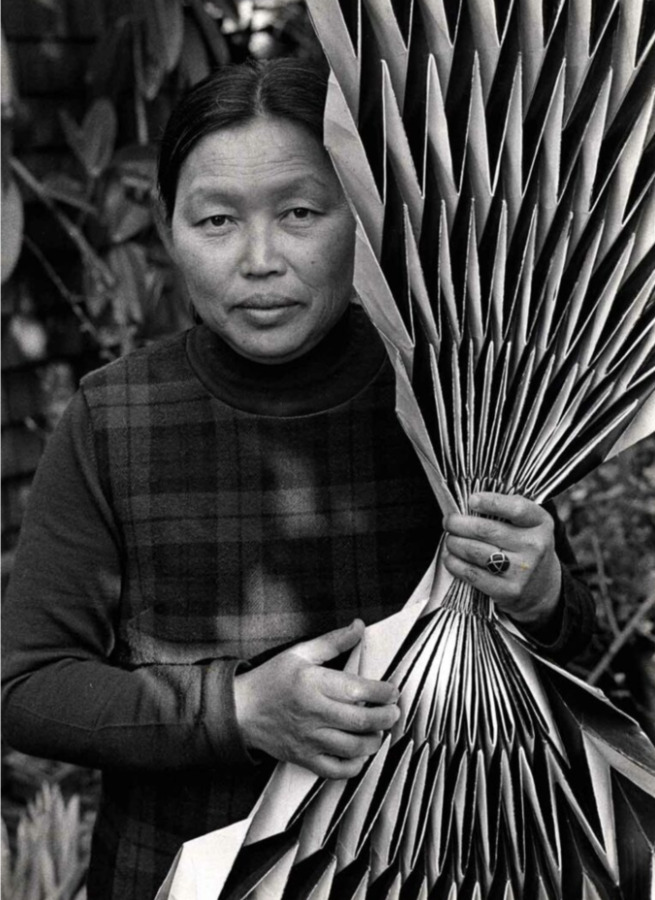 Ruth AsawaRuth Asawa (1926–2013) was a Japanese-American sculptor known for her complex wire sculptures and overall innovation in the art field. Asawa was born in Los Angeles, California, to Japanese immigrant parents. Asawa’s early years were difficult, as she was incarcerated along with 120,000 other Japanese and Japanese Americans in internment camps during World War II (Ruth Asawa Lanier, Inc. 2025). She also worked several jobs at a young age in order to compensate for her family’s poor economic status amidst the Great Depression (Ruth Asawa Lanier, Inc. 2025). These experiences clearly influenced her later work, as they instilled in her the forces of resilience and transformation (Min 2018, 138). After World War II, Asawa went to the Milwaukee State Teachers College. She then studied at the Art Students League in New York, where she developed her signature style. Asawa also studied at Black Mountain College, where she learned from artists like Josef Albers and developed her unique style (Ruth Asawa Lanier, Inc. 2025). Her time studying in Mexico, where she was exposed to the works of artists like Diego Rivera, also influenced her style (Nakahira, 2024). Asawa’s sculptures were typically made from delicate wire and/or metal. Her work is very unique and easy to recognize, as she utilized intricate loops and bulbs that create the illusion of movement and depth. Asawa used materials like wire to produce works that appear both organic and geometric (Higa, 2012). Asawa contributed to American art in more ways than just her artwork. She also had a role in the civil rights movement, as she strongly advocated for art education. Asawa believed that art should be easy to access, and her contributions to art and civil rights demonstrate her own commitment to expanding the role and accessibility of public art (Min, 2018). One notable work by Asawa is Untitled (Wire Sculpture) (c. 1956), which is a hanging wire sculpture. The piece is made from thin wire and appears as a sphere with multiple openings. These openings allow light to pass through to create interesting shadows. The open form of this piece evokes the concept of infinity among the viewer (Min, 2018). Asawa died on August 5th, 2013 at 87 years old. There is a memorial of her life in Golden Gate Park outside of the deYoung Museum. Ruth Asawa’s legacy as an artist and advocate continues to inspire generations, years after her passing (Ruth Asawa Lanier, Inc. 2025).
-
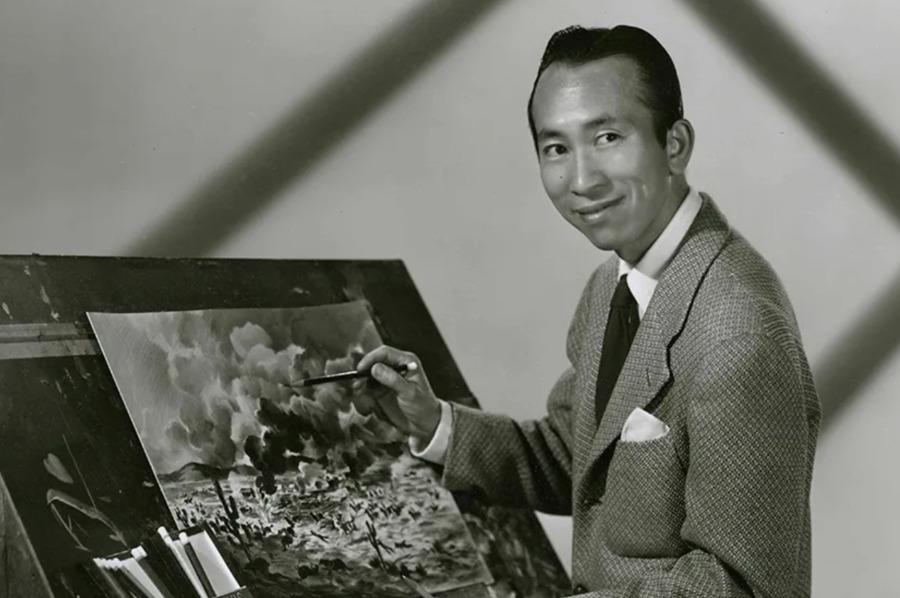 Tyrus WongTyrus Wong (1910–2016) was a Chinese-born American artist who greatly influenced American art and animation. Wong was born in Taishan, Guangdong, and immigrated to the United States with his father in 1919 as a Paper Son. Wong and his father settled in Los Angeles, where he experienced poverty and racism (PBS, 2017). Although this reality was difficult, Wong persevered by capitalizing on his impressive artistic talent, earning a scholarship to the Otis Art Institute. Here, he learned and trained in Western painting techniques while also remaining deeply connected to his heritage, utilizing Chinese aesthetics (Lo Wang, 2015). Tyrus Wong is likely best known for his innovative development work on Walt Disney’s Bambi (1942). A standout example of his work is one of his untitled concept paintings for the movie (pastel on paper, c. 1940, Walt Disney Animation Research Library). This piece depicts a forest, with a small deer in the center surrounded by light. Rather than focusing on detailed flowers and shrubs, Wong makes this piece powerful through subtleties and negative space, which are hallmarks of Chinese landscape painting traditions (Zhang, 2021). These techniques allow the viewer's eye to gently move through the scene. In this piece, Wong uses vibrant, colorful pastels. It is likely Wong learned this during his time at the Otis Art Institute, where his mentors experimented with colors as a way to convey movement and emotion (Fang, 2025). Overall, Wong focused on simplicity to evoke mood and natural beauty in the viewer rather than realism (Yoshihara, 2013). Wong’s techniques through his artwork allowed Bambi’s story to unfold in a way that mirrors the themes in the movie, such as innocence, beauty, and loss (PBS, 2013, 3). His artistic approach to Bambi reshaped how the artwork behind animation could shape the telling of a story as a whole. Wong passed away on December 30th, 2016 at the age of 106, and is survived by his three daughters (Bryant, 2016). Wong is rightfully celebrated as an artist whose legacy transformed animation and broadened American art.
-
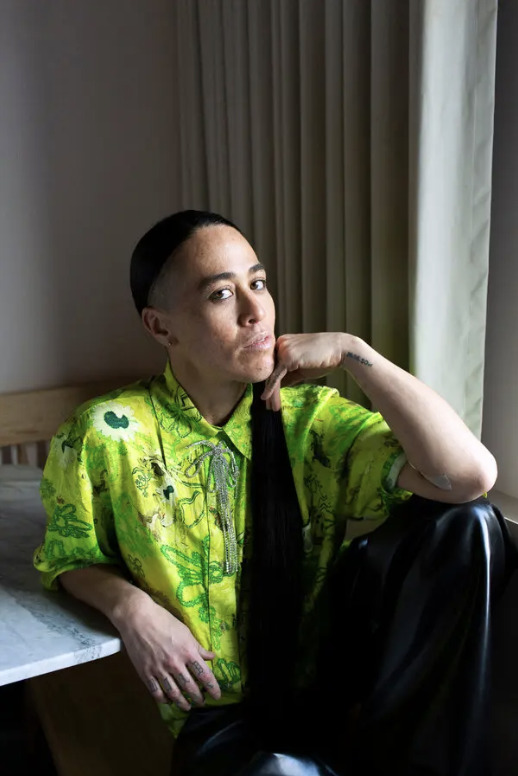 Wu TsangArtist Wu Tsang, born in 1982 in Worcester, Massachusetts, is an internationally acclaimed MacArthur Fellow and openly queer artist who works in mixed media. She uses her art to highlight the stories of people that are not often told, focusing on the exploration of queer/trans rights and the narratives of people of color/immigrants. It is clear through her work that she has a particular interest in traditional storytelling, using dance, poetry, and cinematic scenes to bring written words to life. One of Tsang's most famous works is a project inspired by Herman Melville’s classic novel: Moby Dick (1851.) Tsang created two films that were inspired by this traditional tale. In 2022, Tsang made the film “Moby Dick,” also called “The Whale.” This artistic adaptation of the story of Moby Dick features queer characters and characters of color, completely flipping the script on the original story. Moby Dick was a significant choice for this adaption because it is a story that does not traditionally welcome anyone other than straight, white characters. However, like all theatrical narratives, there is a level of whimsy that already exists to be crafted into something modern. This specific adaptation was written by Sophia Al Maria and directed by Wu Tsang: Tsang recasts, “two of the novel’s main characters, Ishmael and Queequeg, as lovers and the ship’s crew as a community that has partly transcended gender and race. It features queer sex (Rogers, Thomas) The film also focuses greatly on the story of the whale itself, following the creature above and below the surface of the ocean. In the films, Tsang combines art forms such as poetry and dance. Costumery is also incredibly important to Tsang. As seen in figure 3, it is clear that the costumes emulate classic portrayals of pirates while modernizing them, for example the headpiece in the image is made of silk and the ruffles along the wrists are ruffled and more flamboyant than traditionally seen. Modernizing the pirate is significant because it plays into the entire function of the film, taking a traditional figure and developing their presentation to fit into the realm of a queer portrayal of the story. Tsang’s other movie “Of Whales” is a silent feature film length movie focusing on ambient images and sounds of underwater. The images put forth deep dark blues and showcase the animals moving in a dance-like sense, making the viewers feel as though they are in an aquarium and not a museum. Taking the onlookers out of the museum space almost converts the performance to reality, blurring the line between what is real and what is fake. Tsang’s work has been featured in many museums including the Modern Museum of Art in New York and the Chicago Art institute.
-
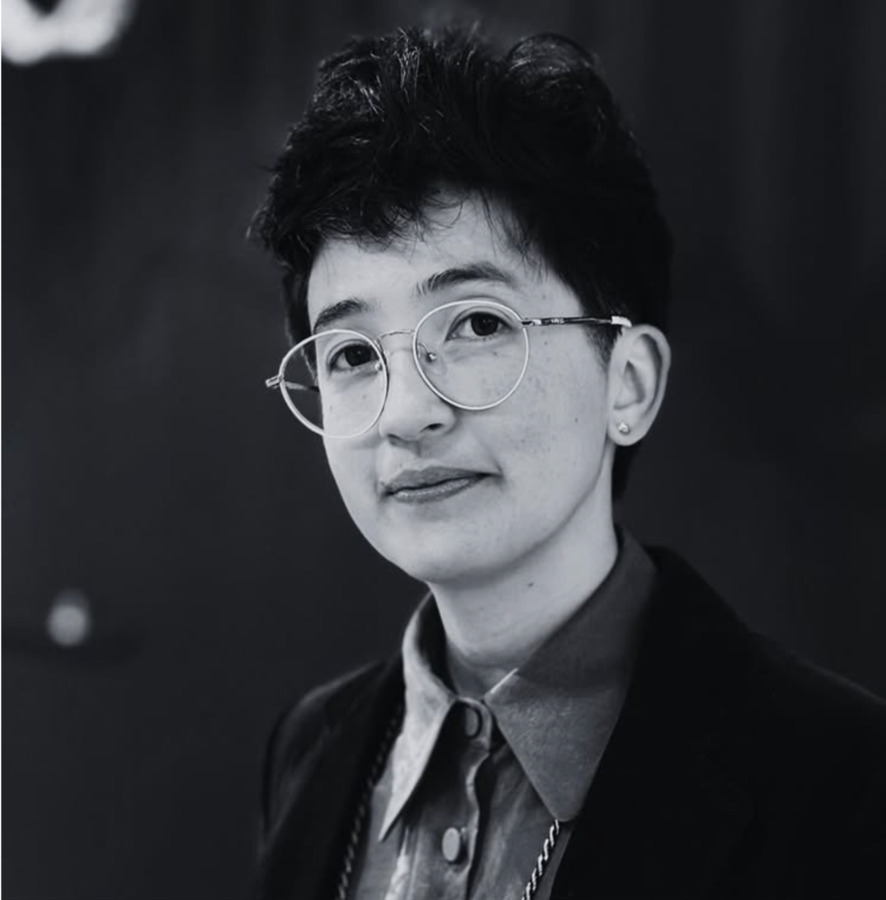 Sun Park (1991 - )Sun Park (they/them) is a Korean-American visual artist and writer from San Francisco, California. Their work focuses on bodily sensations, identity, and the environment and is influenced by their own experiences with spirituality. They are a Union College alum, Class of 2013, and received their Masters Degree in Fine Arts from San Francisco State University in 2023. During their time as a student at Union, Sun often worked with Professor Fernando Orellana. More recently, they came back to Union this past Winter Term to teach a course in digital arts. Though their work used to consist of mostly paintings, Sun considers themself to be a more multi-media artist now, employing video, ceramics, performance, installation, stained glass, and even slime into their work. They also occasionally do stand up comedy. In their exhibition Bulls in the City, titled after a story they wrote when they were 8-years old, Park explores themes of resource scarcity, competition, and power, as well as gender and sensory relationships through self-stimulatory (stims or stimming for short) behavior. For example, in the piece, From the water, sparkling & heavy, which is installed at the threshold of the gallery space and presented as a curtain made from plastic lace and seagrass, Sun explores their relationship with gender and memory through hair. When they got their first masculine haircut, which was actually part of a performance piece in the same space, they described it as touching freshly cut grass, a hair-sensation very different from the one they had previously known. Thus, the piece is a nod to the long hair they had before, depicted by the lengthy strands of plastic, in contrast to the masculine haircut they have now. Additionally, the seagrass used in the piece alludes to their own memories of growing up by the sea. From the same exhibit, in the piece Bulls in the City (pictured below), the original story was inscribed on paper and displayed using tacks facing the opposite way in the exhibit. It reads: One day two bulls found lots and lots of grass. Each one thought the grass would be his to eat. But since both of them were there, each one thought the other would steal his grass. So they started to fight. The bigger bull, who often ate lots of grass and flowers, won. The smaller bull hardly ate anything, so of course the big bull won. From a different installation, Sun’s work Caught Up was presented alongside another piece of theirs, Dreams of the Room, at the San Francisco Arts Commission Main Gallery. The piece is suspended in space in such a way that it appears static, a frozen image, but also active, in a moment of flowing, twisting or curling, and gathering unwanted influences or spirits that may try to enter the space. The shadow this display then creates also highlights the spirituality of the piece, emphasizing the tangible and intangible and the auras objects might possess. Composed of sand, salt, and gochugaru (a coarse chili flake commonly associated with Korean cuisine especially kimchi; Hongu et al., 2017) mixed with slime and spread on plastic, Caught Up utilizes its materials as well as its display to ward off unwanted spirits (Jung; Moga 2009; Suzuki 2014) while also tying in Sun’s Korean heritage and Christian spiritual upbringing. Currently, their artwork can be found on display in Edge on the Square’s exhibition All Eyes on Us: Invention & Ingenuity During Artistic Diasporas in San Francisco. More information here: https://www.edgeonthesquare.org/all-eyes-on-us.
-
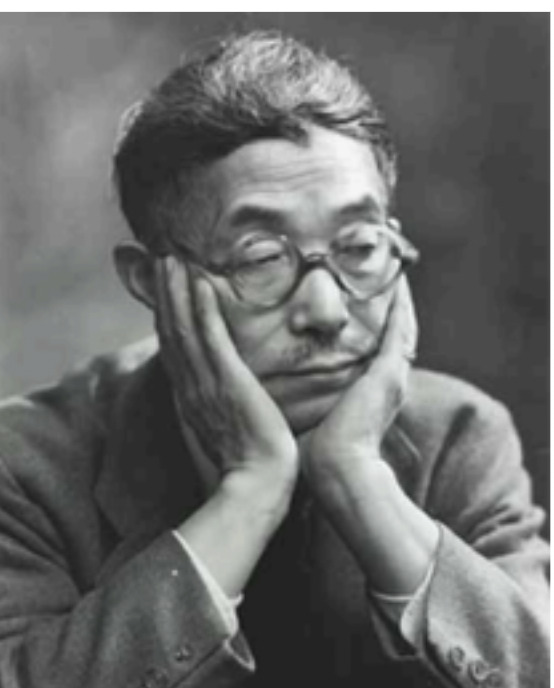 Yasuo KuniyoshiYasuo Kuniyoshi (1889–1953) was a Japanese-born artist who moved to the United States when he was 16. Even though he became a well-known figure in American modern art, Kuniyoshi was never allowed to become a U.S. citizen due to the harsh exclusion laws (Art Institute of Chicago 2021). This experience of feeling caught between two worlds is expressed and told through his artwork. After immigrating in 1906, Kuniyoshi lived in Seattle and Los Angeles before settling in New York, where he studied at the Robert Henri School, the Independent School, and the Art Students League (Smithsonian American Art Museum). He also painted landscapes and still lifes. It is important to note that he was the first president of Artists Equity and a cofounder of the American Artists Congress. One of his paintings is Circus Girl Resting (1925). This painting is oil on a canvas showing a circus performer sitting on a chair, looking like she is taking a break and lost in thought. Her body is misshapen, and there's an uneasy and lonely feeling present. The girl’s body is wide and her face is expressionless but heavy with emotion. She seems both present and distant at the same time. This adds a dreamlike quality to the painting. The colors are soft, and the painting almost feels like there is a sad mood to it. Looking deeper into this it seems that Kuniyoshi may have seen himself in this circus girl. He relates to her being someone who didn’t really fit in, always on the outside looking in. Kuniyoshi worked mostly with painting and drawing, mixing Japanese aesthetics with Western modernist styles. His art career was full of success, and he was even chosen to represent the United States in international art shows. The U.S. government classified him as an "enemy alien," which shows just how much his identity was caught between acceptance and exclusion. During his last couple years of life Kuniyoshi focused on social realist themes which displayed geometric designs and stunning color (Smithsonian American Art Museum). His paintings tell a story about what it means to belong as well as being an outsider.
-
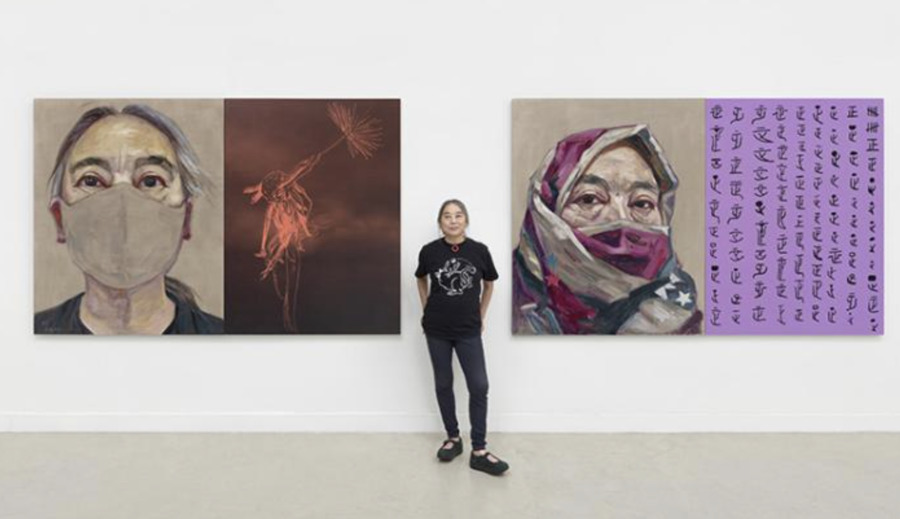 Hung LiuHung Liu (1948–2021) was born in Changchun, China, and was alive during the Cultural Revolution (1966-76), a time that was one of the most intense political and social periods in Chinese modern history. This time shaped the way Liu approached her artwork. During her early twenties, Liu was forced into manual field labor as part of Mao Zedong’s reeducation campaign. These personal experiences of political oppression and displacement influenced the way Liu thought about art and storytelling (National Museum of American History 2021). Liu moved to the United States in 1984 to attend graduate school at the University of California, San Diego. Liu’s artwork focuses on honoring the lives of people who have been forgotten, oppressed, or erased from history. Many of her paintings are based on old photographs of Chinese laborers, refugees, and oppressed women. These are people whose stories were often ignored or disregarded. She used oil painting as her main medium, with a signature technique of dripping paint to symbolize the softness of memory and the passage of time. Liu learned this under Mao’s rule, but uses it to subvert the homogenizing ideals of socialism. Dorothy Moss explains that Liu’s layered paint acts as a veil, separating the viewer from the subject and reminding us of the complexities of history and remembrance (National Museum of American History 2021). Liu uses both Eastern and Western artistic traditions while highlighting immigrant experience and gender oppression. Her work not only recalls these stories but also challenges people to reflect on how history is told. One of Liu’s most powerful pieces is Odalisque (1992), which is based on an old photograph of a young Chinese prostitute. The French term odalisque refers to a female slave or concubines depicted in western traditional paintings. Liu’s choice of this title is important because she links this Chinese women to Western art tradition that viewed women as sexualized objects. It is clear in this work that the woman is stuck, emotionless and put on display. Instead of letting the woman remain stuck as just an object in someone else’s photo, Liu brings her to life on a huge canvas, redirecting the viewer's gaze. Art historian Griselda Pollock explains that in doing this, Liu “opens up a window into the complex processes of perception and representation in the history of the relationship between China and the West” (Pollock 2003, 121). The woman isn’t nude like in those traditional Western paintings, but fully clothed in traditional Chinese garments. The use of dripping paint is also important, which softens the image and gives the sense that memory is always fading or changing. Liu even adds a shelf at the bottom of the painting with Chinese vases, emphasizing Chinese culture and turning the painting into what Pollock calls “a kind of updated altar to an ancestor” (Pollock 2003, 121). Through Odalisque, Liu isn’t just retelling history, but in a sense forces us to look deeper into why she is important. The painting honors this woman not as a nameless figure in a photo but as a human being and individual who deserves to be remembered.
-
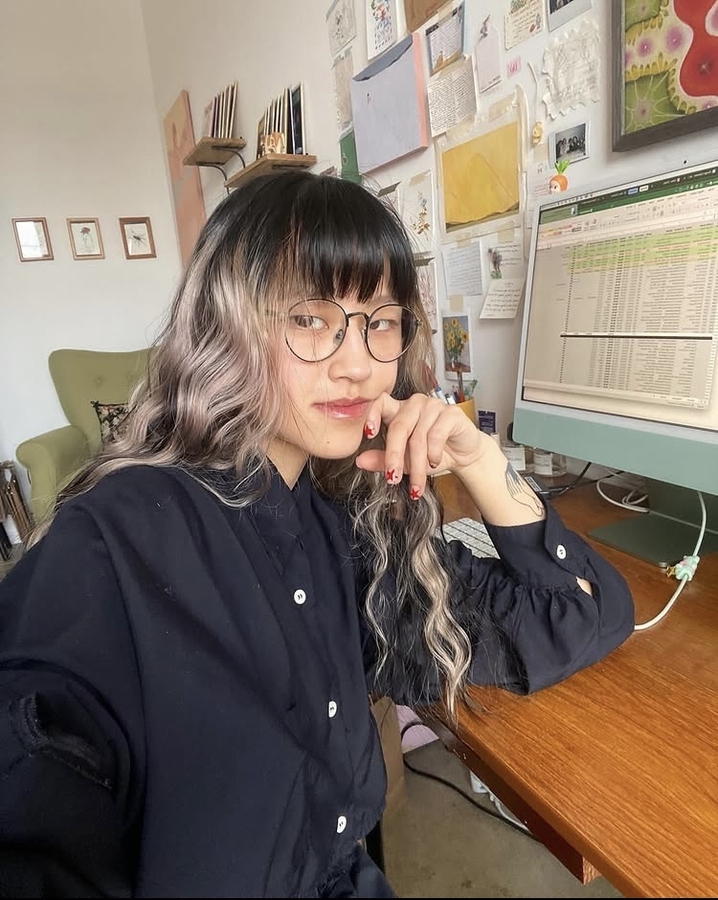 Dayi Novas (1998 - )Dayi Novas (she/her) is a second generation Chinese-American based in New York City and well-known for her work as a tattoo artist. She graduated from the Cooper Union School of Art in 2020, during the height of the COVID-19 pandemic, initially with the intent of becoming a typeface designer. After working for a design firm following her graduation, however, she quit, having said in an interview with L’Officiel Singapore, “I’d rather starve than have a boss.” After quitting, she started the art publication, OUCH! Studio Magazine and began tattooing in her private studio in Ridgewood, Queens. Dayi’s art style varies from child-like scribble drawings to modulated Chinese brush strokes, as seen in some of her flash tattoo designs pictured below. She especially enjoys using the brushstroke style where, in tattooing, she uses a single needle cartridge to imitate the bristles and ink wash qualities that are typically achieved using an ink brush in traditional Asian art. Dayi is also inspired by florals, organic movements, and beauty, as seen in her other flash designs, which are listed on her website: https://www.ouch.studio/tattoos/flash. Additionally, she does a lot of freehand tattooing, an ability she traces back to her earlier work in typeface design. With her distinct style, Dayi’s tattoos have become easily recognizable throughout NYC according to her clients. Her bookings open monthly with limited openings that fill up quickly due to her popularity. Dayi also has an art magazine, OUCH! Studio Magazine, that accepts submissions regardless of skill level. As of now, there have been 12 volumes, each with their own unique theme. Submissions range from drawings, paintings, and photography to recipes, screenplays, and much more. In addition to her tattoo work and zine publication, Dayi simply just enjoys making art in many forms like ceramics, knitting, animation, painting, sketching, and more.
-
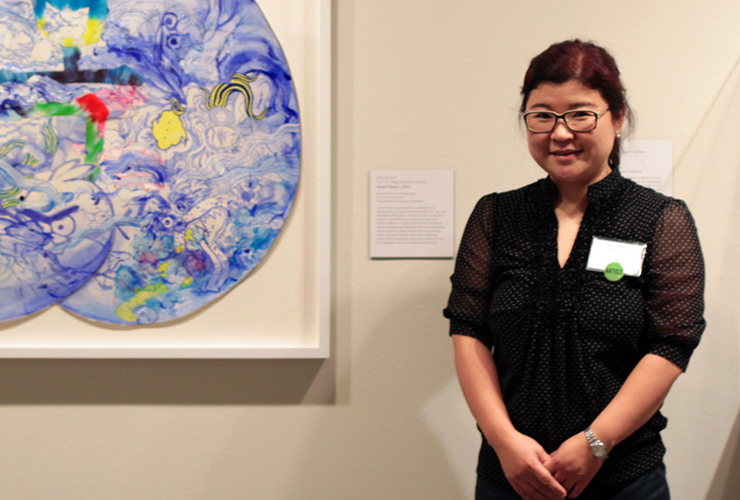 Jiha MoonJiha Moon, born in Daegu, South Korea in 1973, is a contemporary artist known for her fusion of Eastern and Western artistic traditions. She moved to the United States in the late 1990s and currently lives and works in Atlanta, Georgia. Moon earned her MFA from the University of Iowa and is professionally trained in both traditional Asian art and contemporary Western practices. Her experiences as an immigrant and her engagement with cross-cultural identity deeply influence her work. Moon’s art includes a variety of media, including painting, ceramics, and printmaking. Her work blends traditional Korean motifs, such as landscapes, masks, and folk symbols, with pop culture references, emojis, and Western art historical elements. This hybrid style reflects her exploration of globalism, cultural identity, and the fluid nature of meaning in a multicultural world (National Museum of Women in the Arts, "Jiha Moon"). A consistent theme in her work is the interaction between tradition and modernity, as well as a playful critique of cultural stereotypes and consumerism. Her contributions to American art lie in her ability to challenge fixed notions of identity and to create vibrant, layered compositions that bridge diverse cultural narratives. One of Jiha Moon’s notable exhibitions is Foreign Love (2015), a collection of ceramic works that fuse traditional Korean vessel forms with contemporary, pop-inspired decoration. The exhibition features a variety of whimsical, hand-crafted sculptures glazed in vivid blues, greens, and oranges, adorned with abstract patterns, cartoonish faces, and surreal motifs. These works reference the rounded shapes of Korean moon jars, yet subvert expectations with playful, cross-cultural imagery that blends Eastern tradition with Western pop culture (National Museum of Women in the Arts, "Jiha Moon") . The use of ceramics—a historically rich and tactile medium—reinforces Moon’s exploration of hybridity, while the vibrant surfaces provoke curiosity and challenge viewers to reconsider what defines cultural authenticity. Foreign Love exemplifies Moon’s interest in merging past and present through material and form, offering a humorous yet thoughtful commentary on identity in a globalized world.
-
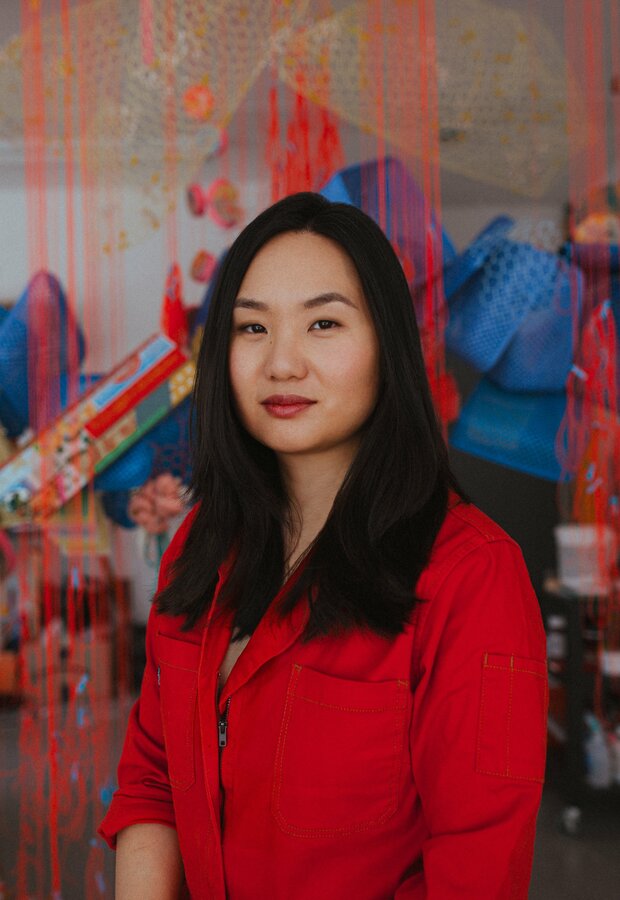 Amanda PhingbodhipakkiyaAmanda Phingbodhipakkiya, born in Atlanta, Georgia in 1988, is a Thai-Indonesian American artist known for her vibrant, socially-engaged public art. Initially trained as a neuroscientist at Columbia University in 2010, she later studied at the Rhode Island School of Design (college.columbia.edu, 2020). Her unique background in science and art fuels her work to explore the intersections of identity, science, and activism. Phingbodhipakiya’s experience as an Asian-American woman and former neuroscientist are portrayed in much of her work, which often responds to contemporary social justice issues, including topics of feminism, racial identity, and Asian-American Identity Phingbodhipakkiya works with a range of media, including public murals, installations, digital design, and illustration. Her projects, as mentioned earlier, often address themes of racial justice, feminist empowerment, and underrepresented communities in science and society. A consistent theme in her art is the resilience and identity within marginalized groups, specifically in response to anti-Asian violence. One of her most notable contributions to American art is the I Still Believe in Our City public art campaign (2020-2021), created during her time as an artist-in-residence with the NYC Commission on Human Rights. Her mural paintings mirror the poster campaign, featuring bold, vibrant portraits that celebrate the strength and resilience of these communities. May We Know Our Own Strength (2021) is a mixed-media installation by Amanda Phingbodhipakkiya, displayed in New York City’s Meatpacking District. The installation features strips of hanged, printed receipt paper, each containing anonymous stories of survival from individuals affected by sexual assault and gender-based violence (Phingbodhipakkiya n.d.). The use of minimalist white paper with black text creates a powerful visual contrast, while the cascading strips of paper mimicking natural forms draw visitors into a reflective, immersive space. The paper strips of stories of each victim were woven together to symbolize a collective resilience of the victims (NYC Commission on Human Rights, "May We Know Our Own Strength"). This work emphasizes resilience, healing, and collective solidarity, inviting viewers to engage with these shared experiences and fostering a sense of communal strength.
-
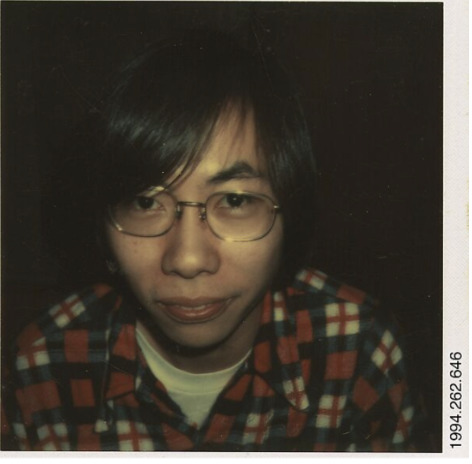 Baldwin LeeBaldwin Lee, born in Brooklyn, New York (1951) and raised in Manhattan's Chinatown, is a living American photographer known for his influential and dynamic black-and-white images capturing the daily lives of Black Americans in the American South. Lee was a professionally trained artist who studied under influential photographers Minor White at MIT and Walker Evans at the Yale School of Art, where he earned his MFA. Evans was a big inspiration for him and influenced many of his artistic endeavors. Lee became the first Director of Photography at the University of Tennessee in 1982, and shortly after, he embarked on a multi-year journey through the American South, photographing with a 4 x 5 view camera. His work focuses on themes of race, poverty, dignity, and community by documenting the daily lives of Black Americans, which provided a strong counter-narrative to the more common stereotypical and marginalized depictions. He really cared about the people he was photographing, which allowed the public to see them not simply as subjects, but as individuals (Ogden Museum of Southern Art 2024-2025). Lee’s choice to photograph Black Americans at home, working, playing, in the street, and in nature highlights his human-centered and observational style. His manner also showed engagement and patience, given that he spent seven years creating 10,000 black-and-white negatives (Hyatt, 2023). He didn’t take these pictures in order to “expose injustice,” an aim he considered too platitudinous. Instead, his mission was rooted in fairness, in believing that “what people are doing, what’s going on, is important” (Gerald 2021, 124). He wanted to treat his subjects as stars (Gerald 2021). Working primarily in black-and-white gelatin silver prints, Lee’s aesthetic is shown through his work, which is classic, formal, intentional, documentary, and socially engaging with emotional depth. One powerful photo by Lee shows a child pulling another shirtless and shoeless child on a cart in a dirt driveway, with the rider's head thrown back. The image accentuates texture and light, while also capturing a raw moment of childhood play. The rural setting contrasts with the boys’ energy in the cart, which highlights themes of resilience and freedom in places that are commonly overlooked. He said that, “If you try to make it be about some sort of ideological or conceptual thing, it’s going to be a stupid picture” (Wiley 2022). This shows the pure unposed quality of this image, where the focus is mainly on two boys going about their day and playing (Wiley 2022).
-
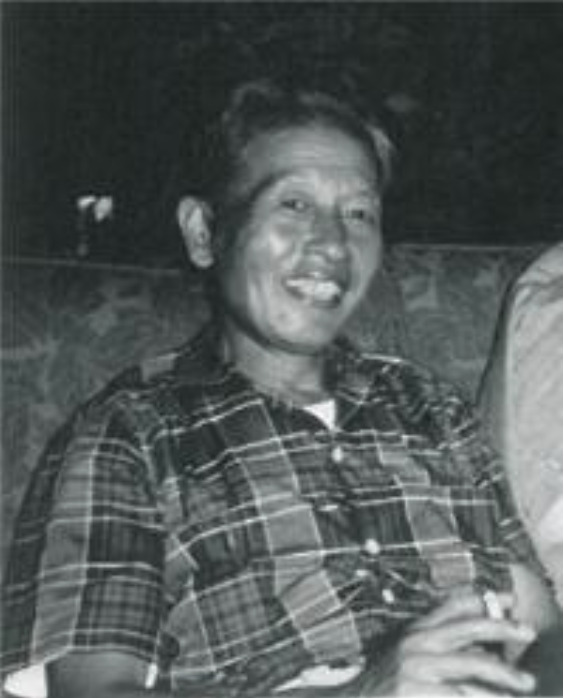 Bumpei UsuiBumpei Usui, born in Nagano, Japan (1898–1994), was a self-instructed artist whose creative endeavors were influenced by his travels, particularly a sojourn in London (The Metropolitan Museum of Art 2014). When he arrived in London in 1917, he was put to the task of decorating furniture in the East Asian style for his brother's shop. This later influenced his artistic path upon arriving in New York during his return journey to Japan. He was captivated by the city's energy and chose to stay, which allowed him to pursue a career in art and create works that address the immigrant experience. From the 1920s through 70s, he presented his work in many venues, including The Society of Independent Artists, Salons of America, and many exhibitions acknowledging Japanese-American artists (Digital Museum of the History of Japanese in NY). In addition, he was also a very skilled frame maker, a trade that not only supported him after arriving in New York, but also acted as a way ticket into the city's art community (The Metropolitan Museum of Art 2014). In his piece, The Furniture Factory, Usui captured his engagement with craft and labor as an immigrant. In this painting, which focuses on men consumed in the furniture-making trade, Usui plays with proportion and figure form to emphasize the workers' labor and skills. The busy shop that leaves no room for emptiness reflects the energy and continuous work required to be a craftsman. It also shows how Usui pays just as much attention to the machine and tools as he does to the human figures, emphasizing Usui’s familiarity with this working space (The Metropolitan Museum of Art 2014). The muted color scheme is presented in many of his other works, including “14th Street, 1924,” which looks like it's outside of the furniture factory (Virginia Museum of Fine Arts 2006), and “Portrait of Yasuo Kuniyoshi in His Studio,” a depiction of a fellow Japanese American artist (Smithsonian American Art Museum 1984). His style is described as precisionist (Strazdes 2018) while also allowing for experimentation with proportions (Metropolitan Museum of Art Bulletin 2014). Many have pointed out his fusion of Eastern and Western techniques, with Japanese designs but Western realism and modernism (The Twain Meet 1935). This hybrid style highlights a part of a larger story of Japanese artists finding their identity through creative works in a Western context.
-
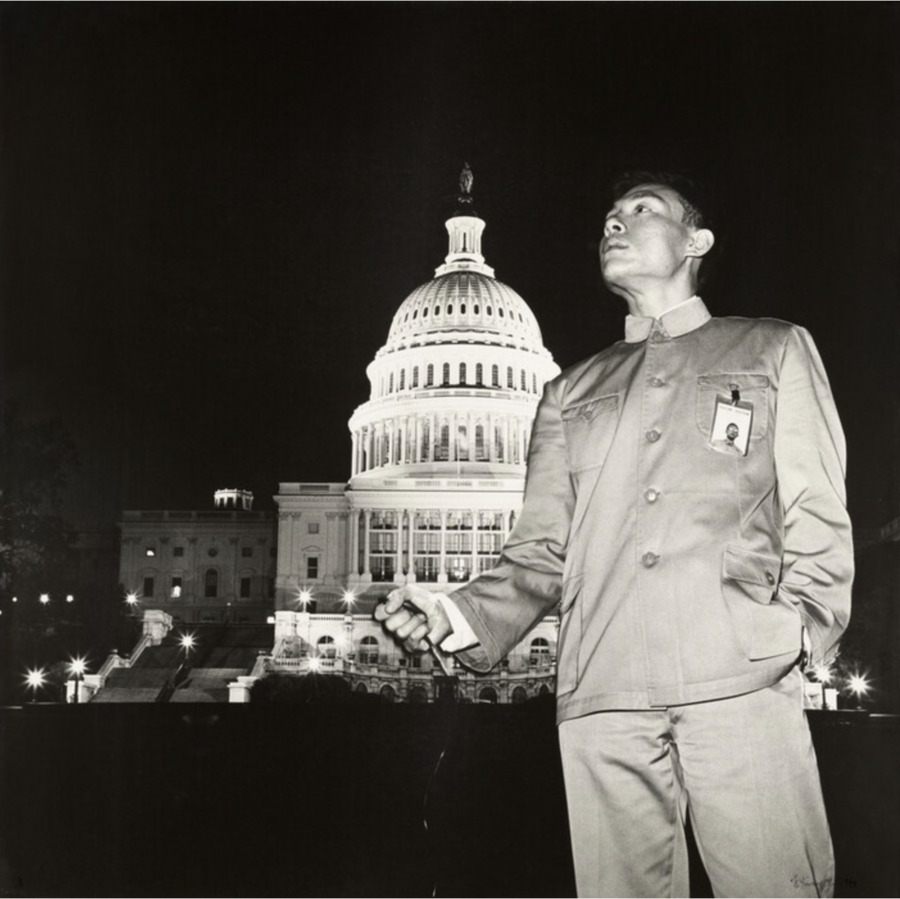 Tseng Kwong ChiTseng Kwong Chi is regarded as a visionary photographer, often describing himself as an “inquisitive traveler,” a “witness” of his time, and an “ambiguous ambassador,” blending performance, portraiture, and political commentary through his images (National Gallery of Art, 2023). Born in Hong Kong in 1950, Tseng was recognized as a prodigy in Chinese painting by age ten. After fleeing to Shanghai, his family immigrated to Vancouver in 1966 (National Gallery of Art, 2023). He later studied formal art and graduated with honors in Paris, France, in 1975 (National Gallery of Art, 2023). In 1978, Tseng moved to New York City and immersed himself in the downtown art scene, running around with influential figures such as Keith Haring and Bill T. Jones (“Biography | Tseng Kwong Chi” 2015). Heartbreakingly, Tseng Kwong Chi died at age 39 in 1990 in New York City, from complications related to AIDS (“Biography | Tseng Kwong Chi” 2015). His most iconic series, East Meets West (1979-1989), comprises over 100 black-and-white self-portraits made of gelatin silver print, taken at major landmarks across North America and Europe. Dressed in a Zhongshan, or “Mao,” suit and reflective sunglasses, Tseng posed in front of culturally significant or heritage sites in the “West,” such as the Statue of Liberty or the Hollywood sign (Demirkazik, 2021). “His stops ranged from the California’s Hollywood sign and Disneyland to DC’s Lincoln Memorial and the US Capitol…the moment he dressed up, Westerners perceived him differently, often stereotyping, questioning, and racially profiling him” (National Gallery of Art, 2023). In a 1984 interview Tseng said, “these monuments pretend to be authentic and their perfect realization brings out a kind of beauty; yet, we know they are the imitations of the real thing somewhere in Europe and that brings out the tacky note” (Lester, 2004). In his juxtapositions, Tseng pairs his own body as a stereotype of “China,” in other words, the East, with sites of superficiality in the West. With his hand visible on the shutter-release cable, he reminds the viewer of the constructed narrative and nature of these photographs, asking the viewer to reassess their understandings of his subjects. In “Disneyland, California” (1979), Tseng stands rigid in formality next to a Goofy character; his severe expression contrasts with the setting’s ‘whimsical’ playfulness. The result highlights the artificiality of the Disneyland environment and his constructed identity. Through self-portraiture, humor, and social critique, Tseng’s work confronts race and identity as it resists simplification and nationalism, where the East meets the West (Demirkazik, 2021). His images are a vital contribution to American art history, playing a central role in shaping and sustaining Asian American and queer artistic expression. Bibliography “Asian American Art & Artists in Our Collection.” 2022. Nga.gov. 2022. https://www.nga.gov/features/asian-american-artists.html. “East Meets West Self-Portraits | Tseng Kwong Chi.” 2020. Tsengkwongchi.com. 2020. https://www.tsengkwongchi.com/portfolio/self-portraits/. Laster, Paul. 2004. "SUITABLE ATTIRE REQUIRED." Art and AsiaPacific (Archive: 1993-2005), Fall, 54-62. https://login.union.idm.oclc.org/login?url=https://www.proquest.com/magazines/suitable-attire-required/docview/1415618190/se-2. “Biography | Tseng Kwong Chi.” 2015. Tsengkwongchi.com. 2015. https://www.tsengkwongchi.com/about/. Demirkazik, Gkcan. 2021. "Hand-Body Connection KANG SEUNG LEE." ArtAsiaPacific, Sep, 42. https://login.union.idm.oclc.org/login?url=https://www.proquest.com/magazines/hand-body-connection-kang-seung-lee/docview/2571497084/se-2 “Visionary Photographer Tseng Kwong Chi’s Vintage ‘Selfies.’” 2023. National Gallery of Art. 2023. https://www.nga.gov/stories/visionary-photographer-tseng-kwong-chi-vintage-selfies.html.
-
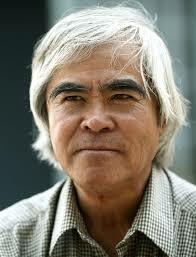 Nick UtNick Ut is a Pulitzer Prize winner and Vietnamese American photographer and journalist best known for his grueling image of war and human suffering, The Terror of War, taken on June 8, 1972. Nick Ut was born in Long An, Vietnam, in 1951 (About Photography, 2023). In 1966, Ut began working for the Associated Press (AP) in Vietnam at the young age of 15, focusing on the grueling war, and following in his brother's footsteps (World Press Photo). Following the war in Vietnam, Ut then worked for the AP in Tokyo and later moved to Los Angeles in 1977 (the Associated Press, 2025). Ut's work placed him directly on the frontlines, where he was wounded three times during a singular AP coverage of an event, and tragically, his brother was killed while on the frontlines photographing for the AP (About Photography, 2023). The Terror of War is a heartbreaking image that Nick Ut captured on the frontlines during the war in Vietnam. Its subject is a little girl, Kim Phuc, also known as “Napalm Girl,” who was captured screaming, crying, and fleeing as a napalm bomb was dropped on her homeland in the background. Research shows that not only was this little girl, as well as the other children and Southern Vietnamese soldiers around her, running not only out of fear, but also due to extreme pain as they were severely burned and wounded. Immediately following the release and publication of this image, it gained widespread attention: “...when Nick Ut took the photograph…he knew it was a newsworthy photo…he trained his camera on the bombs and then on the Vietnamese children running from them…” (Durham, 2023). This image is a gelatin silver print, highlighting the bright flashing lights from the chaos in the photo's background. In addition, the immense terror and pain on the little boy's and girl’s faces and the single vanishing point with the dark grey background help create contrast. All of this was captured by one man trying to raise awareness through strikingly harsh images worldwide. The following provides a glimpse into the mind of the man himself: “...people asked why he didn’t flee when the bombing began, and his answer has been, ‘If I running, I don’t make a good picture’…Ut’s motivation was also, in a sense, personal…‘I wanted to stop this war,” (Durham, 2023), and his powerful photographs indeed convey the imperative perspectives of victims of the terrors of war to various viewers around the world. Bibliography “AP Report: Investigating Claims around “the Terror of War” Photograph | the Associated Press.” The Associated Press, 15 Jan. 2025, www.ap.org/about/ap-report-terror-of-war/. “Artist Info.” Nga.gov, 2025, www.nga.gov/collection/artist-info.44453.html#main. Accessed 25 Apr. 2025. Durham, Meenakshi Gigi. "'Napalm Girl' at 50: On Photojournalism and the Ethics of Care." International journal of communication [Online] 17 (2023): 3865+. Gale Literature Resource Center (accessed April 25, 2025). https://link-gale-com.union.idm.oclc.org/apps/doc/A754393028/LitRC?u=nysl_ca_unionc&sid=summon&xid=701a9862. “Nick Ut | World Press Photo.” Www.worldpressphoto.org, www.worldpressphoto.org/nick-ut. “Nick Ut: The Man behind the Iconic “Napalm Girl” Photograph.” About Photography Blog, 22 Apr. 2023, aboutphotography.blog/photographer/nick-ut.
-
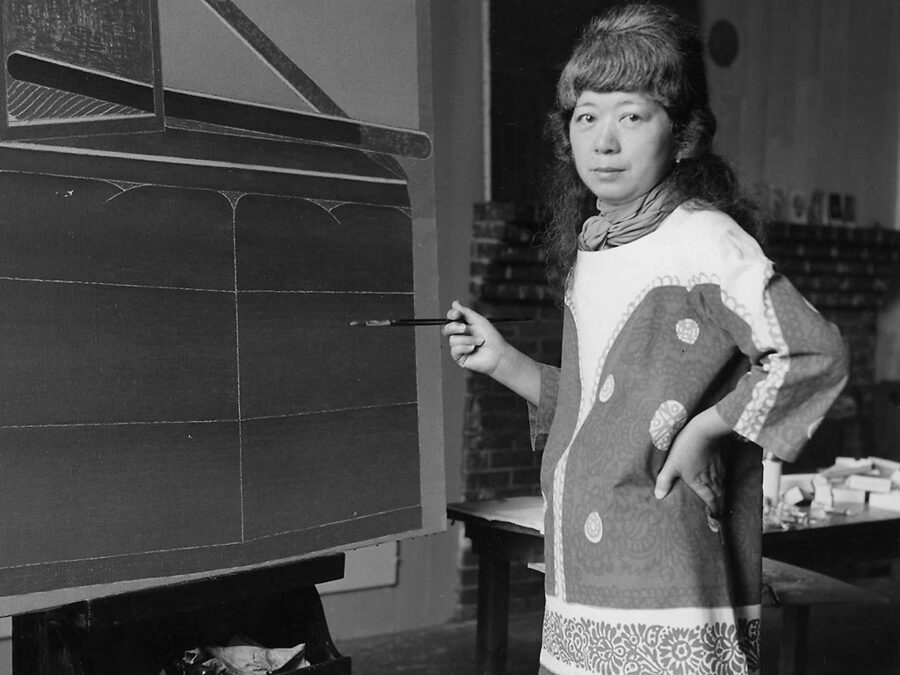 Miyoko ItoMiyoko Ito was born on April 27th, 1918, in Berkeley, California, to Japanese immigrant parents. In 1923, her family moved back to Japan to provide her with "what they believed to be a true and proper education"(Past Ordeal to Beauty), later returning to California five years shortly after. Ito studied art at University of California, Berkeley, which is where she developed a comfort in artmaking and shaped her own style. She was inspired by European Modernism, and especially Cubism. (cite Fendrich article:) and looked into cubism and the school of Paris. During World War II, with Executive Order 9066, she was interned at the Tanforan Assembly Center and later at the Topaz War relocation center. After the war, she was able to continue her studies at Smith college and the School of the Art of Institute of Chicago. These years of training, along with the refinement of her individual style, enabled Ito to become a well-known Asian American artist. With this her paintings are characterized by vast forms that really bring out architectural structures and landscapes. She was associated with the “Allusive Abstractionists,” which are a group of Chicago painters who really explored metaphorical and subjective abstraction. Her meticulous and fine technique included layering colors to create depth and a source of luminescence, and curiosity. Overall her work was unique and different but also impactful and important to the history and culture that we still even study to this day. A work by Miyoko Ito, highlighted above, is Sea of Changes (1977), which was created in oil on canvas. In this painting, Ito really employs warm colors like reds, oranges, and yellows that are amplified by the contrast of applications of blues and greens at the top right, reminiscent of a seascape. The painting is layered to suggest a sight of waves and currents, that really conveys a sense of movement and transformation. Here precise brushwork and subtle gradations of color really create a sync of balance and fluidity that show her true methods and structure. She does this by showing the horizontal layerings of color and then composing them into vertical shapes that cut through and intersect the canvas, creating a sense of abstract three-dimensional form and depth. This work really reflects her interest in the cross play between the natural world and human perception or thoughts. It invites a sense of personal thought and views on her work, a view in your own type of way of feeling.
-
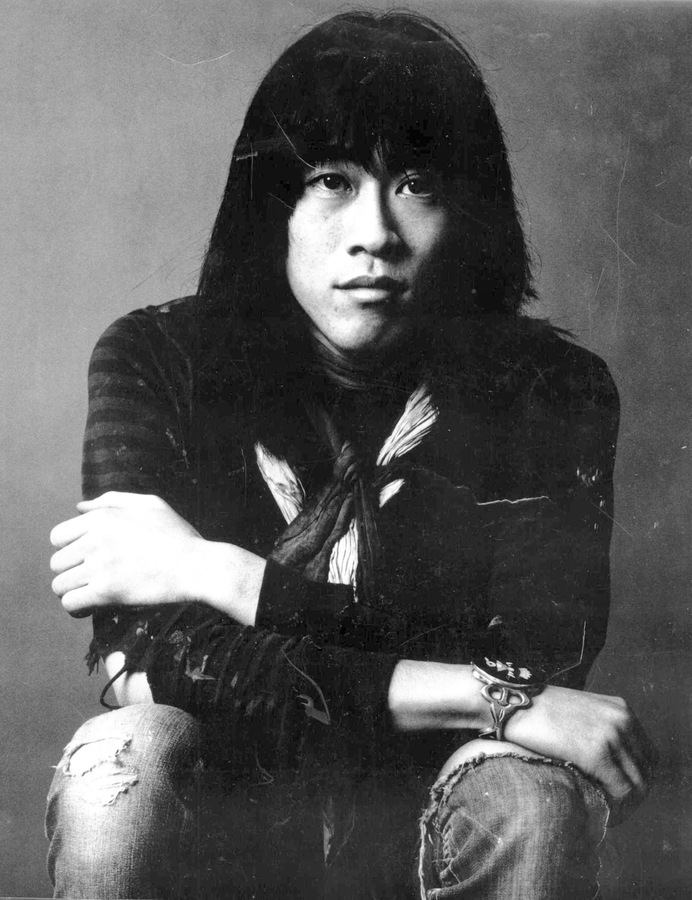 Ching Ho ChengChing Ho Cheng was born on December 26, 1946, in Havana, Cuba, to a family of Chinese diplomats. His father served as Chiang Kai-shek’s last ambassador to Cuba, where his mother was a fashion designer which as a reader we see he got some of his inspiration from his mom but also being in Cuba where he grew up, the combination. In 1951, the family relocated to New York City, where Cheng grew up in Queens. He then went on to pursue an art education at The Cooper Union School of Art from 1964 to 1968. Cheng’s work is categorized into four distinct periods: Psychedelics, Gouache, Torn Works, and the Alchemical Series, all primarily done on paper(Cheng Official Website). His art reflects the themes of transformation, spirituality, and the metaphysical, and draws inspiration from Chinese Daoism and Egyptian mythology. These disparate yet intriguing cultural influences are what have distinguished Cheng's work throughout his career as an artist. One interesting example of Ching Ho Cheng's work is his piece, Glossolalia (1969), which was created with ink, opaque watercolor, and graphite pencil on board. This work can be found in the collection of the Whitney Museum of American Art. In Glossolalia, Cheng shows a vibrant, intricate piece that really takes on his exploration of language and spirituality. The term “glossolalia” refers to speaking in tongues, a phenomenon associated with spiritual ecstasy(Glossolalia). We read about it in the bible as when the disciples gather together and there is a story of them all speaking different languages but understanding each other(Sauter). Here, as many of Cheng’s other works, we read an interest in spirituality and communication. The painting shows swirling patterns, vivid colors, and little detailed textures that really create a sense of movement or energy. He also has much depth in his work as people believed he was painting like he was looking under a microscope at these mouth-like looking cells. The central motif shows a mouth like or portal that could symbolize the communication between the earthly and the divine. There are also signs of an ear that looks like which ties into the thoughts of the apostles above. The use of gouache allows for rich, opaque layers that really enhance the painting depth and intensity, making it weigh more to the eye than it should. This work exemplifies Cheng’s ability to merge abstract forms with a central thematic content, which gives viewers an interesting but vivid experience.
-
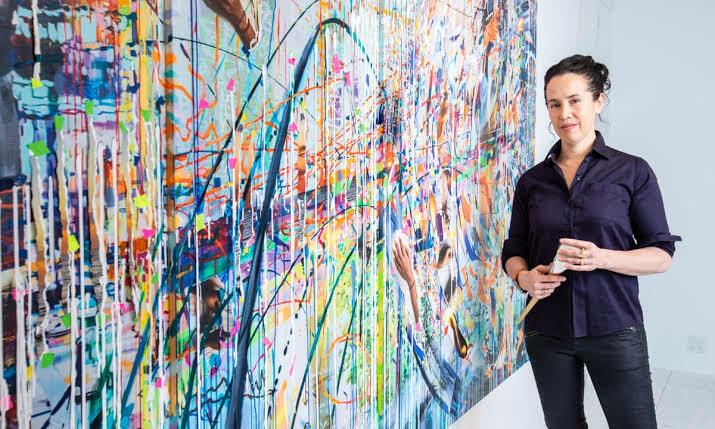 Sarah SzeSarah Sze, born in Boston Massachusetts in 1969 is an American contemporary artist focusing on sculpture from everyday materials, often including found objects such as plants, food, wiring, and more (Artnet 2022). She completed her master's in architecture and painting at Yale University, and later her MFA at the School of Visual Arts (Artnet 2022). She received the 2003 MacArthur Fellowship and also represented the United States at the Venice Biennale in 2013 (Sze 2025). Her work is featured in the Museum of Modern Art, Solomon R. Guggenheim Museum, and The Tate Modern (Sze 2025). She also has a collection of public works in the Seattle Opera House, the Metropolitan Transportation Authority in New York, and the High Line in New York (Sze 2025). Today, Sze lives in New York and is a professor of art at Columbia University (Artnet 2022). Sze is interested in creating art that depicts the transitional state of growth and decay, capturing the process of life. Sze has stated while reflecting on her work: “I am aware people might dismiss my art, but I'm interested in getting them to stop and look; for no other reason than that is what I do” (Artnet 2022). She has a diverse portfolio, from painting and collage to projection mapping and full installations. Her art incorporates both sculpture and installation, creating immersive pieces that allow the viewer to feel a part of her work. Slow Dance, 2024, is an installation using mixed media including paper, string, aluminum, video projection, and sound; the dimensions of this work vary. Sze used over 700 pieces of hand-torn paper and combined both video and photo. The visuals projected all share the common theme of flames/campfires, creating a warm and eye-catching work that connects the viewer to nature and the elements. (“Realer than Real: Sarah Sze at the Nasher Sculpture Center” 2024). Slow Dance ties to Sze’s idea of growth and decay, each image showing a fire either growing in size or dying out. The fragmentation of the paper and images creates a narrative process of change, reflecting Sze’s interest in representing processes of life.