Student Submissions
-
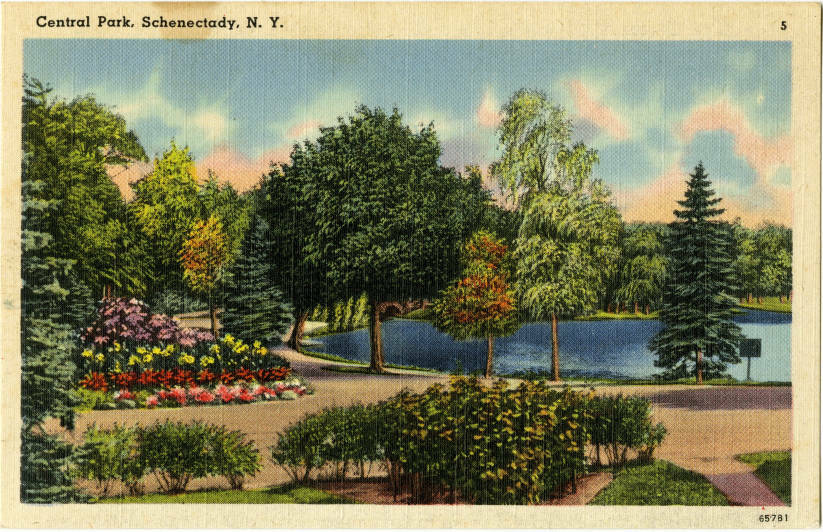 Floral View of the LakeThis is another view of the Central Park lake, however this one has the addition of floral bushes along with numerous trees and greenery. This is a vastly different view which probably existed back when the park was first being used in the 1900s. Modern day there isn't so much of that left, on these trails/roads its mainly just the trees and lawns that are visible. For those who would want to see floral bushes then they would need to go to the Rose Garden to see large areas of flowers.
-
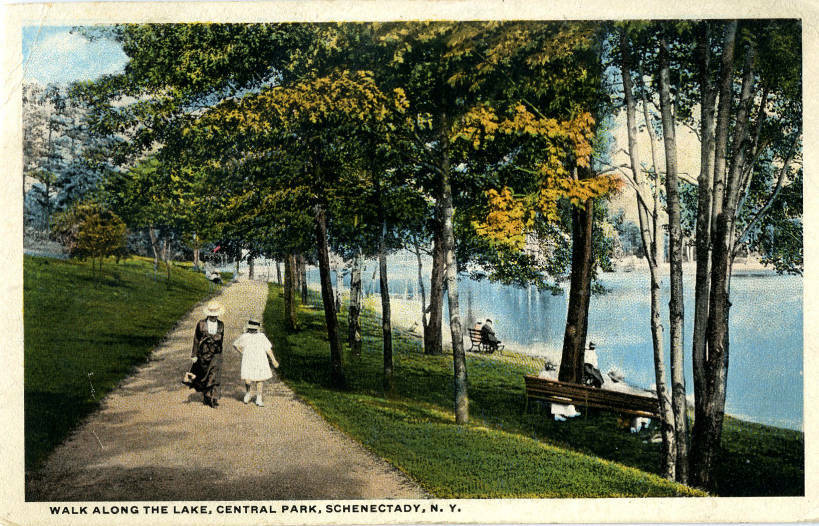 Trail beside the Lake in Central ParkThis is back when there were solid trails besides the large lake in Central Park. Nowadays, that trail doesn't so much exist it's more of just a gravel filled road that cars can drive on as they go through the park. People can still walk on it but its mostly just there for the cars. However, that view is almost still the same now just like it was back in the early 1900s.
-
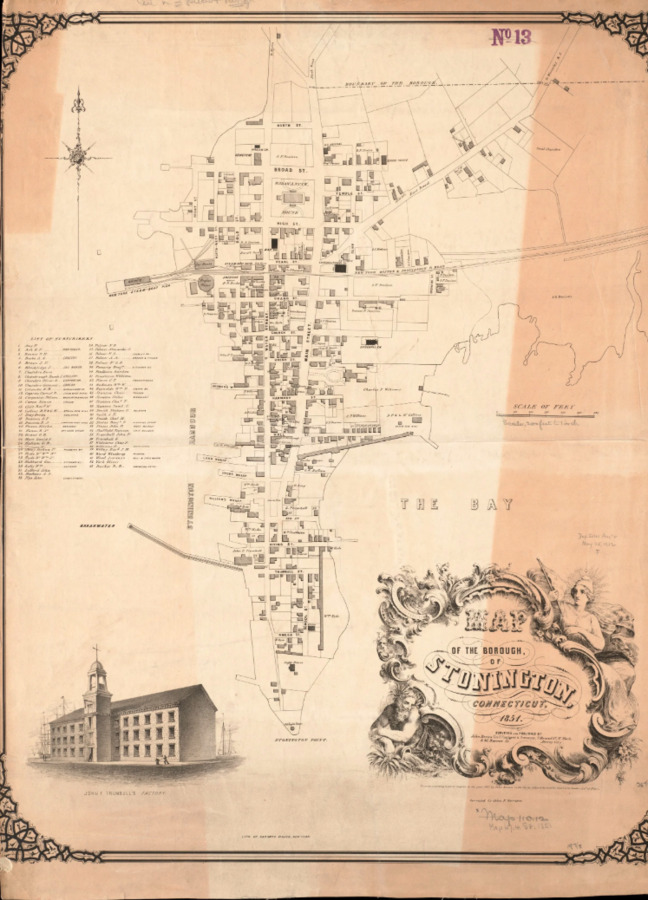 A Map of Stonington Featuring the New Railroad LineWith the completion in 1837 of the Providence and Stonington Railroad and access to coal-fired steamship service provided by the Boston and New York Transportation Company, the Borough became a major hub for people traveling between New York and Boston. It was bustling with activity, hotels, bars and shops. Entering through what is now known as Salt Acres, the rail line ran along Denison Avenue heading west, squeezing between homes and businesses. The end of the line was the New York Steam-Boat Pier and Depot, now the site of the current Town Dock. By 1890, the railroad was built to span the Connecticut and Thames Rivers and connect, which eliminated the need for a steamboat connection.
-
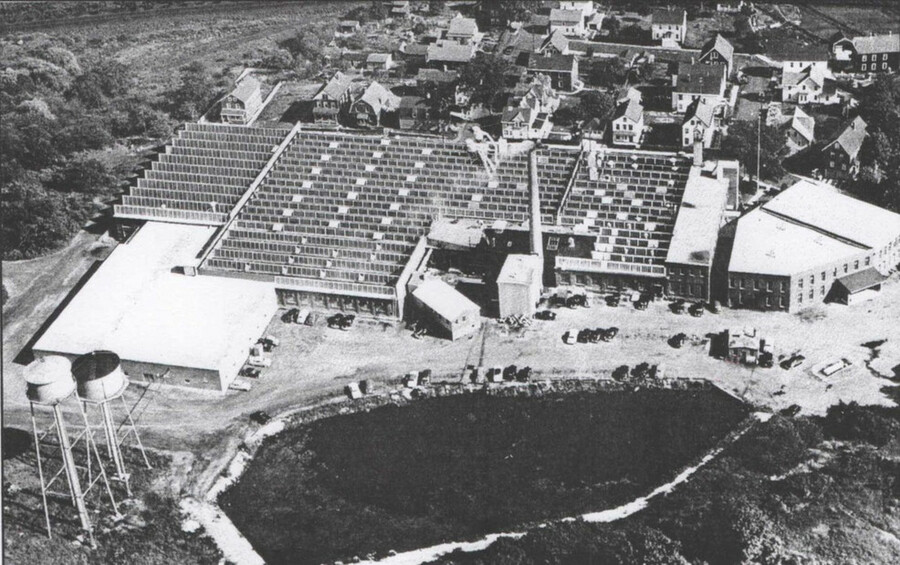 The Stonington American Velvet Company MillThe American Velvet Company opened in 1892 at the height of the Industrial Revolution, transforming a sleepy fishing village into a manufacturing powerhouse. The company enjoyed its heyday in the 1950s when it employed 450 people. By the end of the 20th Century, rising labor and manufacturing costs in New England prompted the company to move its operations to Virginia. The factory closed in 1996; however, the structure itself is a historical monument. There is still a pond behind the mill, which is likely contaminated with runoff from the mills waste dumping.
-
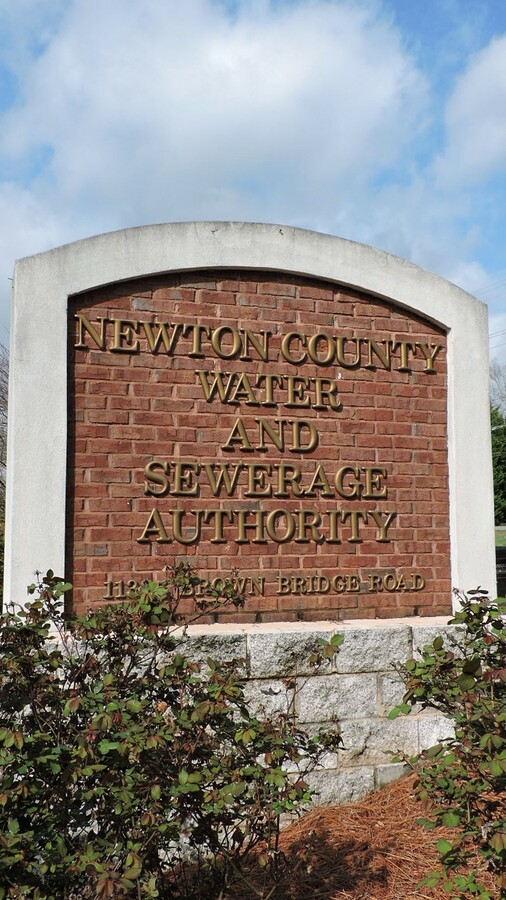 The Newtown Water and Sewer Authority ExpansionIn 2018, Newtown residents went to the Newtown Water and Sewer Authority (WSA) to complain about the decision to install a “sewer system”, since that would encourage development. Originally, under Newtown’s Water Pollution and Control plan, it allowed for the manipulation and reconstruction of the sewer system in Sandy Hook, but an LLC, located at 79 Church Hill Road, objected to the proposed draft. This was because there were several illegalities involved in the fact that the WSA had to power to use the sewer districts, maps, formulas, regulations, or their capacity to control land use or zoning. The proposed expansion would put the Wastewater Treatment Plant over the capacity it can handle. Due to all of these reasons, the draft was objected to by 79 Church Hill Road, LLC.
-
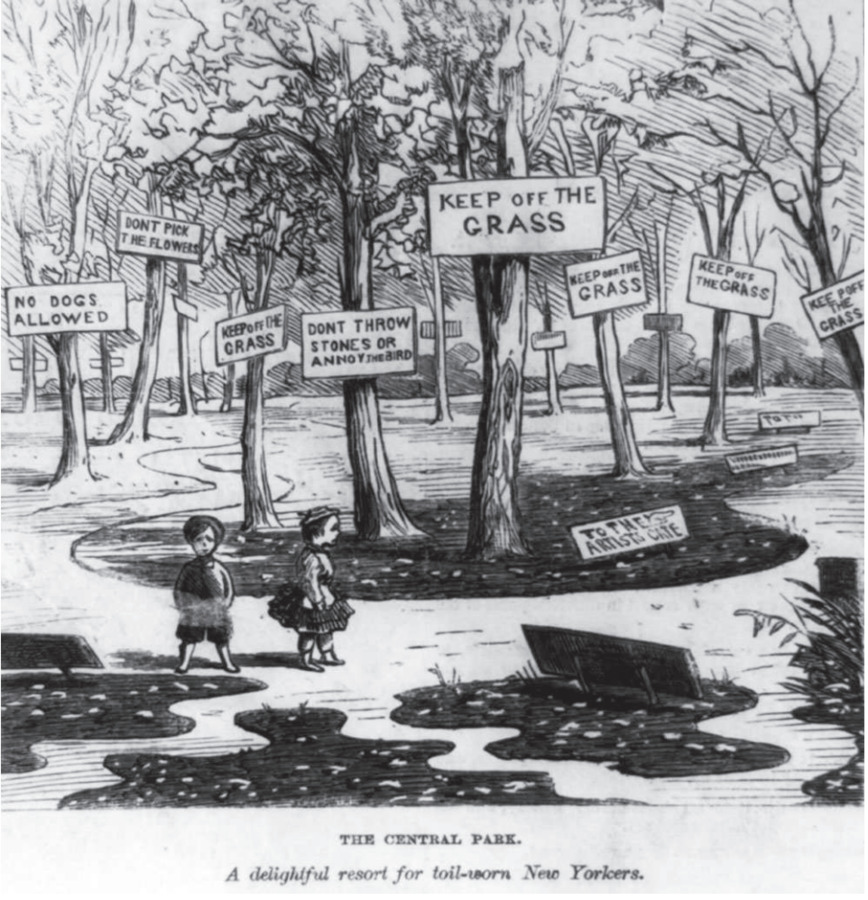 Central Parks RulesCentral Park's early rules controlled the way New Yorkers and visitors interacted with the park in order to promote peace and meditation. Some regulations consisted of banning music, sports activities, swimming, and picnics, which is opposite to what Central Park is today. They were inspired by Victorian nature tourists, who valued the appreciation of nature while not trying to integrate themselves through active use. This ultimately led to class and social distribution, where the working-class New Yorkers were judged for their use of the park. They turned the space into a lively communal place, which the creators of the park found unfamiliar.
-
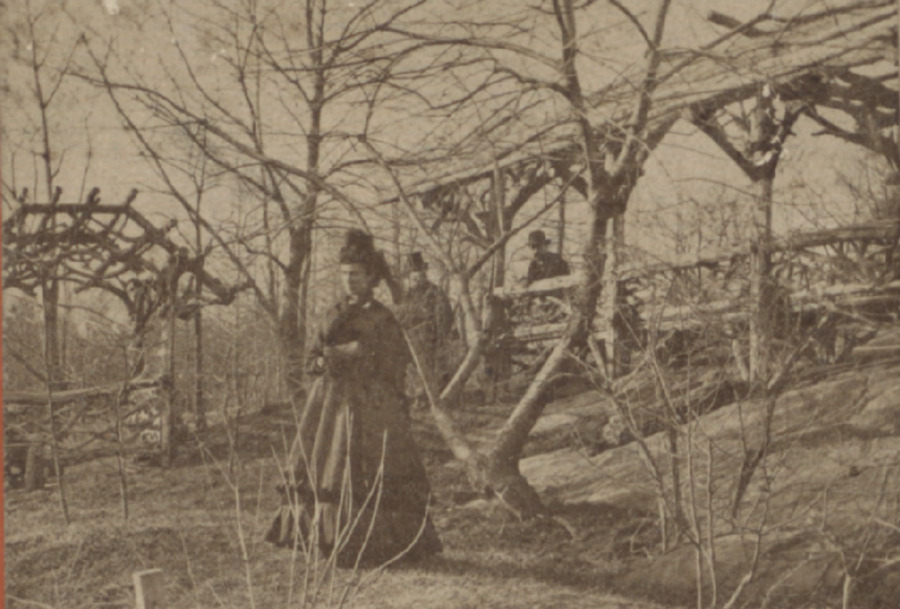 The RambleThe Ramble in New York’s Central Park was designed by Fredrick Law Olmsted and Calvert Vaux, with a goal to give the park a natural and wild appearance. It was built on uneven terrain, aimed to allow people to escape from the commotion of the city. The ramble is laid on in a very intricate way, forcing people to wander and discover new, mysterious paths. Before the creation of the park, this land was home to the Seneca Village, which was displaced when the park was being developed. The community was predominantly American and Irish immigrants, making it a place where they could escape from the discrimination of downtown New York.
-
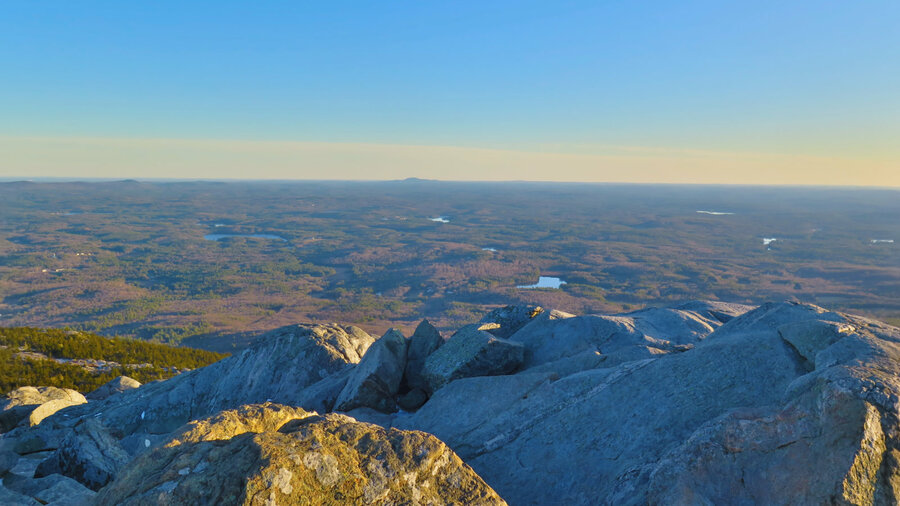 New "Natural Areas" on Mount MonadnockAfter nearly a century of regulated timber harvest, the Forest Society decided to declare 2,786 acres as "Natural Areas", rendering them safe from all human intervention (besides hiking trails and their management of them). This decision was made as the understanding of the importance of old-growth forests became apparent, and the Forest Society wanted to protect the State Park from future roads and timber harvest, while hoping to create an ecosystem that would be unobstructed.
-
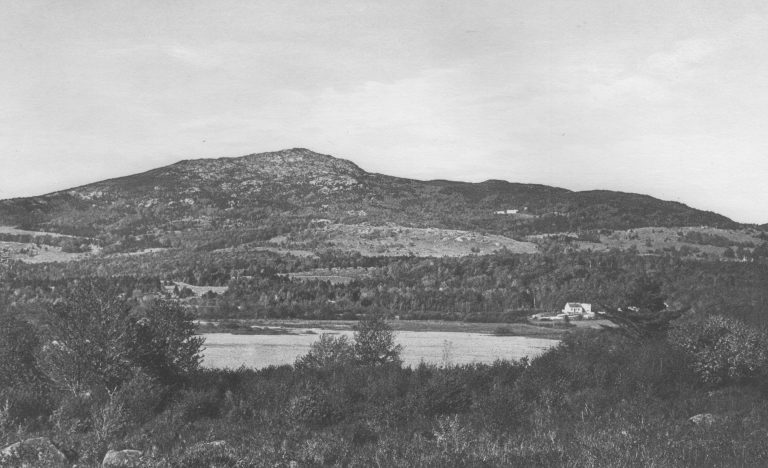 Thoreau Hikes Mount MonadnockMount Monadnock, located in Jaffery New Hampshire, stands at 3,166ft above sea level. Native Americans named the mountain Monadnock, meaning "mountain that stands alone." Transcendentalist Henry David Thoreau took four trips up the mountain throughout the mid-19th century. Thoreau wrote in his journal about an account from a man in Peterborough where the mountain top had caught fire, burning all the trees off he peak. In their place, a dense thicket grew, creating a brilliant habitat for wolves to thrive. Farmers in the area saw their livestock being killed off in large numbers by the wolves. In an effort to remove wolves from the area, the farmers set the thicket on fire, burning everything off the peak, wolves and all plants together, thus forming the bald peak at such a low elevation.
-
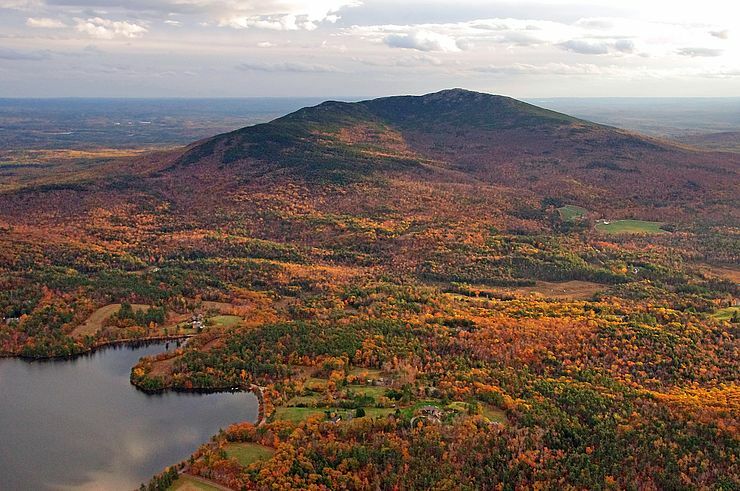 Forest Society Acquires First Acres on Mount MonadnockThe Society for the Protection of New Hampshire Forests sought to protect the White Mountains from the decades of clear-cutting that had been occurring. Their efforts grew rapidly to protect forests across the whole state of New Hampshire. The centuries of unmanaged land on and around Mount Monadnock saw its first protection in 1915, when the Forest Society acquired its first title to 600 acres on the slopes of Monadnock, strictly for protecting the ecosystems on the mountain.
-
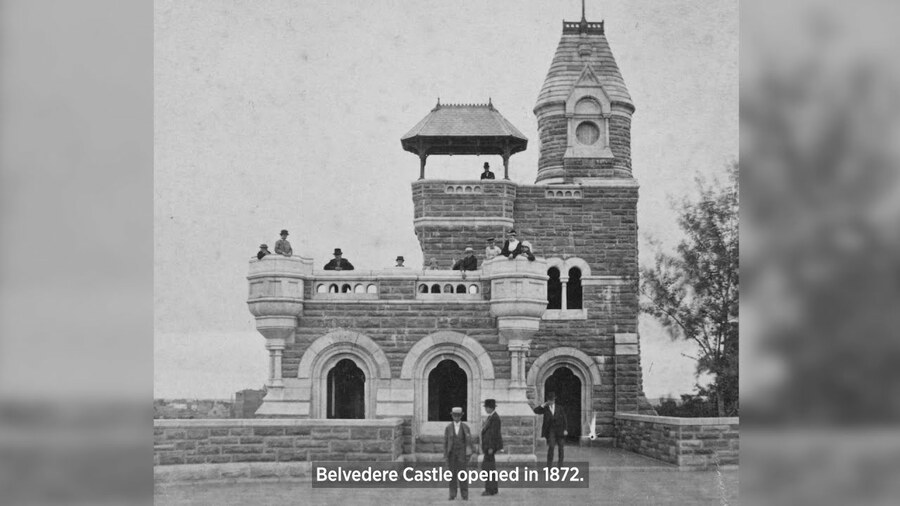 The Belvedere CastleThe Belvedere Castle in the center of New York’s Central Park shows the attempt to blend landscapes and architecture together. It was built directly onto the schist of Vista Rock by Calvert Vaux to give the illusion that it is a part of the earth. The name stands for “beautiful view,” showing how it was a form of tourism and escape, allowing the people of New York to leave the chaotic city and observe it from a distance. In 1919, the U.S. Weather Bureau moved its observatory there, and then later shut it down in the 1960s. The castle was left without maintenance until 1983, turning it into what it is today.
-
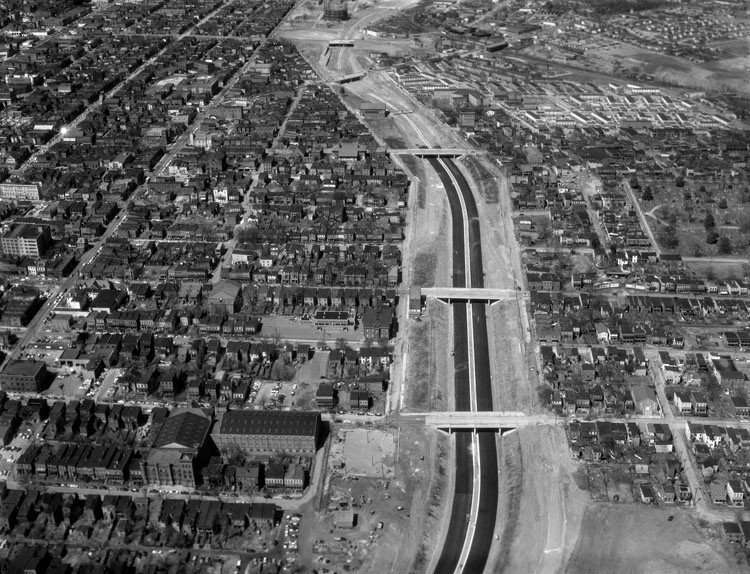 Construction of I95: Richmond VirginiaIn the 1950s, construction of Interstate 95 through Richmond, Virginia destroyed much of the historically Black neighborhood of Jackson Ward nicknamed "Harlem of the South." Hundreds of homes and businesses were destroyed and the community then ended up divided by the highway. City planners at the time targeted Black neighborhoods while leaving the white neighborhoods untouched. This shows how transportation advancements and suburban growth reshape cities and forced change in communities.
-
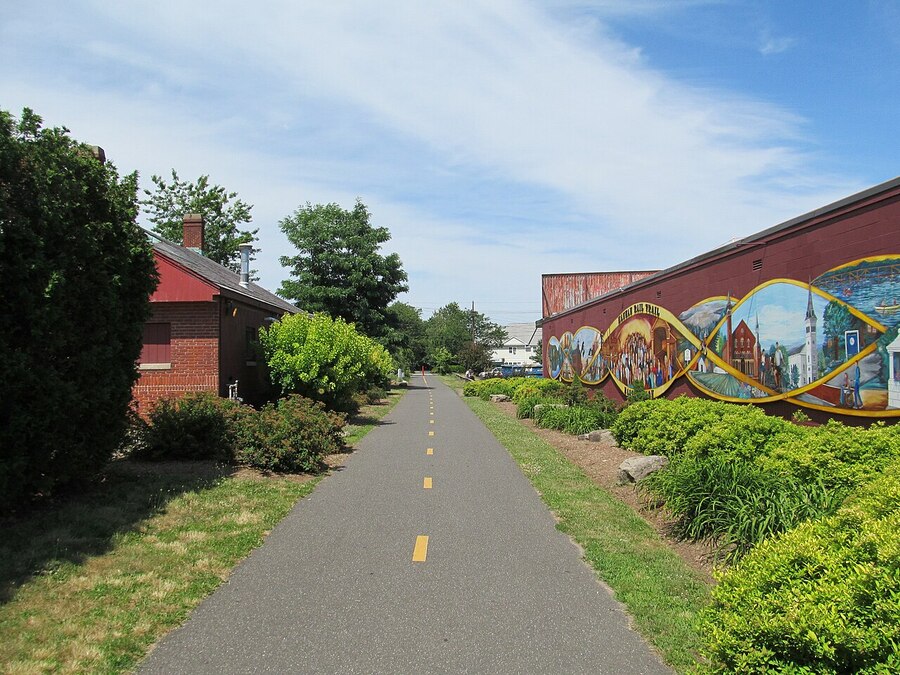 Repurposing the RailwayEasthampton's manufacturing industry created substantial traffic for the railroad, and up until the mid 1970s was thriving; but with new environmental laws towards the end of the decade, business started to move out. In 1974, Easthampton was the destination for more than 4,000 cars a year, this went down to 500 by the late 80s. In 1992 the Pioneer Valley Railroad filed for abandonment. Then in 1994, a plan to change the old tracks into a rail trail began to gain steam, and by 1999, the town had bought the old railway and removed the tracks. Construction took place from 2003 to 2004 when the rail trail officially opened, now serving as a bike path.
-
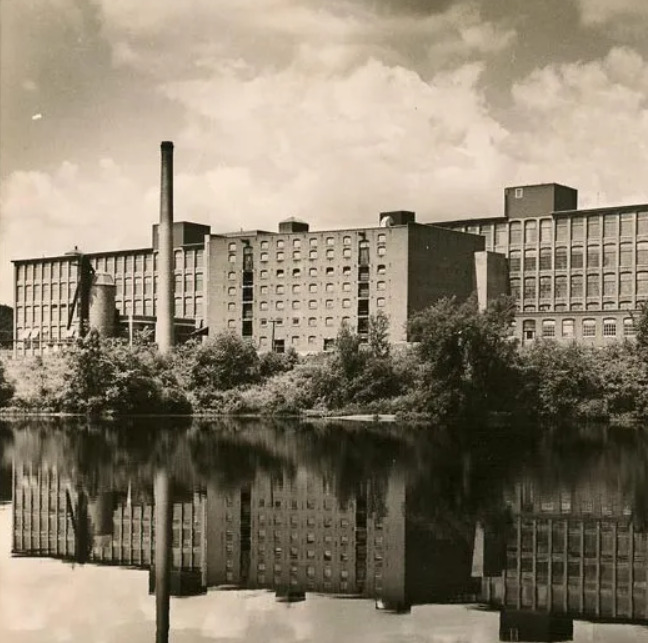 The Eastworks MillOriginally built in 1908 by the West Boylston Manufacturing Company, Eastworks' original purpose was textile manufacturing. The mill changed hands throughout the years, including being owned by General Electric for a time. During WWII, the mill's production was temporarily changed to develop bombs. In 1996, now owned by Stanley Home Products, the mill shut down its operations, and the next year was bought by an Easthampton resident. Nowadays the mill has been repurposed as a space for businesses, arts, apartments, and more
-
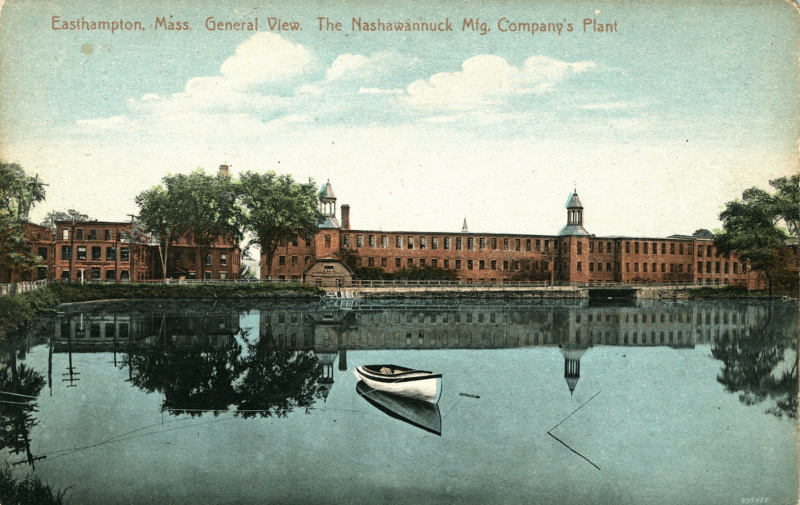 Creation of Nashawannuck PondThe Williston-Knight Button company created Lower Mill Pond by damming three tributary rivers, the Broad Brook, White Brook and Wilton Brook. This was done to create a water power source to fuel the industrial mills, which were the main driver of economic growth in the town at the time.
-
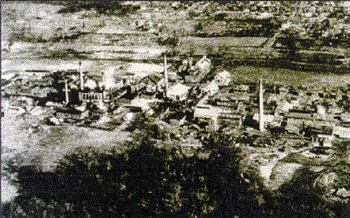 Maywood Chemical CompanyFrom 1916 to 1955, the Maywood Chemical Company in Maywood and Rochelle Park, New Jersey, processed radioactive thorium waste, which led to serious pollution to the land and the water. The waste left behind created health problems for nearby residents, including higher cancer rates. In 1983, the Environmental Protection Agency (EPA) named the area a Superfund site, meaning it needed major cleanup. The U.S. Army Corps of Engineers and the Stepan Company have worked to remove the contaminated soil and make the land safe again. This shows how industrial growth and chemical pollution can harm the environment and public health.
-
 The Growth of Midland Township (Rochelle Park), NJIn 1871, MIdland Township was formed in what is now Rochelle Park, New Jersey. At first it was a quiet farming area with dirt roads and small schools. The arrival of railroads and trolleys soon helped to connect it to larger cities such as New York City and Paterson. This made it possible for people to live in the suburbs but travel into cities for work an early example of a commuter lifestyle. As more people moved in farmland was replaced with neighborhoods, roads, and small businesses connecting to environmental history showing how transportation and population changed both the land and the way people lived.
-
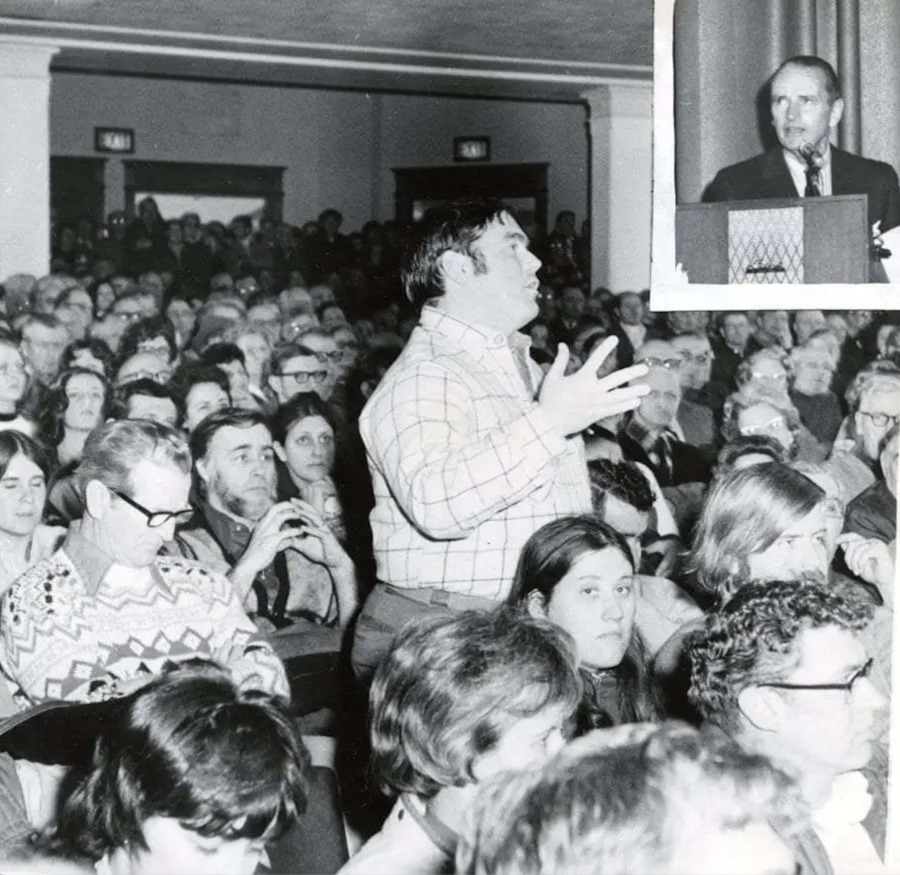 APA Private Land Plan Public HearingThe Adirondack Park Agency (APA) invited the public to comment on the draft of the private land use plan, resulting in over 5,800 attendees across the state. Individuals spoke at the Saranac Lake public hearing to advocate for the statewide importance of the Adirondack Park. Advocates defended backlash, emphasizing that the Sierra Club's New York members are residents, landowners, and users of the Adirondacks, giving them a personal stake in its future and its protection.
-
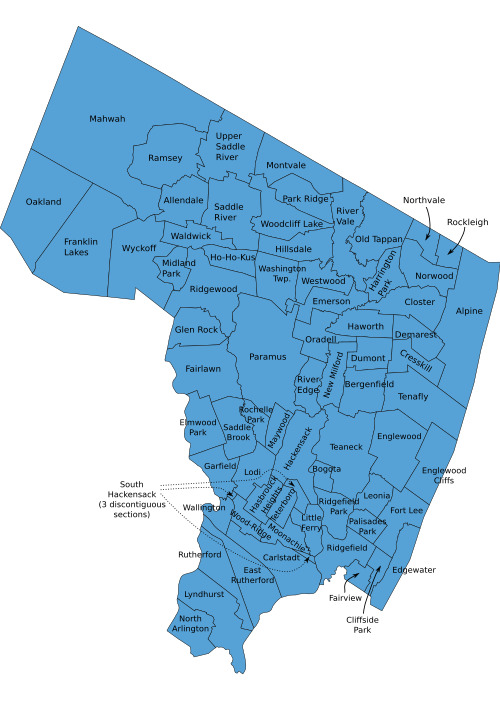 Bergen County: "Boroughitis"Between 1893 and 1896, people living in Bergen County, New Jersey started breaking away from larger townships to make their own small boroughs. This event was labeled as "Boroughitis." This started due new suburban families who moved near railroad stations wanted better schools, paved roads, and other services. The long time farmers didn't want higher taxes to make those things happen. This movement reflected new patterns in the land was being used and transportation. Farmland turned into neighborhoods and streets, and forest were cleared for new homes. Due to there being so many new towns formed it became harder to plan for things like floods, clean water, and shared green spaces.
-
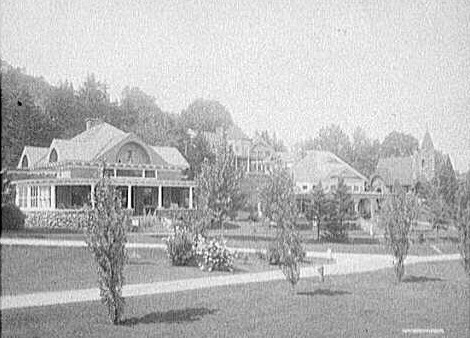 Adirondack Cottage SanitariumThe Adirondack Cottage Sanitarium, established in Saranac Lake, was one of the leading centers for tuberculosis research and patient care in the early 20th century. Doctors who were connected with the sanitarium expressed concerns about air quality, and publicly advocated for government regulation over land in the park. Individuals reported an increase in efforts to cure nature of disease.
-
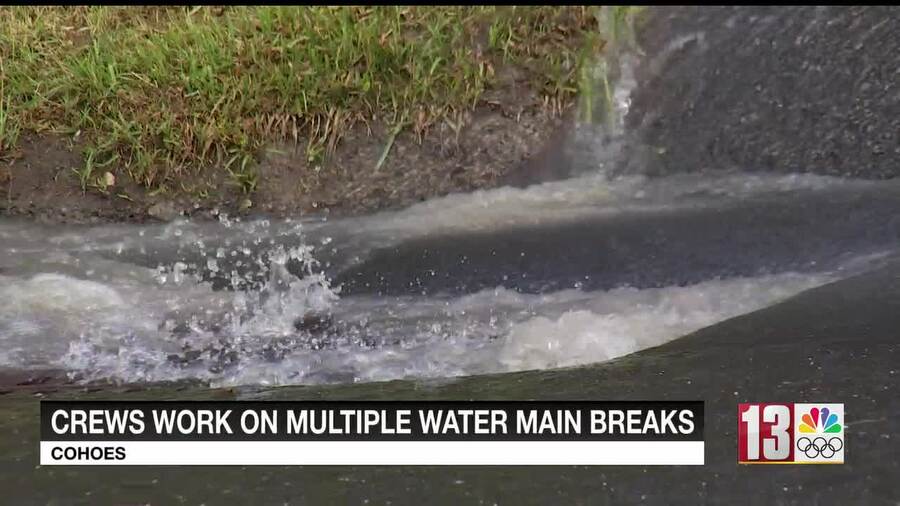 Water Main Breaks - Threat to Water QualityCohoes has faced many threats when it comes to water quality since the first settlers arrived. From sewage in the Mohawk to leaky pipes, Cohoes has it all. We can see leaky pipes as an enduring issue for Cohoes. In 2025, the city faced around 3-4 pipe breaks a day during the wet spring. It raises the question: what is getting into the pipes, and are the pipes leading to lead and other harmful substances getting into municipal water in Cohoes?
-
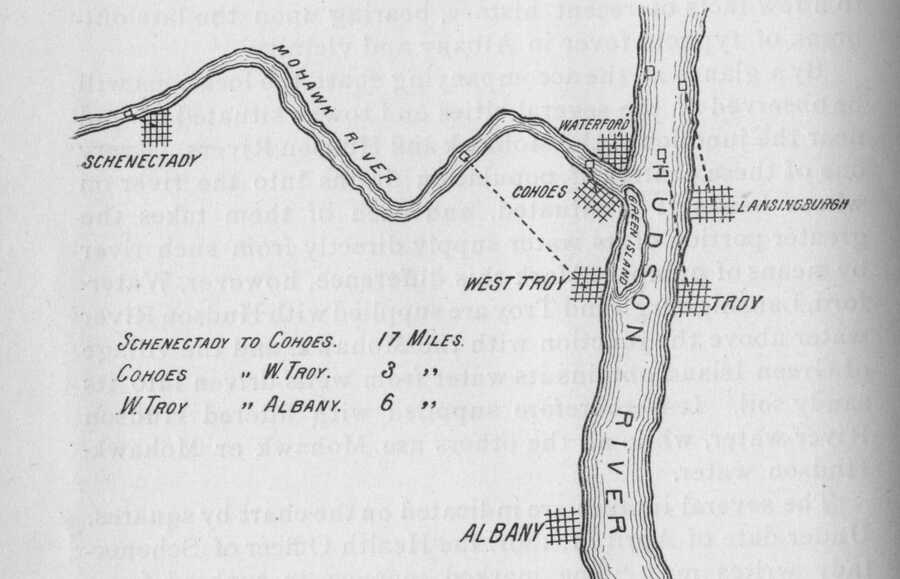 Water Connection of Schenectady and CohoesOne main disease outbreak that occured in upstate New York was the 1891 Typhoid Epidemic. While this disease mainly spread throughout Schenectady, downstream neighbors were also susceptible due to the flow of the Mohawk River. During this time, sewage flowed directly into the river and downstream to Cohoes, causing a higher amount of cases in Cohoes.
-
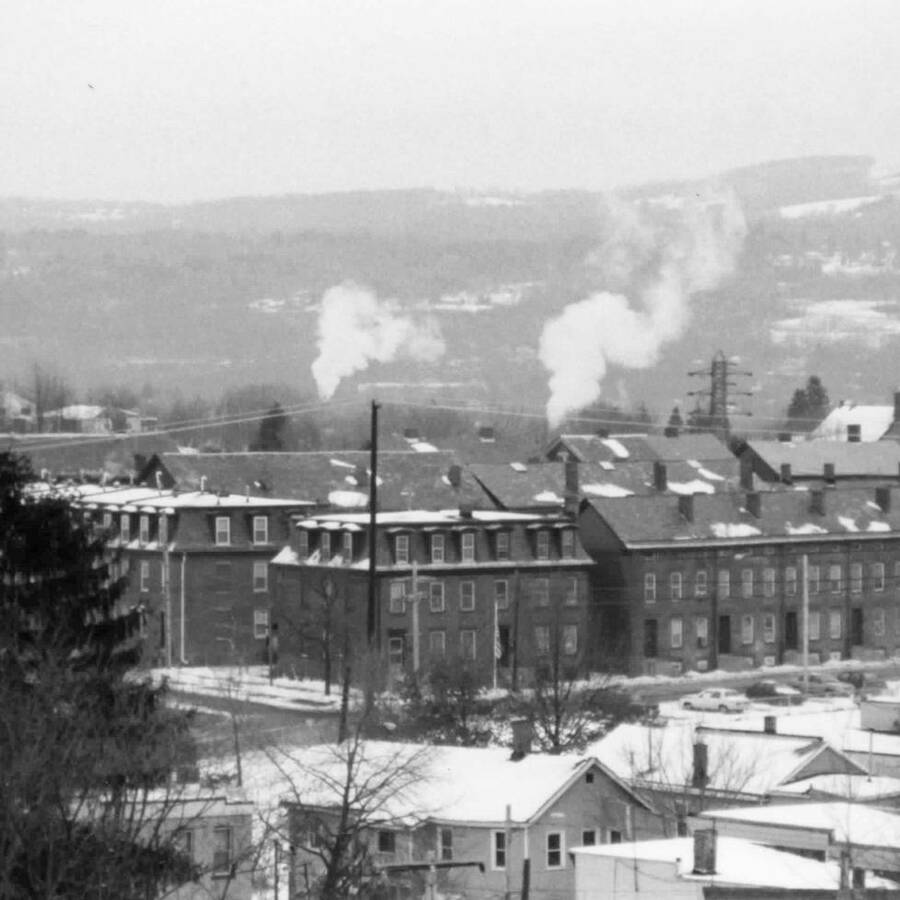 Harmony Mills - Air PollutionCohoes was known for its textile manufacturing industry. People from all over the area came to get a job at the Harmony Mills. What many people don't talk about are the emissions from these mills and the pollution that occurred. Although the mills were mostly water powered, coal would still be used on occasion.
-
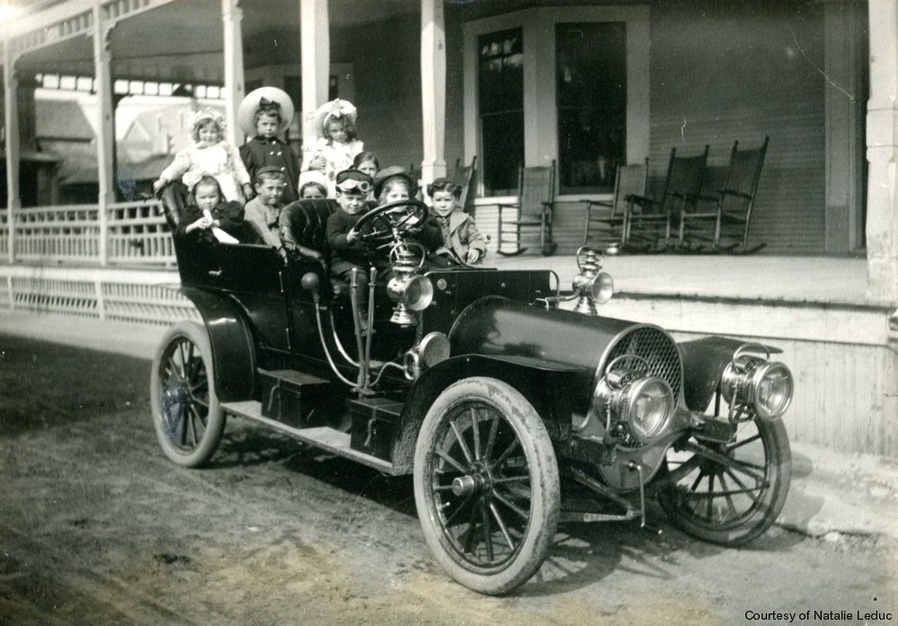 First Automobile in the AdirondacksIn July, 1902, an automobile reached the central Adirondacks for the first time, arriving in Saranac Lake. This event marked a significant change in transportation accessibility that led to increased tourism in the Adirondacks. Car travel made the Adirondacks a more desirable place for vacations and leisure.
-
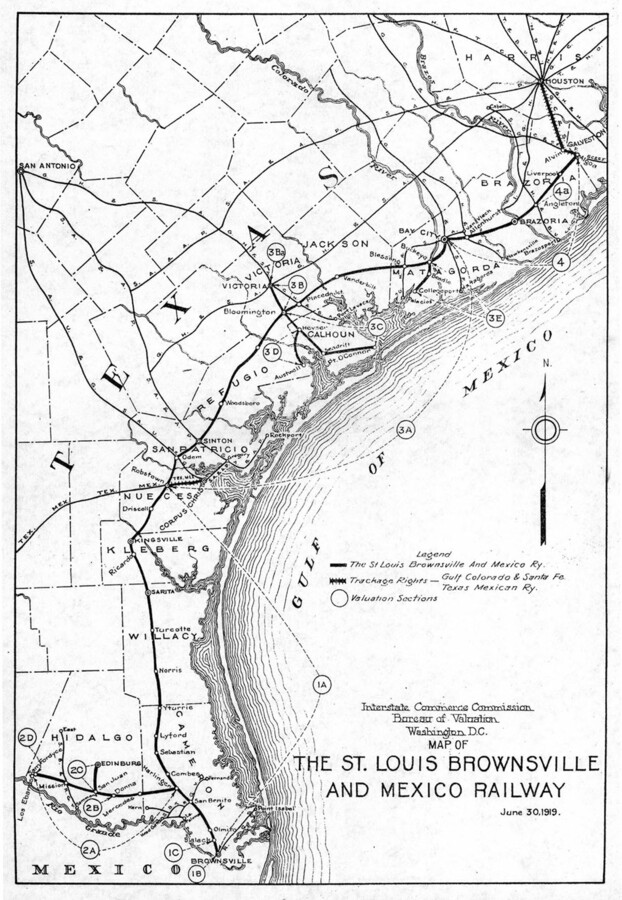 St. Louis, Brownsville, and Mexico Railway CompanyCompleted in 1904, the St. Louis, Brownsville, and Mexico Railroad introduced Northern settlers to the tropical, fertile, deltaic lands. The creation of the railroad drastically impacted the population numbers of South Texas. In 1920, the population of Cameron County, the county encompassing Brownsville, was 36,662; by 1930, 77,540, an increase of 111.5%.
-
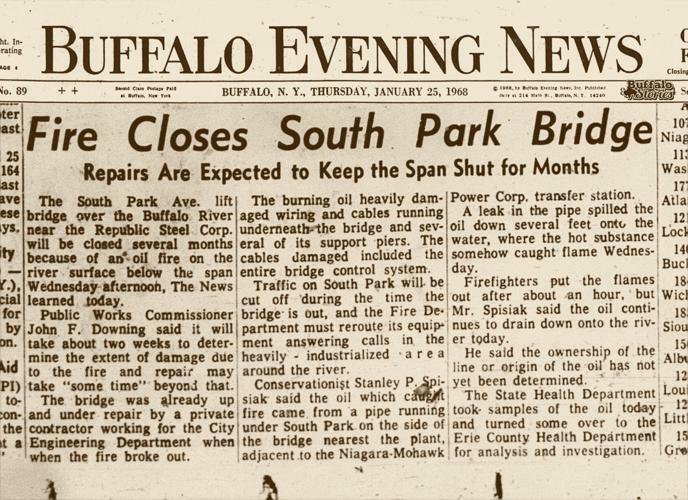 Buffalo River Catches on FireIn January of 1968, the Buffalo River caught fire. The river was so polluted, with oil coating the surface, that sparks from a welder's torch set the river on fire. The event set the stage for the river to be deemed an Area of Concern, but it did not garner much national attention and the pollution itself was an accepted fact of Buffalo life.
-
 Buffalo River Remedial Action PlanThe Buffalo River Remedial Action Plan (RAP) was implemented after the Water Quality Board of the International Joint Commission deemed the Buffalo River an Area of Concern. The plan was made to address the major contamination of the river and implement solutions to increase water quality and aquatic life in the river. The RAP was developed by a commission of citizens and the NYSDEC.
-
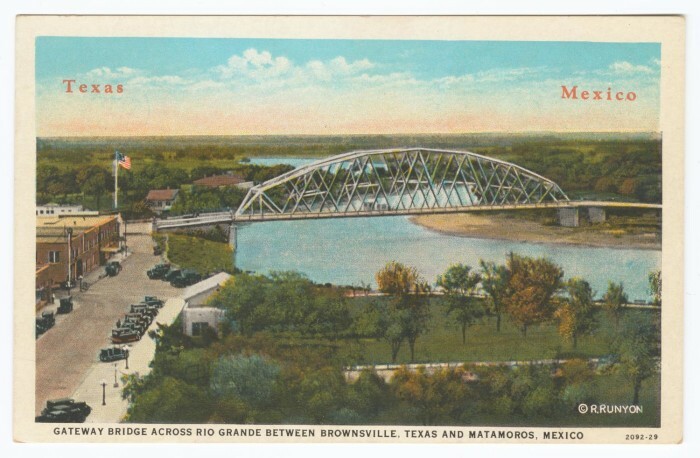 Brownsville Gateway International BridgeOpened in 1926, the Gateway International Bridge unites Brownsville with its Mexican twin city Matamoros. The Gateway International Bridge serves all commercial/private vehicles and pedestrians. It's operational 24/7, and is responsible for 80% of pedestrian traffic traveling from Brownsville to Matamoros. The Gateway International Bridge processes around 90,000 vehicles monthly. This means that thousands of cars sit in idle, with their engine running/emitting fumes, while they queue to cross. The border/customs officers shoulder an exposure burden from air pollutants released by vehicles.
-
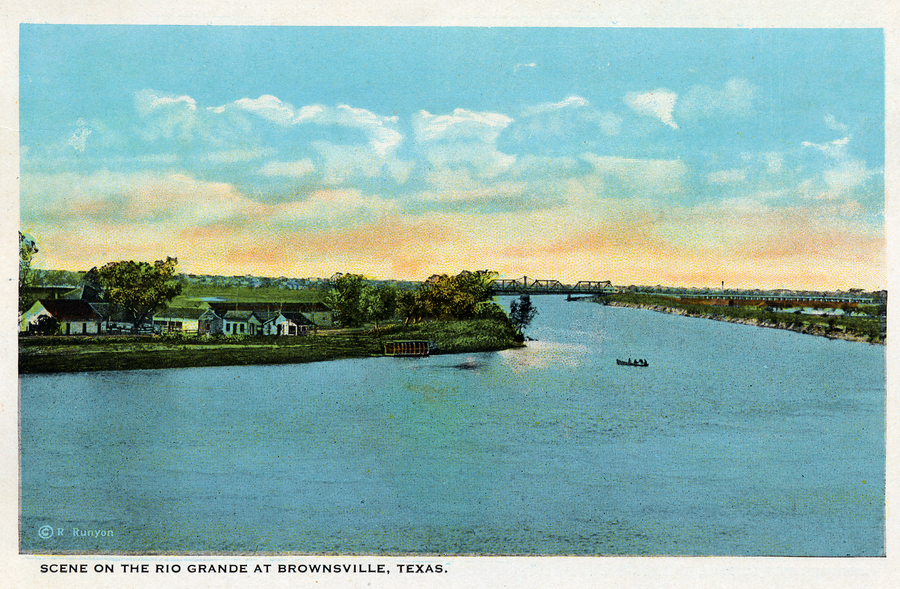 Rio Grande RiverFirst crossed by Spanish settlers in 1530. Spanish settlers granted land grants to families, so they could harvest/settle land in the Rio Grande Valley. After the Treaty of Guadalupe Hidalgo in 1848, the Rio Grande River became the border dividing Texas and Mexico. The Rio Grande River has been crucial for the agriculture community in South Texas. Farmers utilize the water from the Rio Grande to grow sugarcane, cotton, and vegetables. The Rio Grande has been running dry, the reservoirs have hit record lows and water levels hover at around 20%.
-
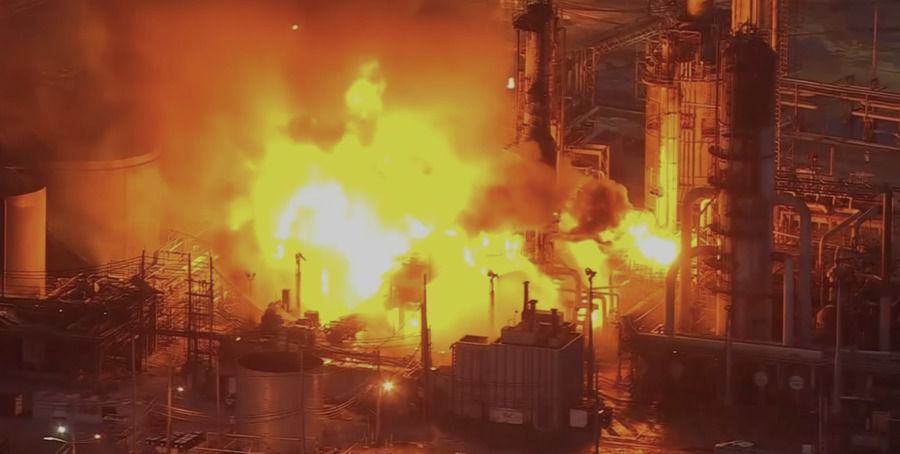 The 2019 Refinery Explosion in South PhillyThe Philadelphia Energy Solutions refinery had a massive explosion in June of 2019. Early in the morning, a pipe in a hydrofluoric acid unit basically gave out because it was super corroded, which caused a massive "vapor cloud" that caught on fire. One of the blasts was so strong that a 38,000 pound piece of equipment flew across the Schuylkyll river. The fire burned tons of hydrocarbons and released over 5,000 pounds of hydrofluoric acid into the atmosphere, which is extremely dangerous to breathe in. 5 works were hurt, and the fire was put out the next morning. On June 26, 2019 PES announced that the refinery would be shutting down, and on June 27th they filed for bankruptcy.
-
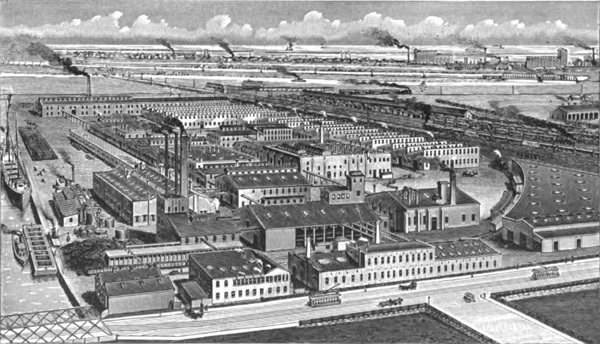 The Height of Allied Chemical and Dye CorporationAllied Chemical and Dye Corporation was the largest dye plant in the United States. It formed in 1920 from a merger of other chemical companies. The corporation was a major chemical manufacturer located along the Buffalo River. It was one of the chemical industries that polluted the river through direct liquid waste disposal and toxic sludge runoff.
-
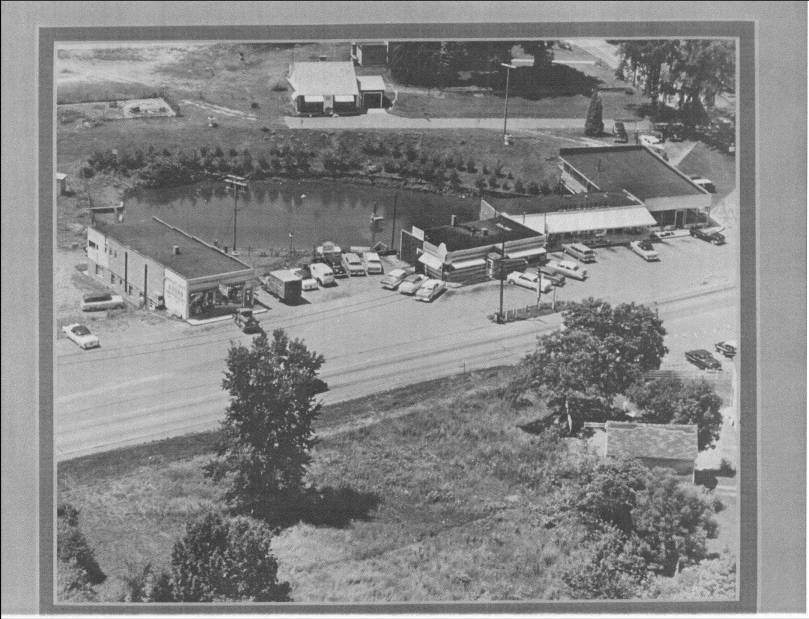 Burnt Hills, New York, corner of Route 50 and Lakehill Road, 1950s.As America became more dependent on cars and the travel between cities increased, Burnt Hills shifted its center to where cars from the bigger cities would pass through. The intersection of Route 50 and Lakehill Road is now the center of Burnt Hills, although it wasn’t until the 1930s that Route 50 was constructed as a faster way to get to and from Schenectady and Saratoga. In 1950, the Burnt Hills Fire Department moved its building from the intersection of the Lakehill and Kingsley roads onto Route 50. Several businesses followed suit.
-
 New Haven Land TrustThe New Haven Land Trust begins focusing thorough energy on environmental
-
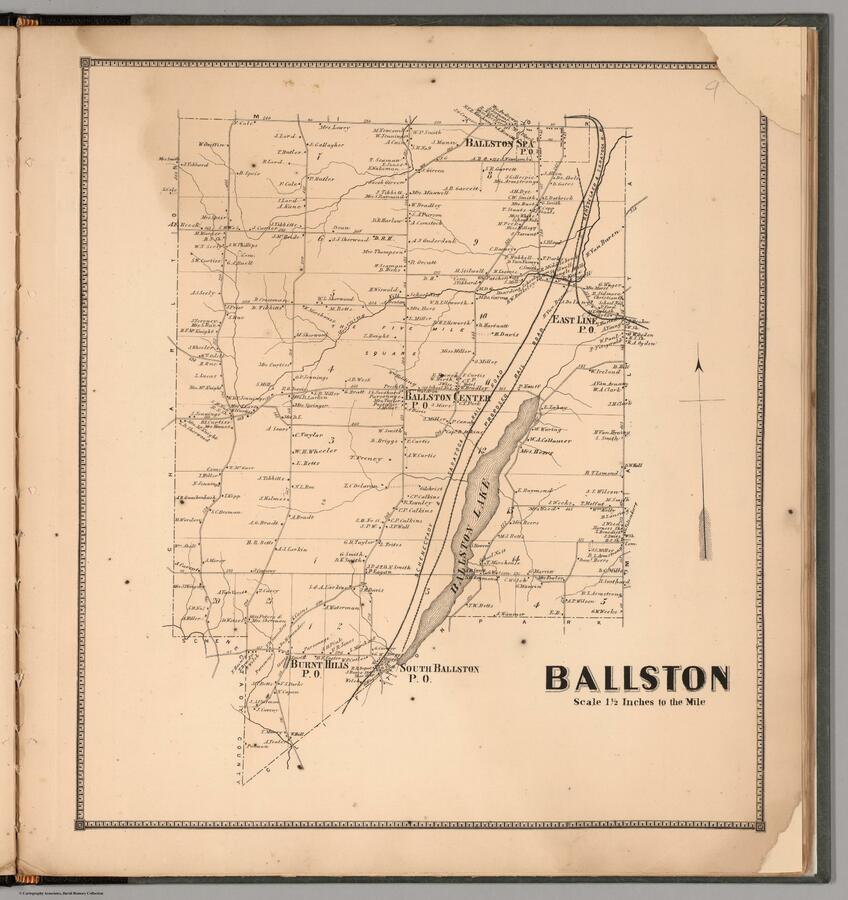 Ballston, Saratoga County, New York.This 1866 map depicts Ballston, New York as well as Burnt Hills and Ballston Spa. In the century since the McDonald’s brothers settled on the shores of Ballston Lake, the town has grown significantly. Roads cut back and forth across the land and the homes of residents and some businesses are clearly marked. There is even a railroad between Schenectady and Saratoga present along the edge of the lake. Many of these roads are still in use today, but at this point there are still far less of them than will appear in the coming decades.
-
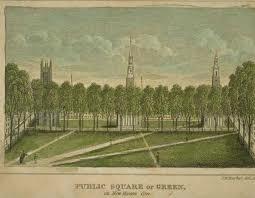 First New Haven SettlersNew Haven’s first English Puritan settlers set up camp for the winter alongside a creek.
-
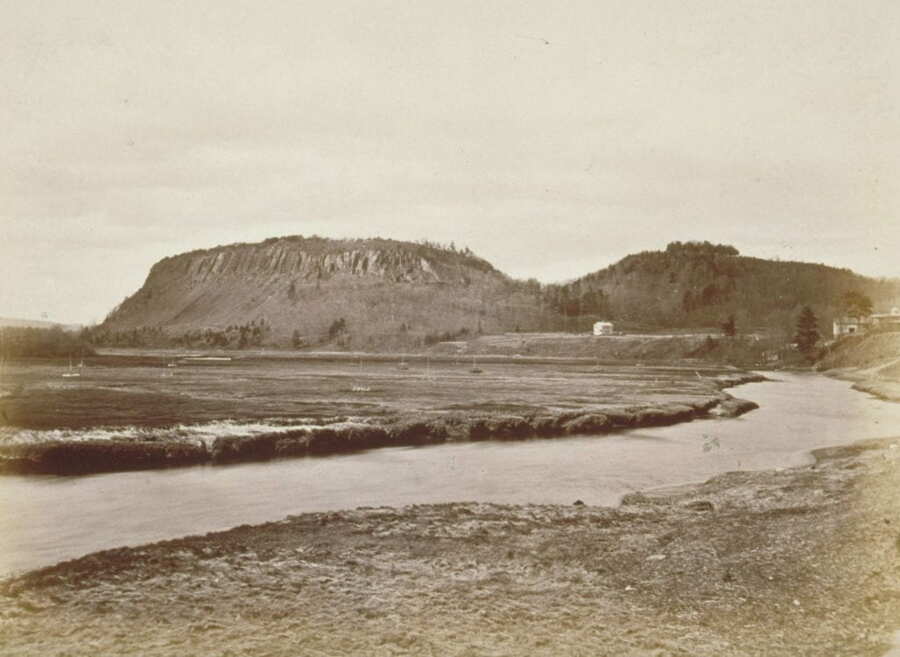 West Rock and East RockDutch explorer Adriaen Block made a pitstop in New Haven while sailing through the Quinnipiac River, which he nicknamed the "River of Royenberch,” meaning “red rock,” referring to East Rock and West Rock
-
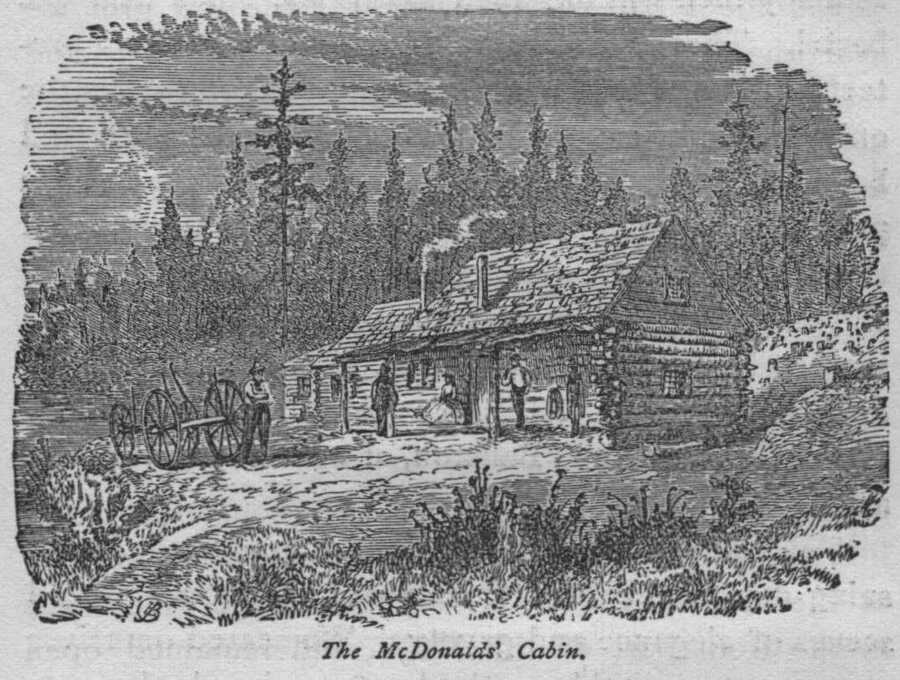 The McDonald Brother's Cabin in Ballston, New YorkMichael and Nicholas McDonald were the first Euro American settlers in what is now Ballston. After moving out of Schenectady, the two brothers squatted in 1763 on the site of this log cabin near the edge of Ballston Lake before later obtaining a deed. On their way to the lake, the brothers came across the site of a recent prescribed burn by Native Americans and decided to call the area "Burnt Hills".
-
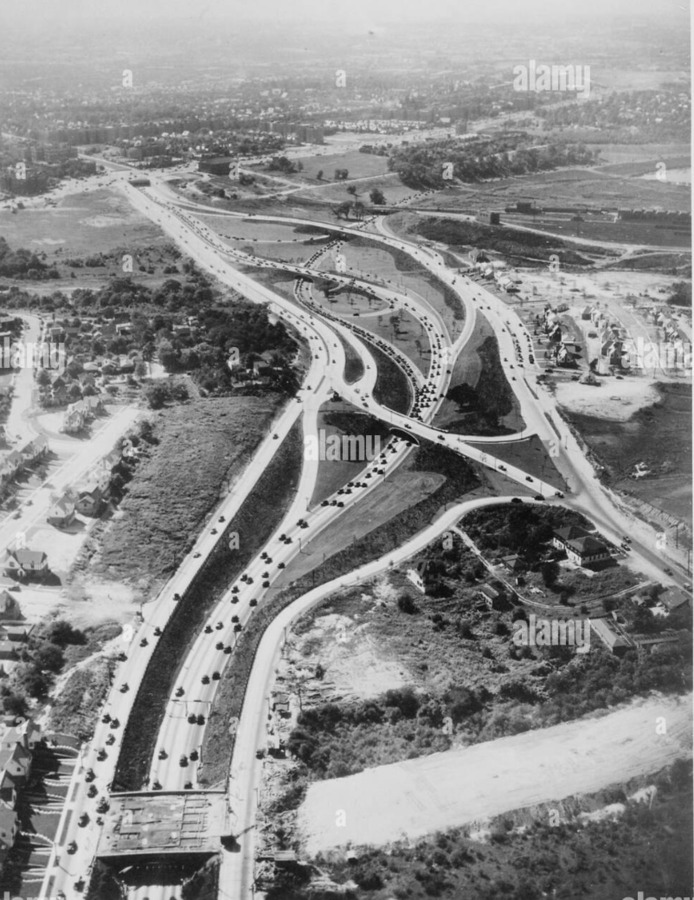 Deveolpment of the Long Island Highway SystemThe highway system was an innovation that allowed for a more simplistic travel for people. The increase in personal vehicles lead to people wanting to get to their destinations significantly faster.
-
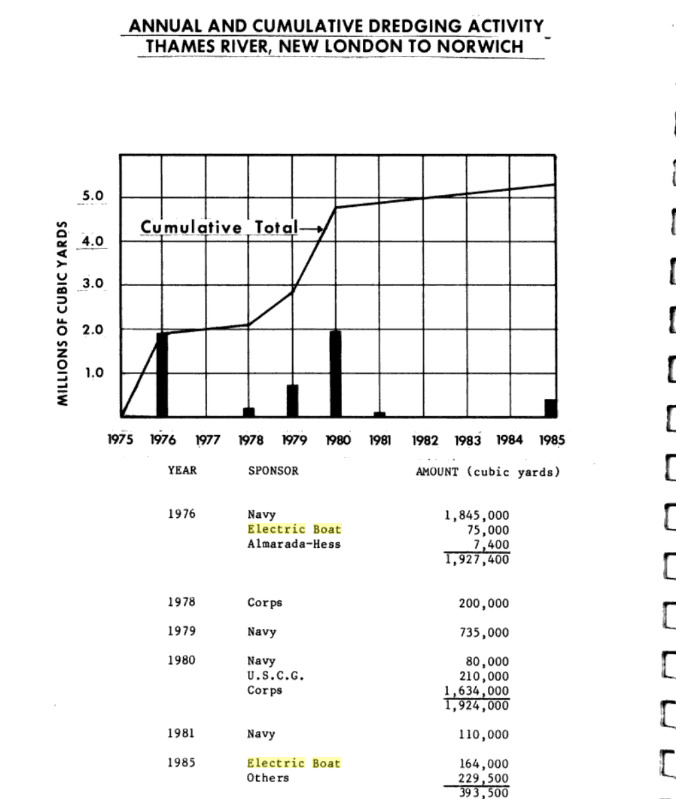 Dredging the ThamesThe Thames River has a muddy and relatively shallow bottom. For larger oceangoing vessels to travel into the Thames, making the river deeper is needed. However, dredging operations are harmful to the clam population and can disturb sediment layers which are holding pollutants.
-
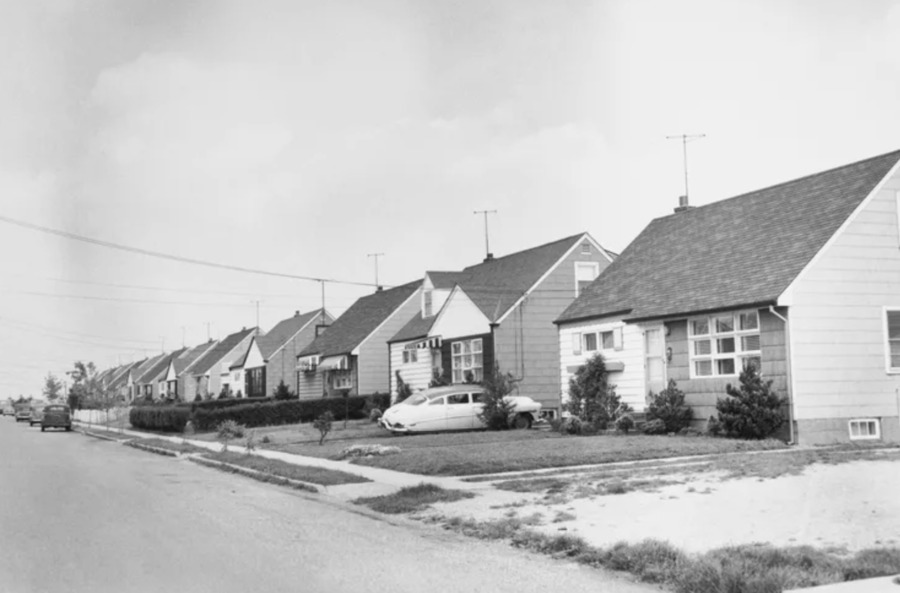 Levittown: The Start of the SuburbsLevittown was one of the first development of the suburbs. The houses were densely packed and had lawns, which at the time was advertised as the American dream post world war two.
-
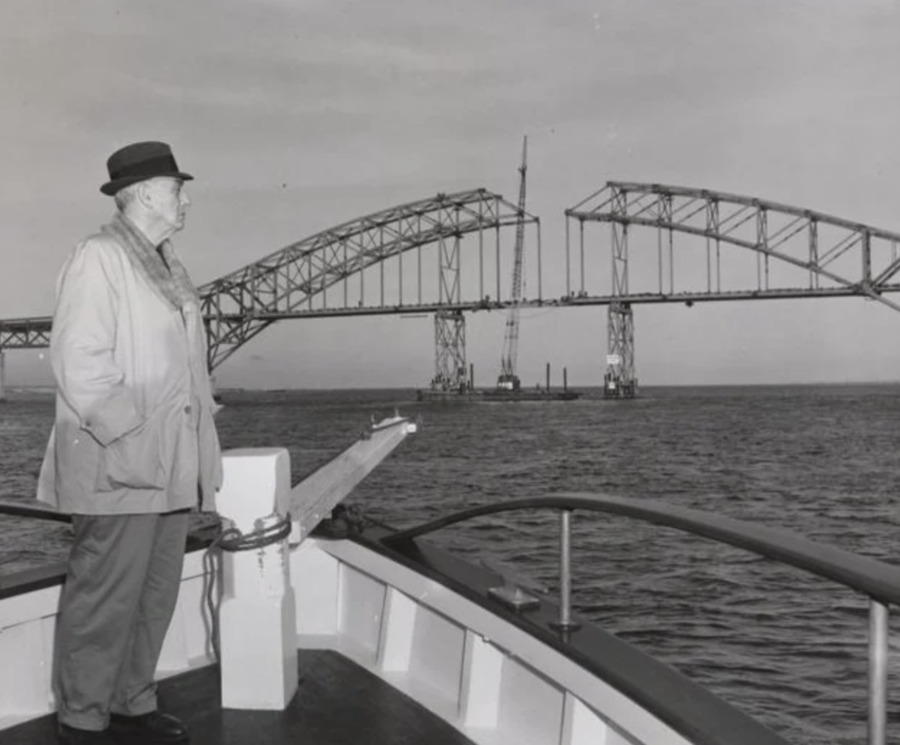 Traveling to Robert Moses BeachRobert Moses developed a bridge system due to the increase in sububurbian life on long island and personal automotive vehicles. People wanted to be able to be able to get to the beach the cheapest and easiest way.
-
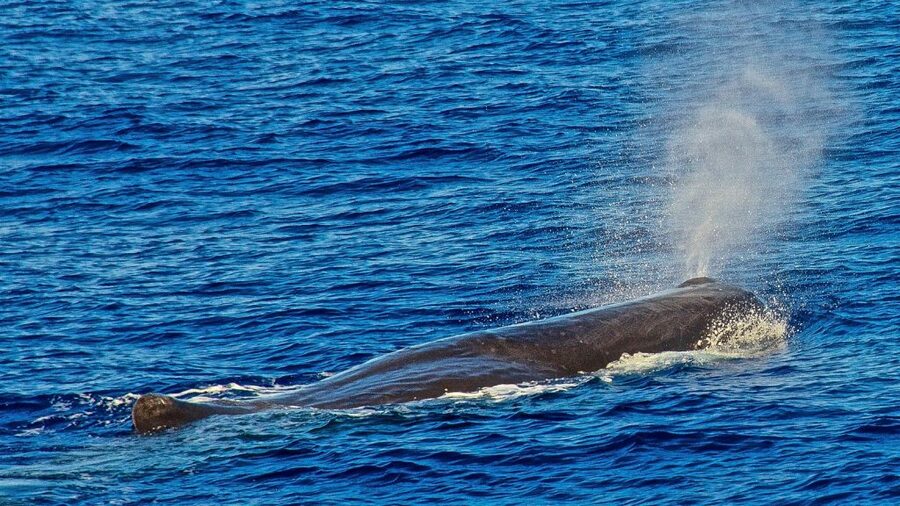 Captain Hussey Kills A Sperm WhaleCaptain Hussey from Nantucket was blown out to sea in a storm and found himself in a school of Sperm Whales. He ordered his crew to kill one of the whales. After doing this, the Captain tried the Sperm Whale's oil and noted its high quality.
-
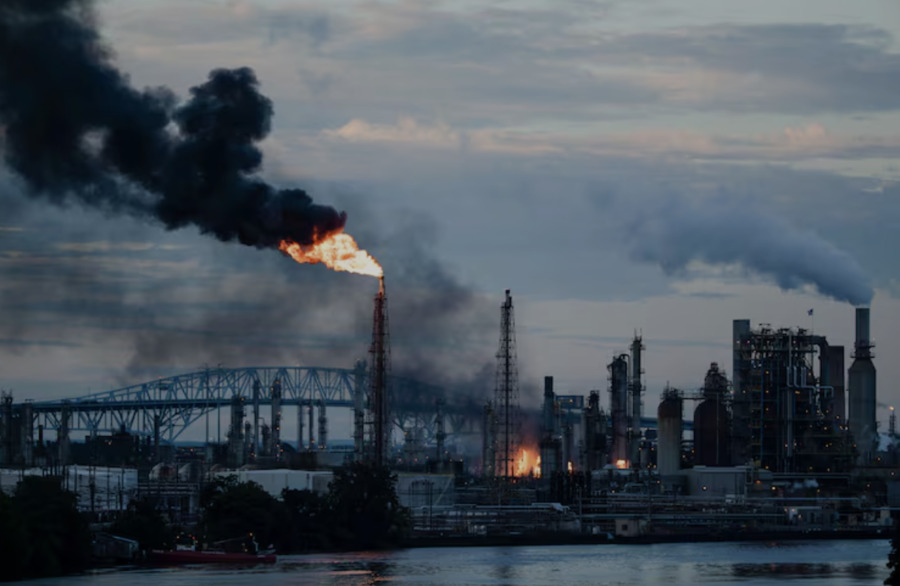 Health Problems That Came With Living Near The RefineryThe South Philly refinery affected the health of people living nearby. The report says the refinery was basically the biggest source of a ton of harmful air pollution in the entire city sulfur dioxide, and VOCs such as benzene. All of that stuff is bad for your lungs, and research from other refinery communities shows more asthma attacks, more kids wheezing, and worse lung function overall. Even though no one did a full health study just on the South Philly neighborhoods, the same types of pollutants were coming from this refinery, which makes the health risks pretty obvious. People living close to the plant also had to deal with stress from constant leaks, equipment problems, and sketchy monitoring systems that didn’t always work. The refinery had a ton of incidents where it went over legal emission limits, and residents weren’t always told everything. Then in 2019 the huge explosion released over 5,000 pounds of hydrofluoric acid, which is very dangerous. They still don’t know how that affected people long term, but it shows how risky it was for anyone living near it.
-
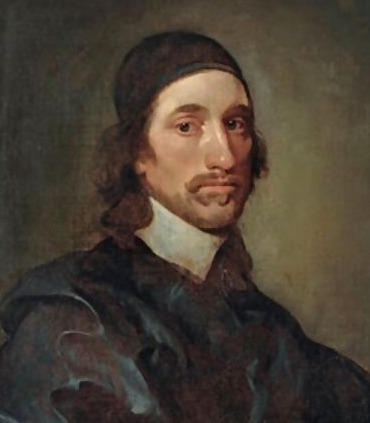 John Winthrop founds New LondonJohn Winthrop started a settlement on the West bank of the Thames River and established a harbor. The Thames was protected by Fisher's Island. The river's muddy bottom allowed for easy anchoring for ships.
-
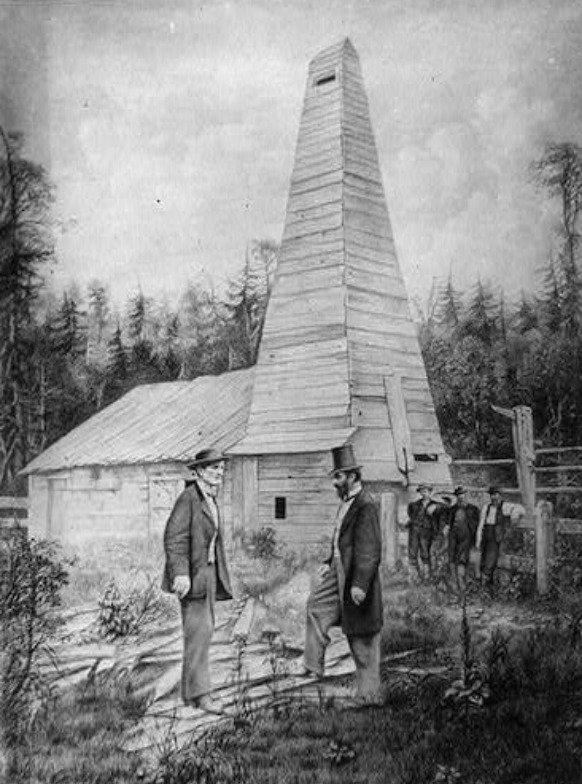 How Philly Became an Oil Hotspot in the Mid/Late 1800sPhilly became one of the main places for storing and refining oil in the late 19th century. Once Edwin Drake struck oil in western Pennsylvania in 1859, the industry blew up fast and companies needed somewhere bigger to refine and ship everything. Philly was the perfect spot for that because it already had a major port and many railroad connections, and open space along the Schuylkill and Delaware rivers. By the 1860s and 1870s, the city had multiple oil storage sites and refineries spread around. After multiple fires and accidents, companies moved their operations farther south, which is how spots Point Breeze and Girard Point became long term refinery hubs. All of this early infrastructure ended up shaping how South Philly looks today and also played a huge role in how the city grew around the oil industry.
-
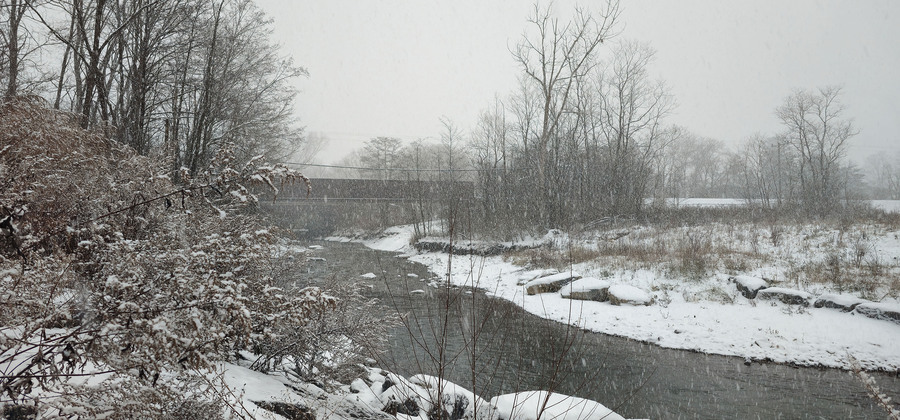 An Engineered Legacy: The Unnatural Sauquoit CreekThe construction of the Sauquoit Valley Arterial solved one 19th-century problem, chemical pollution from the mills, by creating a new 21st-century one. As seen in this photograph, the creek was physically re-engineered, forced into an unnaturally "straight" channel to make room for the highway. This alteration, which destroyed the original, winding path of the creek, is the direct cause of severe, chronic flooding. The May 15, 2023, Upper Sauquoit Creek Flood Study by Ramboll was commissioned to diagnose and find solutions for this exact flooding. This modern engineering report confirms that today's "natural disasters" in this area are, in fact, the direct, man-made legacy of the NY 8's 1969 construction.
-
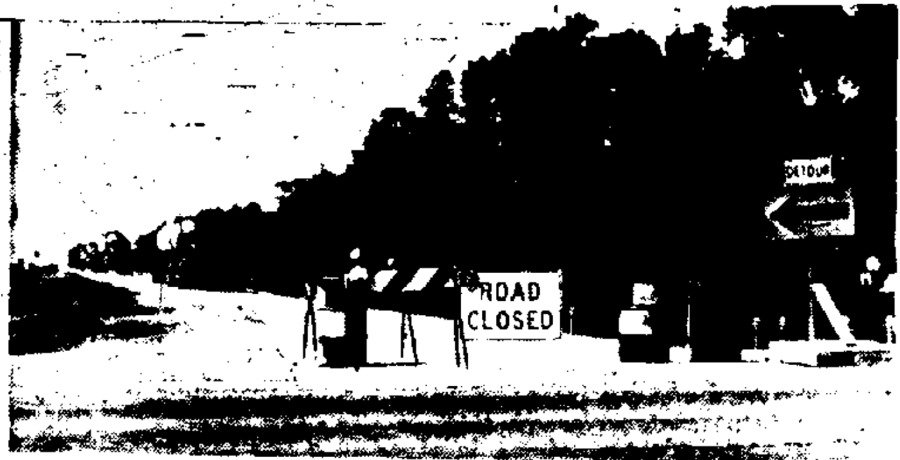 Paving the Past: The Construction of the Sauquoit Valley ArterialThis newspaper clipping from the Utica Daily Press on July 18, 1969, announces the August 6 opening of the Sauquoit Valley Arterial. This massive, four-lane highway was celebrated as a 20th-century solution to replace the "blight" of the defunct 19th-century industrial corridor. Planning documents confirm this project was a "great erasure," as the new road was built directly over the demolished foundations of the A.T. Stewart Woolen Mill and the abandoned DL&W railroad tracks. During this construction, the Sauquoit Creek itself was fundamentally re-engineered by being straightened into an artificial channel. This project completed the violent transformation of the hamlet's landscape, permanently burying the industrial past under a new layer of modern, automobile-centric infrastructure.
-
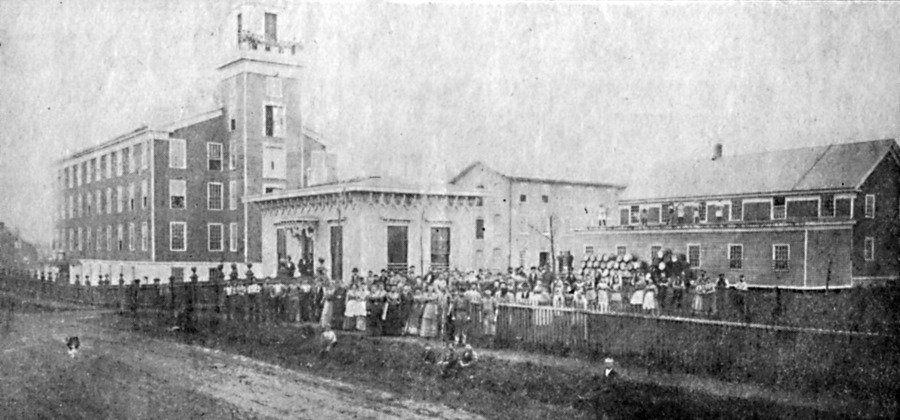 Harnessing the Sauquoit: The A.T. Stewart Woolen MillThe A.T. Stewart Woolen Mill, which operated from 1840 to 1879, was the primary 19th-century industrial anchor of the hamlet of Washington Mills. Originally built by Frederick Hollister, and later acquired by retail magnate A.T. Stewart, this massive stone factory was the "mill" that, along with the nearby Union Fork and Hoe factory, formed the industrial cluster that gave the hamlet its name. As a textile factory, it was the economic engine of the community, employing a large portion of the population to produce woolen goods. Its entire operation was dictated by the Sauquoit Creek, which it first harnessed with dams and millraces to power its machinery. As the mill shifted to steam and coal, the creek then became its industrial sewer, carrying away a toxic cocktail of chemical dyes, lye, and other manufacturing waste.
-
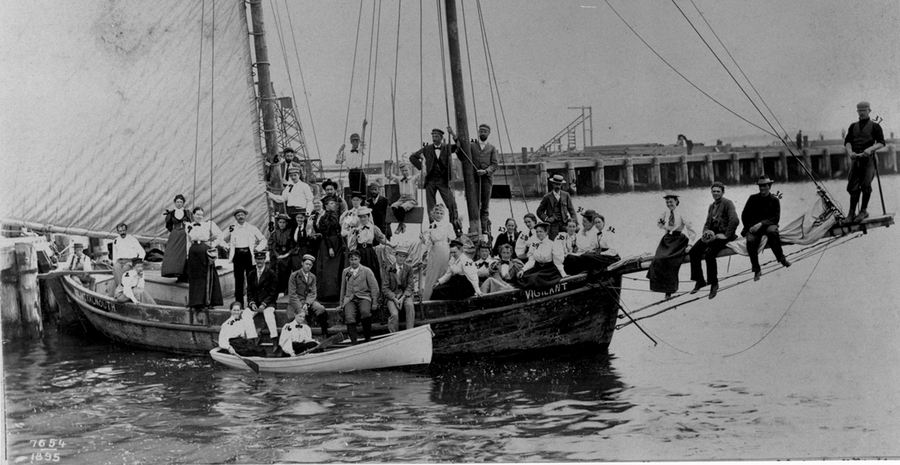 Founding of the Marine Biological Laboratory in Woods HoleThe internationally-known Marine Biological Laboratory (MBL) in Woods Hole was first established through the efforts of Falmouth's Woman's Education Association and scientists and university professors across the country. The site was chosen because it was at the confluence of the ranges of southern, warm-water species and northern cold-water species, and was therefore an ideal location for studying marine life. From the outset its priorities were strictly scientific, valuing primarily the acquisition of knowledge and education and considering economic impact or conservationist efforts to be "secondary." The lab would grow dramatically over the subsequent decades and establish Woods Hole as a bastion for scientific research, with other famous organizations including the Woods Hole Oceanographic Institution joining MBL by the early 20th century. The establishment of MBL is one of countless examples of how Falmouth's marine environment was crucial to its economy and identity, as well as a general trend in American environmental history of the natural environment at this time beginning to be seen as something to be studied and understood.
-
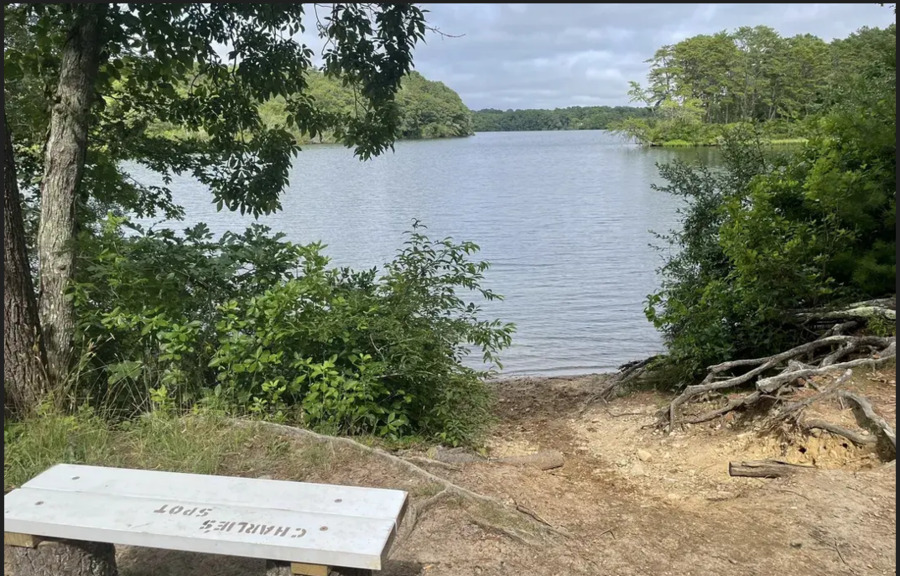 Establishment of the Coonamessett Greenway Heritage TrailCranberry bogs formed a large part of Falmouth's economy in the 19th and early 20th centuries, supported mostly by immigrant labor from Portugal and Cape Verde. In modern times these bogs are no longer in use, and the Coonamessett Greenway Heritage Trail as well as other similar projects in the area represent efforts to restore them back to the ecosystems they were before European colonization. The project was undertaken by the 300 Committee and Coonamessett River land trusts, local privately-funded organizations which purchase land in Falmouth and convert it into conservation land to prevent it from being developed. While not a significant event in the town history, it represents a shift in ideals and a general devaluing of agriculture relative to natural spaces. The fact that it is a publicly accessible walking trail is also indicative of the town's tourist economy. The project aimed to help restore the health of the river ecosystem, which has since been challenged by controversial housing developments upstream.
-
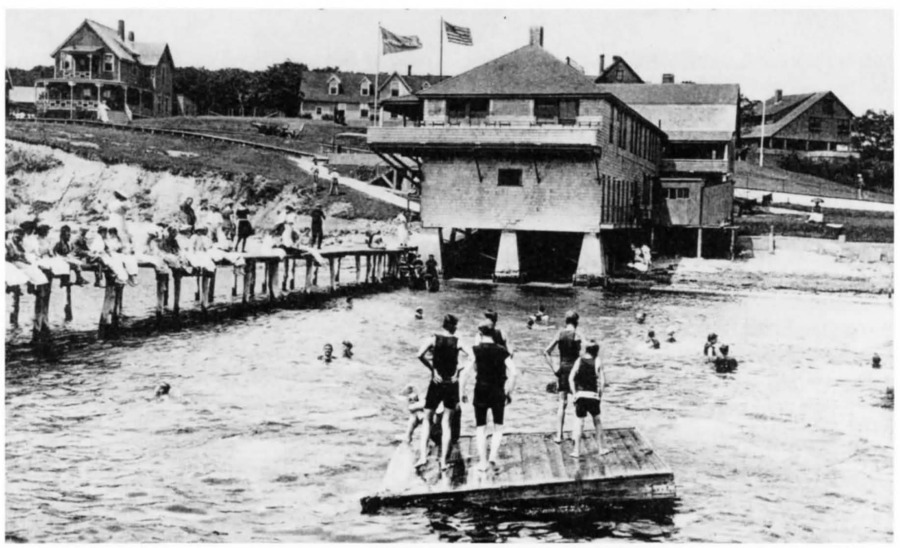 The Rise of Falmouth's Tourist EconomyJanuary 7, 1871 marks the incorporation of the Falmouth Heights Land and Wharf Company, a group of developers responsible for the creation of Falmouth Heights, an area of the town envisioned as an ideal location for a summer resort. Coastal real estate in Falmouth during settlement was not highly valued as it was seen as unfit for development. These men, most of whom were from Western Massachusetts, purchased the land from a salt works company and would split it into several lots in a city-like layout that was unusual for the mostly rural setting and would sell the land to developers who would construct rental properties and hotels, mimicking the success of the earlier development projects on Martha's Vineyard. The connection of Woods Hole to the Old Colony Railroad the year after helped immensely to draw tourism to the area. This event marks a shift in Falmouth towards tourism and away from its mostly maritime economy which had been tied to the declining whaling and salt-making industries. This represented a major boon for the town and would lead to a dramatic increase in population in the subsequent decades, but would ultimately lead to a myriad of environmental problems including straining of the wastewater system in the future.
-
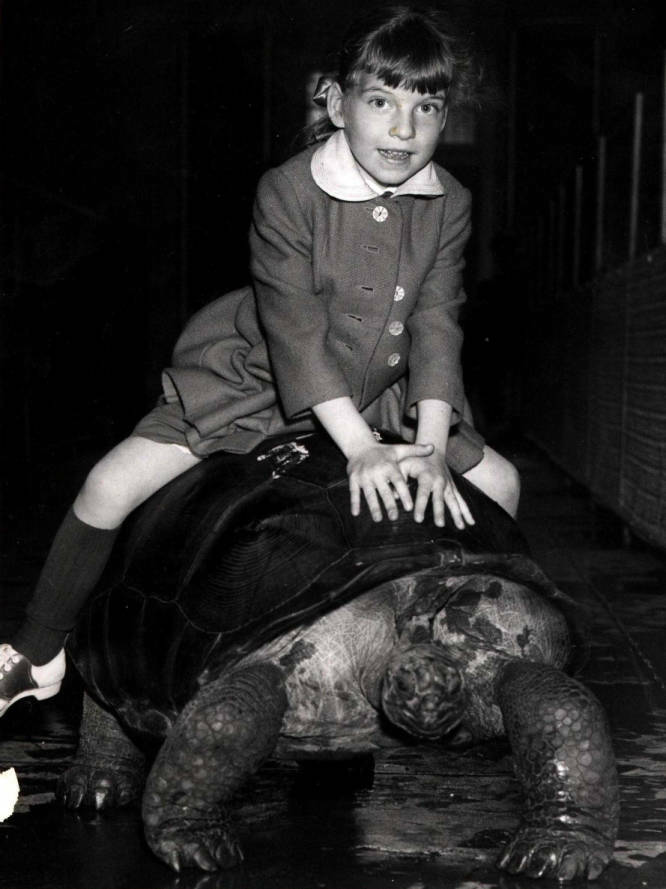 Utica ZooBuilt in 1914, the Utica Zoo has been around for over 100 years now, and sits on land donated by Thomas R. Proctor in 1909. He hired a famous architect, Fredrick Olmstead Jr, whose father designed Central Park, to plan walkways and scenic areas in the park. The zoo started with just 3 deer, and has expanded over the century to encompass over 99 species of animals.
-
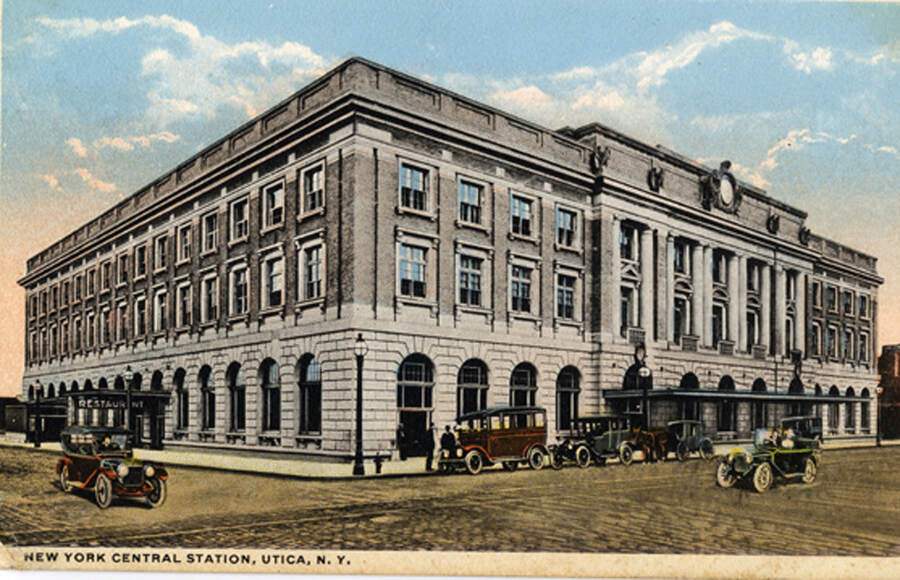 Early Immigration, Erie Canal, and IndustrializationWith the construction of the Erie Canal in 1817 came along a wave of early immigrants into Utica, notably Irish immigrants. The production of railroads also led to large immigration into Utica, as Utica was quickly becoming one of the centers for textiles. The industrial development of Utica coincided with the arrival of many new immigrants, including a significant Italian population along with Poles, Greeks, Jews and others from southern and eastern Europe, Syrian-Lebanese, and a host of others, intertwining culture and economic growth.
-
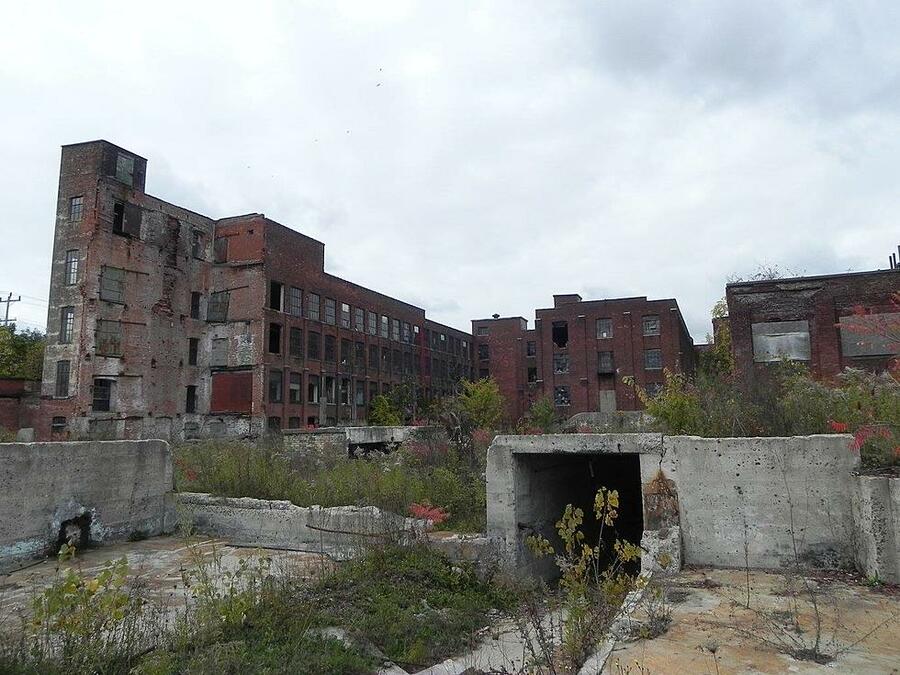 Charlestown Mall DemolitionOn the border of Utica and Frankfort lies the abandoned, fire-struck Charlestown Mall. Once a gun manufacturing facility, the building has had many uses throughout time, converting to a computer factory and then eventually a mall. In 2020, a fire broke out, and the mall was abandoned. The site was reported to have large amounts of asbestos from the material it was constructed with and other harmful chemicals from its history as a gun manufacturer. During its time as a gun manufacturing site, there was chemical runoff and frequent improper disposal of waste materials, such as asbestos. As a result, the site was considered a hazard by the EPA and named a brownfield site.
-
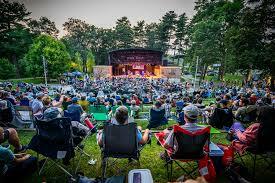 Overusage of ResourcesThis was a newspaper article written in the late 1990s covering the usage of funds and how they would be applied towards the park. A lot of their funds were catered towards the entertainment pieces to draw people in such as concert stands or festivals. Whereas the actual nature aspect kept downgrading throughout the years from storms or other strong weather events. Less of their funding budget went to upkeep the park in good conditions because the main value they saw in it came from their entertainment.
-
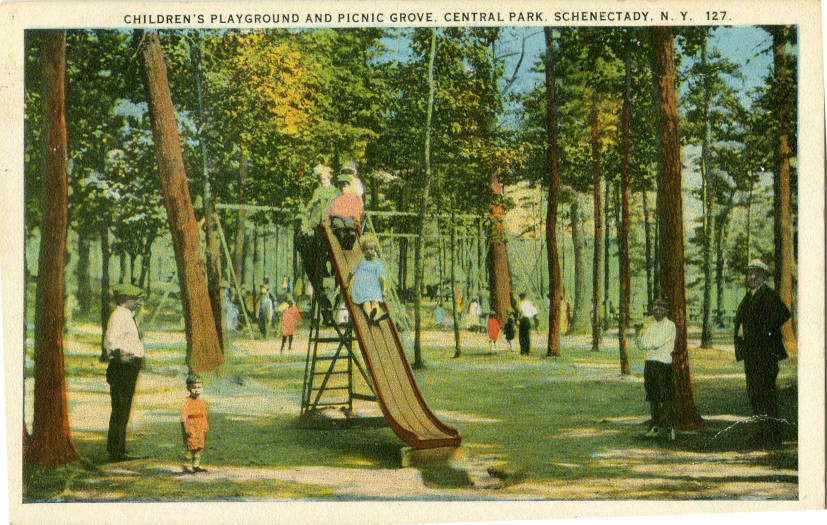 Children’s PlaygroundThis picture captures this sense of leisure that families would be looking for in parks. This is a callback to one of the readings we did earlier in the term where one of the main attractions for parks was the need for leisurely and large peaceful areas of nature in the aftermath of the post-war thinking.
-
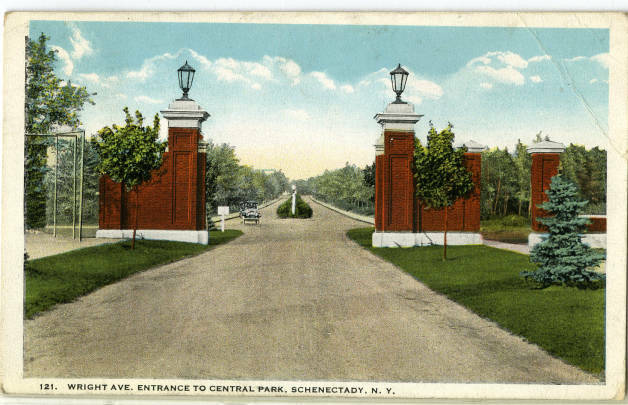 Wright Avenue Entrance of Central ParkThis is a postcard capturing one of the entrances into Central Park during the 1900s. This captures a significant aspect being that the rose garden, which is a popular aspect to the park nowadays actually hadn’t existed before 1960 (when the first bushes were planted). It wasn’t until the early 2000s where talks about restoration came about.
-
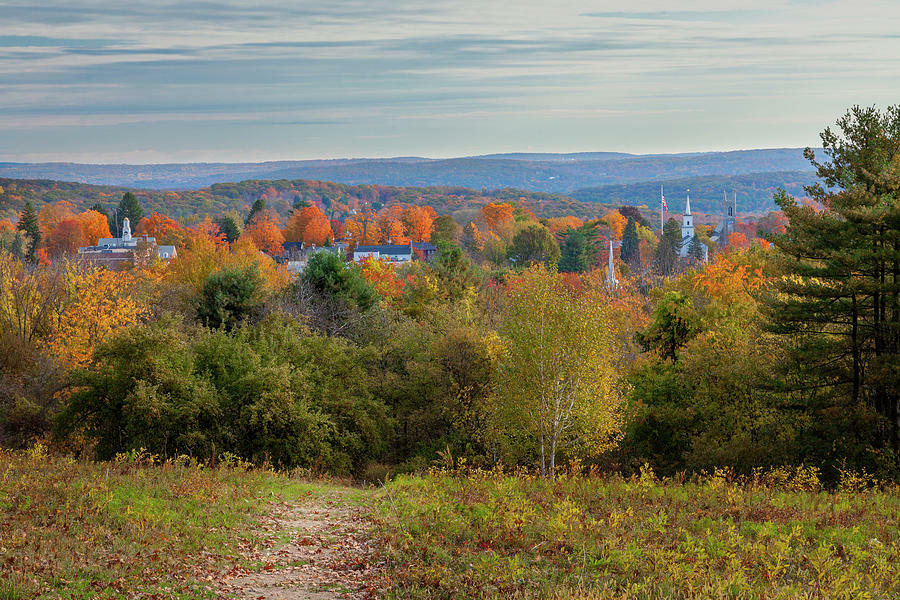 Town of Newtown Natural Resource InventoryIn 2011, Newtown decided to look at itself altogether and develop a Natural Resource Inventory (NRI) with the goal of revising their Plan of Conservation and Development. This meant Newtown could look at biodiversity of both plants and animals, soil resources, watershed management, wetlands, and water quality. This report found that biodiversity supports a healthy and diverse wildlife population, which is a positive indicator of overall environmental quality. Unfortunately, the inventory also reported finding 20 different invasive plant species, including the Norway maple, autumn olive, common reed, and water chestnut. When looking at the soil composition across town, it was determined that there are 6,748 acres of prime farmland soils, 4,707 acres of statewide important farmland soils, and 27 percent of farmland soils within the watershed. Overall, this inventory shows that Newtown has a positive environmental quality and supports a healthy and diverse wildlife population.
-
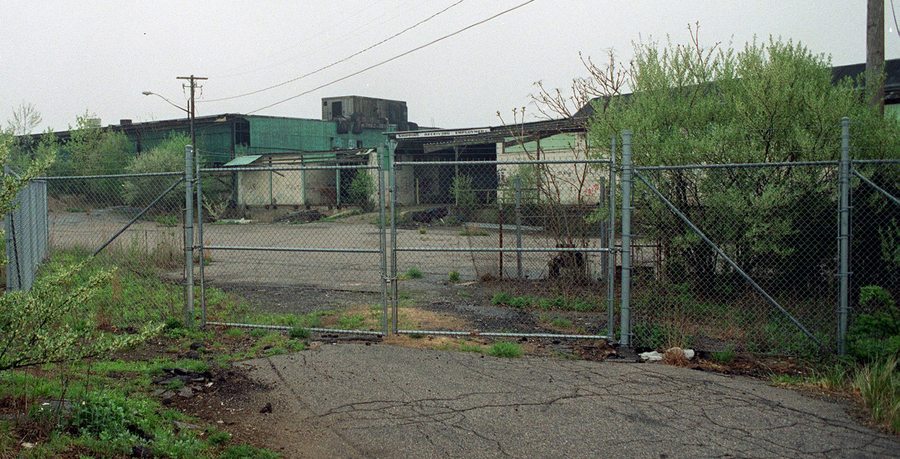 Work Begins to Remove Contamination at Newtown, Conn. SiteThis site is a former aluminum smelting facility that was in operation from 1947 to 1987, but now sits abandoned. The operations of the facility included smelting aluminum and using oil that contained polychlorinated biphenyls (PCBs) while also heating the facility building and running the smelters using volatile organic compounds (VOCs). The EPA was called to start a 2-month project to remove large piles of fine metal waste products that were contaminated with high levels of metal, including cadmium, lead, tin, chromium, copper, zinc, nickel, and PCBs, asbestos-containing roofing shingles, drums, containers, and aboveground storage tanks. Today, the site is marked as a Superfund Site and remains abandoned.
-
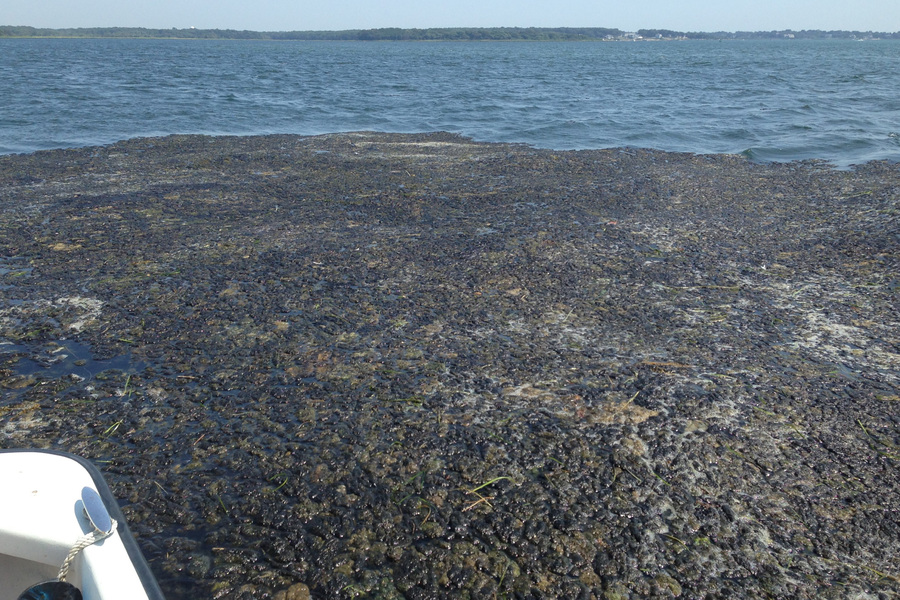 A Mat of Invasive Cladophora in Little Narragansett BayThe Cladophora monoculture in the bay has been increasingly noticed by residents of Stonington, Conn., and neighboring Westerly, R.I., for more than a decade, as it continues to foul beaches with piles of smelly, decaying seaweed, and fill the bay itself with floating mats that wash up in the summer on every beach in the area. Even though recently updated wastewater treatment plants are doing a better job of removing nitrogen than before recent upgrades, the nutrient load entering the bay is still too high due to changing conditions there. This, combined with ever warming ocean temperatures, is continuing to fuel the Cladophora explosion on the bottom and surface of the Bay. In addition, natural shifting of the Sandy Point sandbar, the spit of land that was connected the Napatree Point before the 38 Hurricane, has restricted tidal flows into the bay, further fueling the algae growth.
-
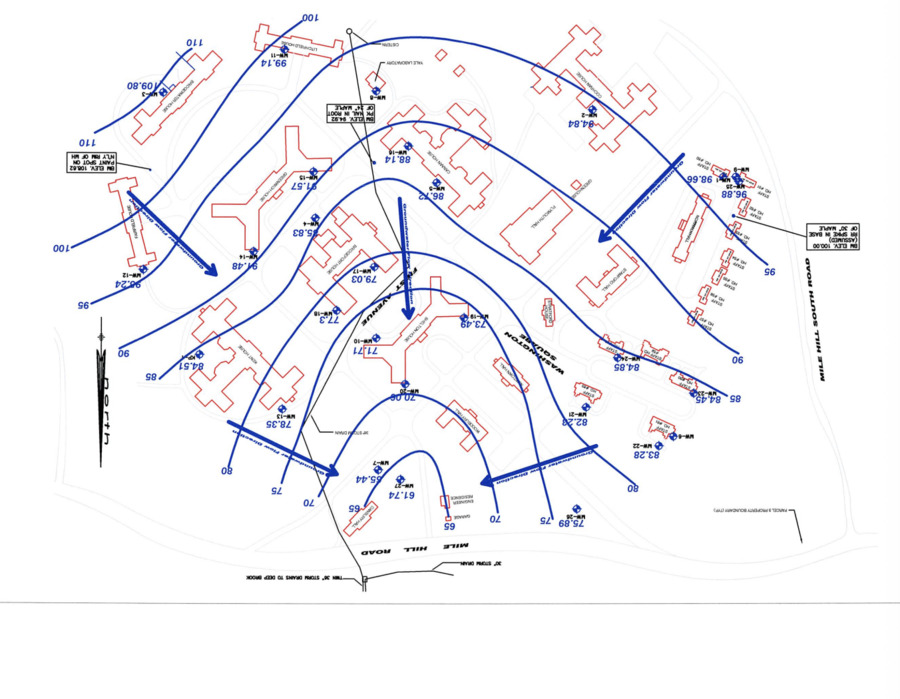 Fairfield Hills State HospitalFairfield Hills State Hospital, which was a psychiatric hospital for anyone over the age of 18 from 1931 until 1995, and at its peak held 4,000 patients, 20 doctors, 50 nurses, and 100 other employees, and was entirely self-sufficient. The hospital was abandoned in 1995, following the trend of deinstitutionalization, and was bought by the town of Newtown in 2001. Around 2008, the town of Newtown requested a Phase I environmental site assessment; they were looking for the presence, or likely presence, of a hazardous substance or petroleum products on the property. Following this report, soil and groundwater that were contaminated with petroleum on the northeast side of campus, tetrachloroethylene from the laundry building, and dieldrin from the main subject property. There is still an ongoing remediation project, which includes the problems of asbestos and lead-based paint.
-
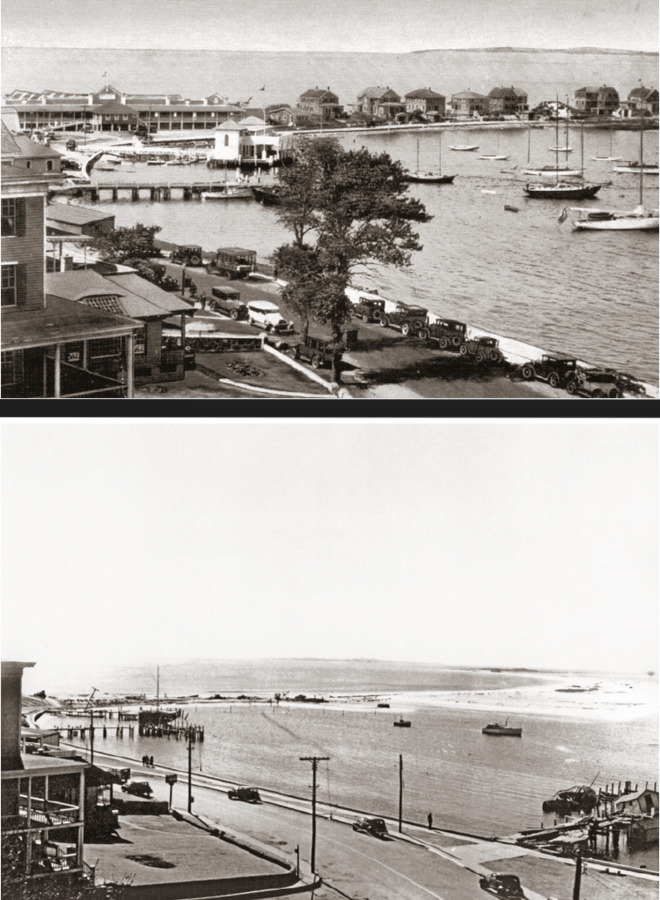 Napatree Point Prior to the Hurricane of 38Across Little Narragansett Bay from Stonington lies the small tourist town of Watch Hill. Since the early 1800s, it had been a destination for beach-goers and sightseers. The top half of the photograph shows Napatree Point as it was before the 1938 hurricane, full of 39 pristine beach houses, all the way down to the old military fort at the end of the dunes. The bottom photo shows Napatree as it was in the immediate aftermath of the hurricane. Every single one of the houses, and 15 of their residents, had become victims of the storm's fury.
-
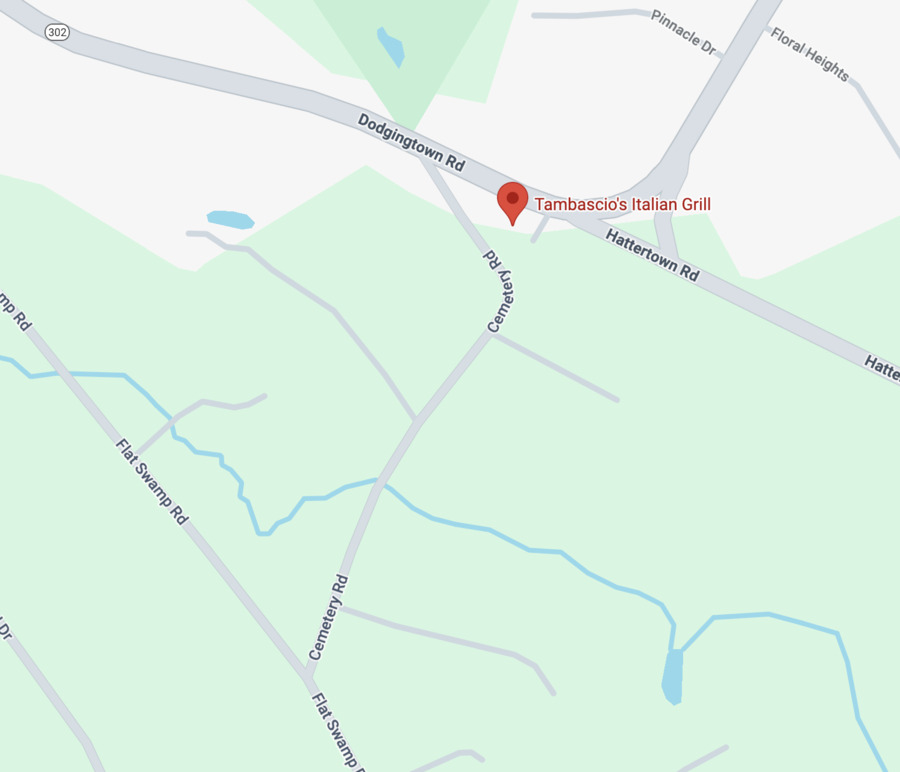 Tanker Truck Crashed Along Route 302Behind a local restaurant, and down Cemetery Road, a tanker truck crashed along the main road, which spilled more than 9,000 gallons of gasoline into the restaurant parking lot. Reportedly, the truck rolled on its side and hit two utility poles before finally landing in the parking lot on fire, blowing up six cars and sending oil pouring everywhere. About 48 hours after the crash, DEEP was finding high levels of gas in the soil, which seemingly leaked into septic leaching fields. Remediation efforts were made by removing all the contaminated soil and bringing it to a facility in Waterbury.
-
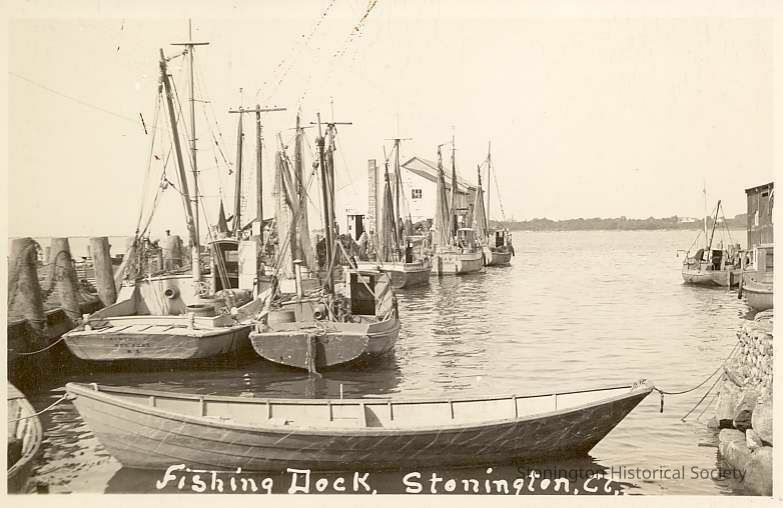 The Stonington Fishing FleetPrior to the introduction of steam trawling in 1906, groundfish off the New England coast were caught exclusively with baited lines, fished from schooners and their smaller dories. Even in a smaller port town like Stonington, the local fishing fleet was the lifeblood of the community. This era of fishing was the last remnant of a pre-industrial society, where mass commodification of natural resources and surpluses in food were things of imagination for most Americans.
-
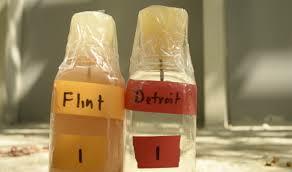 Flint: The Crisis That Didn't EndIn the 25th of April 2014, the city of Flint switched its drinking water supply from Detroit's system to the Flint River in a cost saving move, this decision unknowingly would cause a lead crisis in the 21st century, as inadequate treatment and testing of the water followed, resulting in a series of major water quality and health issues for the residents of the city. Soon after this switch was implemented, residents started complaining that the water from their taps looked, smelled, and tasted foul, despite these observations from the city's residents, the city officials maintained that the water was safe. When researchers from Virginia Tech conducted a study, they revealed the problem: the water samples that had been collected for study indicated citywide lead levels had spiked, with nearly 17 percent of samples registering above the federal action level of 15 parts per billion. Lead is a heavy metal that had already been infamous in history since its documented use by the Romans for makeup, cookware, and pipes, but what made it infamous is that in large doses, it would cause high blood pressure, heart and kidney disease, and reduced fertility. This event was significant for American Environmental History, because to this day, even after the city had completed its pipe replacement program, Flint's residents still distrust their tap water due to a single decision.
-
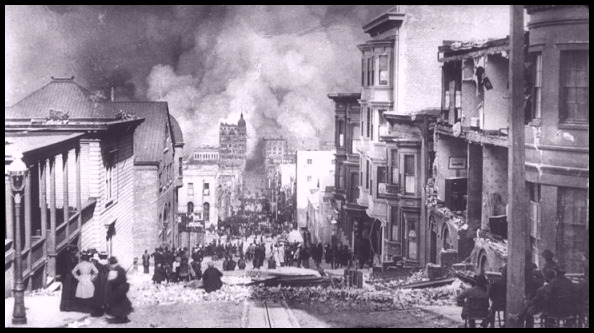 San Francisco Earthquake of 1906The California earthquake on April 18th, 1906, is one of the most relevant in history when it comes to discussing natural disasters, not only because of its devastating effects, but also the scientific knowledge it brought. The San Andres fault ruptured about 477 km and led to the emergence of the elastic rebound theory. Tremor occurred up to a minute and was felt in regions in Nevada and Oregon. Liquefaction took place in San Francisco, where sediment behaves like liquid during seismic activity, causing buildings to collapse. Fires were later emphasized as the true disaster, making the earthquake look like a minor event, ultimately downplaying seismic risk.
-
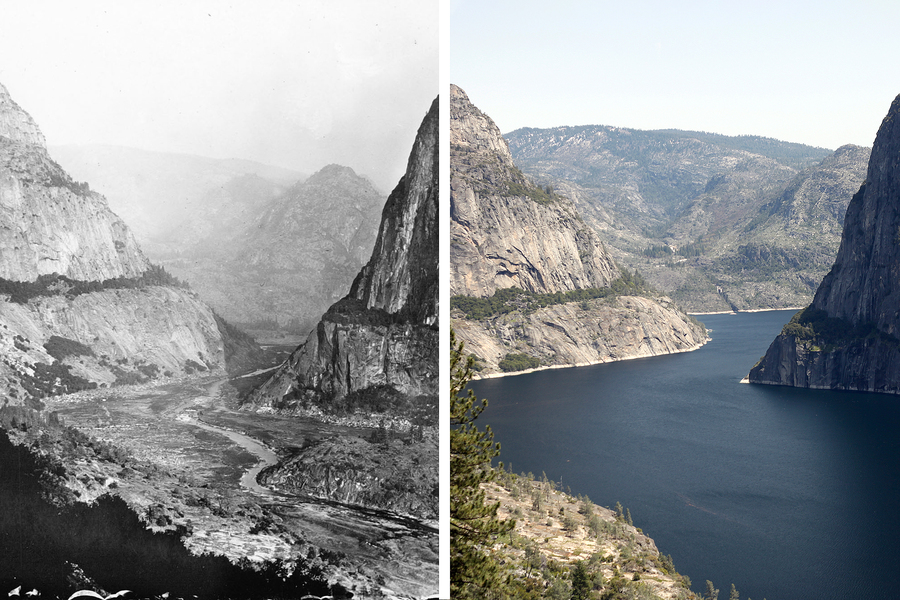 Worth A Dam?The damming of the Hetch Hetchy Valley in Yosemite following the aftermath of the earthquake and subsequent fires in San Francisco was the last industrial use of a National Park, and many opposed the creation and existence of it prior to its construction and following its completion. The rise of environmentalism in the late 20th and early 21st centuries sparked a genuine debate on whether or not the dam should be taken down, allowing for the natural wildlife and ecosystems of the valley to return to how they were. Many argue that the Dam is essential for energy production and water supply to the city of San Francisco. Others argue that the energy production isn't all that large a factor and point towards new renewable energy projects that are taking place around the San Francisco area. The water supply of San Francisco isn't very diverse and relies heavily on the Tuolumne River, so an expansion of different water sources could relieve the Hetch Hetchy of its purpose as a reservoir. It would take an extremely large effort to properly supply San Francisco with adequate water if the Hetch Hetchy Dam were to be taken down, but the positive environmental impacts if it were to be taken down could be very large as well. The question stands: should the Hetch Hetchy Dam stay, or be destroyed?
-
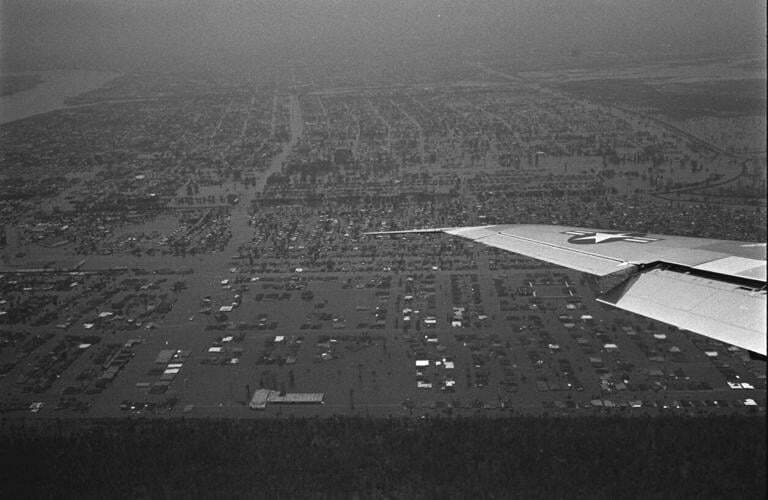 Hurricane Betsy Floods the Lower 9th WardWhen Hurricane Betsy slammed into New Orleans in 1965, and with it came torrential rainfall and winds up to 150 miles per hour. The amount of flooding that transpired overwhelmed the levees that were supposed to protect the city's lower ninth ward. While the rest of the city sustained minimal damage, the lower ninth ward ward was decimated; Dozens of people lost their lives and thousands were left without a home. The greater amount of damage in the ward compared to the rest of the city roused suspicions amongst some residents of the lower ninth that higher ups had intentionally destroyed the Industrial Canal's levee, in order to sacrifice the lower ninth ward for the sake of the more well off areas of the city. This was fueled by the fact that the lower ninth ward had been neglected for some time. Overall, this is part of a larger trend towards distrusting governments due to their neglect, mismanagement, and broken promises
-
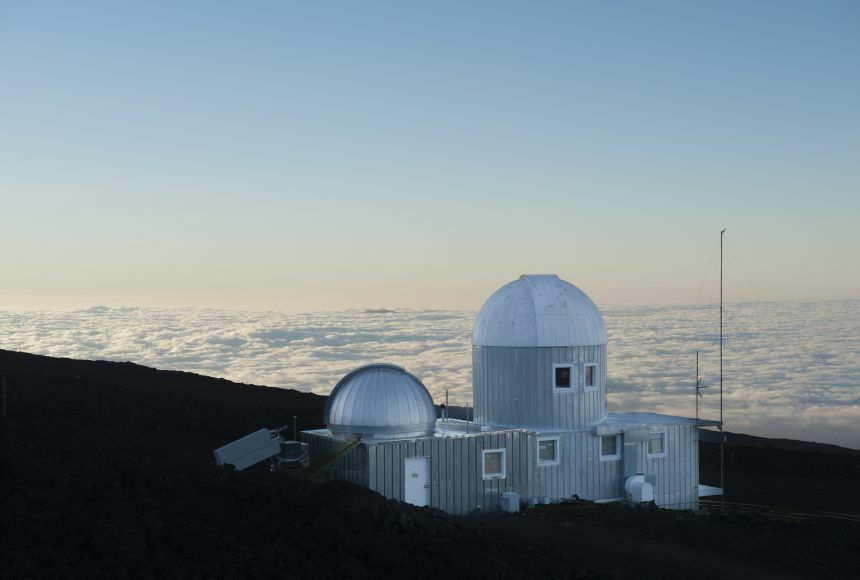 Mauna Loa ObservatoryThe Mauna Loa Observatory, located nearly 4000 meters high in Hawaii, was created as a way to take atmospheric, solar, and meteorological parameter measurements. In 1958, carbon dioxide measurements started being taken led by Dr. Charles Keeling, and created the Keeling Curve, showing the undeniable evidence of increasing CO2 influencing rising atmospheric temperatures.
-
 “Natural Disasters” and Human CasualityThe CDC published a report that establishes ties between Field Epidemiologists and how their efforts contribute when disasters hit. Mainly they are almost the ones to help sort through the chaos when all seems to be chaotic. They are the ones who bring the necessities that people need such as the lower class who cannot typically afford to recover from disasters such as earthquakes or even floods or hurricanes when they hit. In a way they act and make the real important decisions that others cannot do so easily. However, it can be argued that because of how fast decisions must be made there would have to be some fault or errors located somewhere in the aftermath of what they choose.
-
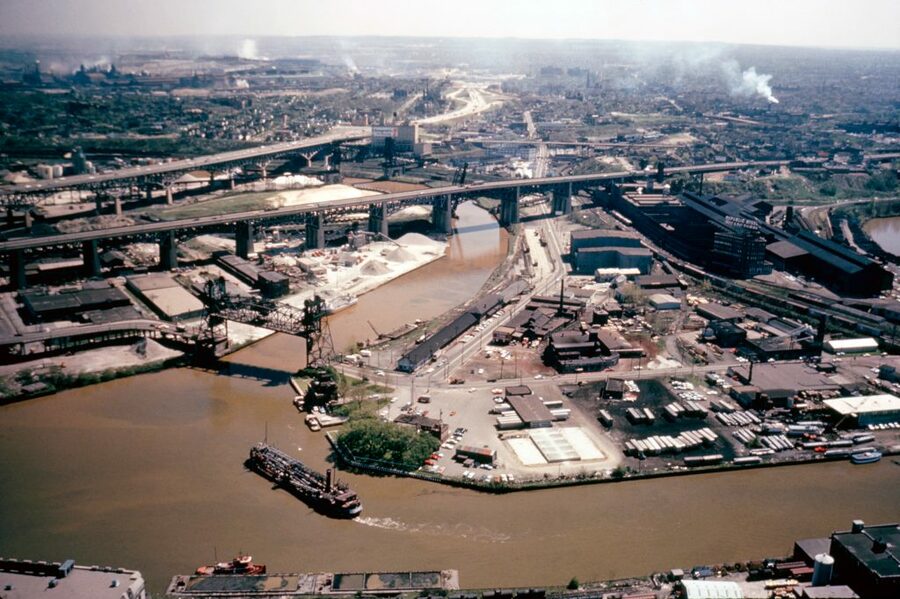 Ohio's Cuyahoga RiverCleveland was one of the most important cities during the Industrial Revolution. John D. Rockefeller founded Standard Oil in Cleveland, Ohio. Standard Oil operated the biggest oil refineries in Cleveland and would dump its runoff byproduct into the Cuyahoga River, which flowed into Lake Erie. The city of Cleveland would dump its sewage, detergents, and chemicals into the river. The Cuyahoga River was so heavily polluted that it turned a nasty brown color and had suds of soap nested on top of it.
-
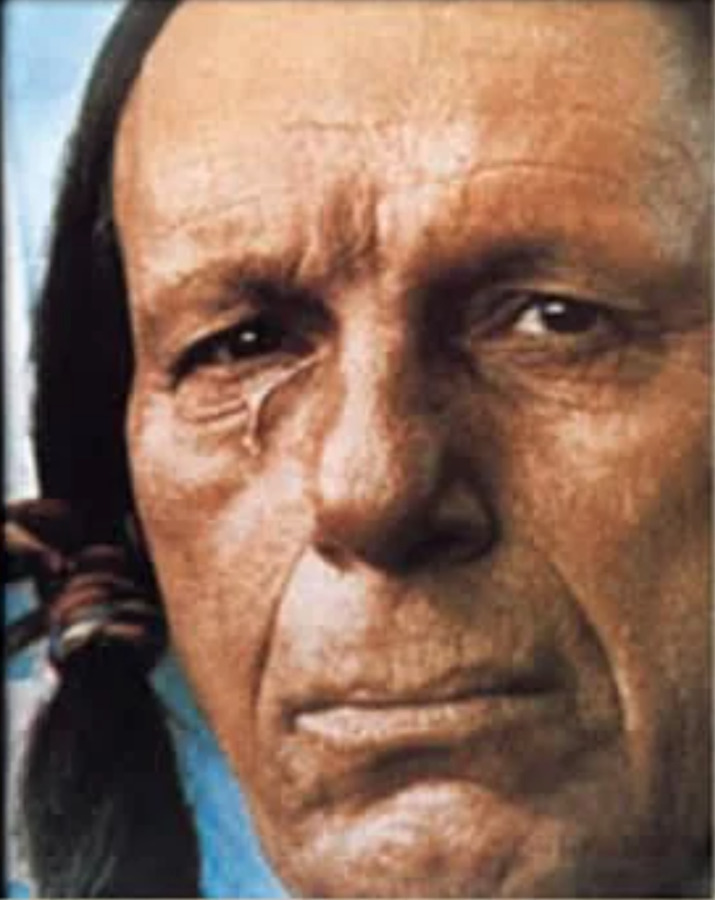 The Crying Indian - Keep America Beautiful AdThe "Crying Indian" advertisement debuted on Earth Day 1971, created by Keep America Beautiful and the Ad Council. In the ad, actor Iron Eyes Cody portrays a Native American who is deeply saddened by the pollution in the river he paddles his canoe through. The ad end with him shedding a tear as a passing car throws trash at his feet. Keep America Beautiful had produced one of the most famous public service announcements in U.S. history. The PSA was an attempt to help prevent individuals littering habits at a time wrappers and plastics were becoming more popular. This iconic ad, which also faced backlash for shifting blame from corporations to individuals, was all part of the rise of environmental awareness in the early 1970s.
-
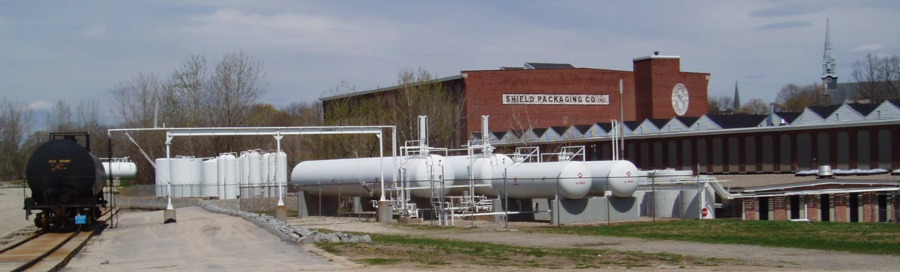 Shield Packaging Chemical CleanupThe EPA had alleged in a complaint filed in September 2012 that Shield Packaging Co. violated the Clean Air Act’s chemical accident prevention provisions by not fully developing and putting in place a risk management plan for processes that used extremely hazardous substances at the facility. In 2013, they agreed to pay $484,900 in penalties to settle claims that it violated numerous federal and state regulations in its liquid and aerosol packaging plant, the U.S. Environmental Protection Agency announced Monday.
-
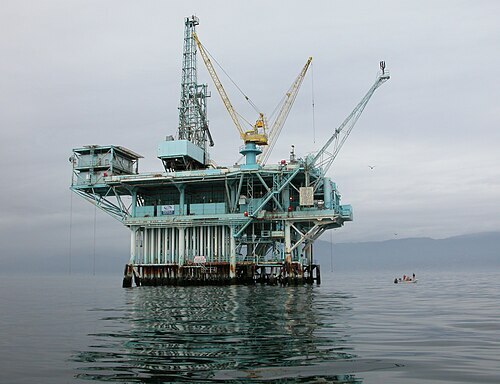 Santa Barbara Oil SpillAn off shore drilling platform owned by Union Oil sprung a leak and 80,000 to 100,000 barrels leaked out into the Pacific Ocean. There was no loss of human life but the spill ended up being incredibly harmful to animals in the area. News coverage showed the effects of the spill to millions of people and helped create public awareness for people not in the Santa Barbara area.
-
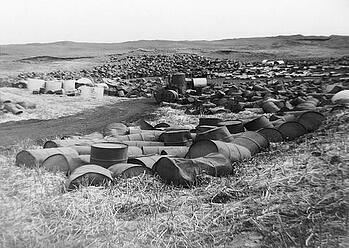 Love Canal Environmental DisasterLove Canal in Niagara Falls, New York, became one of the most infamous environmental disasters in U.S. history when buried chemical waste began leaking into a residential neighborhood in the 1970s. Families living there experienced health problems, toxic odors, and chemical seepage in their homes and yards. The crisis sparked nationwide awareness about industrial pollution, environmental justice, and government responsibility in protecting communities.
-
 Niagara Falls GazetteThe Niagara Falls Gazette is the newspaper that published studies about birth defects and other information about Love Canal. The first time activist Lois Gibbs considered having any concern about Love Canal was after reading articles published in June of 1978 by Michael Brown. Lois Gibbs developed further concern and started making the first canal connections to her son's health after digging deeper into the paper's coverage on the Love Canal. Gibbs later came to be a leader of the movement for justice for the residents around Love Canal, all sparked by reading Michael Brown's articles from the Niagara Falls Gazette.
-
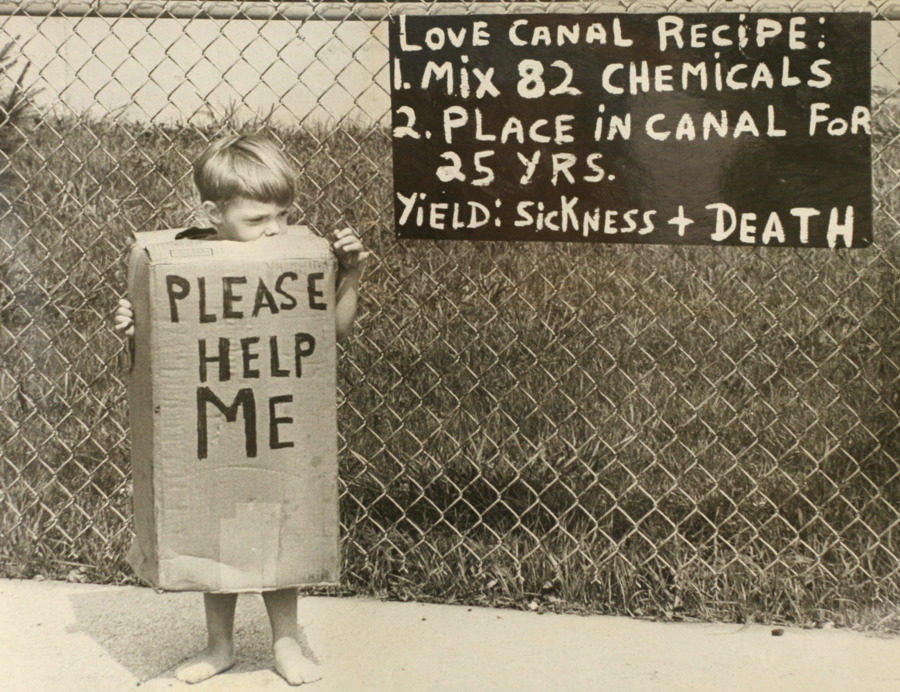 Love Canal: Fighting for AcknowledgementWhen the chemical company Hooker dumped toxic waste into the canal, the land was later sold to the nearby school district. Children began getting sick, and the community tried everything possible to make people aware of the danger.
-
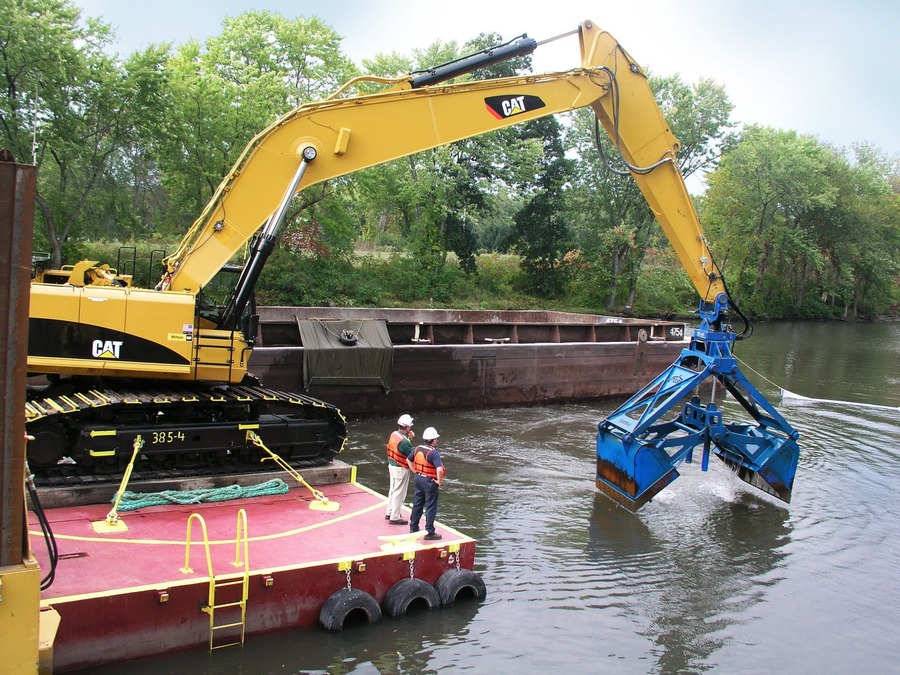 The Hudson River CleanupPCBs, or polychlorinated biphenyls, can be used in firefighting foams, as insulators in things like transformers, since they can withstand exceptionally high temperatures. Between 1947 and 1977, which is when the EPA banned PCB production, two General Electric capacitor manufacturing plants released approximately 1.3 million pounds of PCBS into the Hudson River. The pollutants entered the rover and mixed with sediments on the bottom of the river at many locations, and at some locations ended up along the shorelines in the floodplains. GE was forced to dredge approximately 2.65 million cubic yards of PCB-contaminated sediments over the course of a 40-mile section of the Upper Hudson River. These areas were determined using the results of a multi-year sediment sampling program, which generated more than 60,000 sediment samples.
-
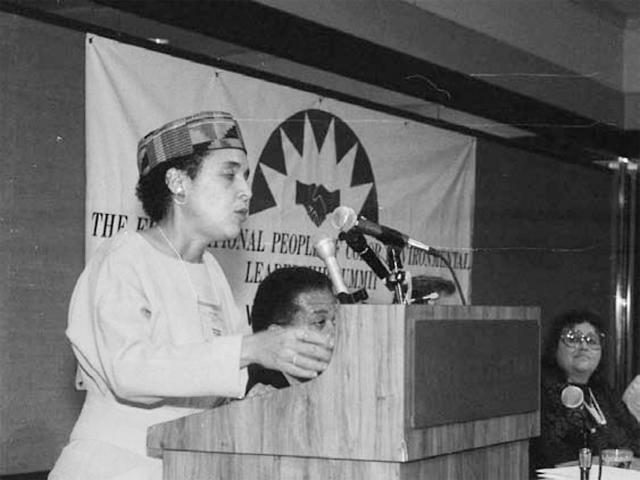 Dana Alston at the National People of Color Environmental Leadership SummitAs the environmental movement was taking place, a lot of voices were not being included or being heard. Dana Alston, in her "Moving Beyond the Barrier," described how environmental impacts on human health were only taken into consideration when they impacted whites and white babies, ignoring indigenous and black populations also being affected. In this image, Dana Alston is speaking for this cause at the NPCELS in Washington to advocate for these observations.
-
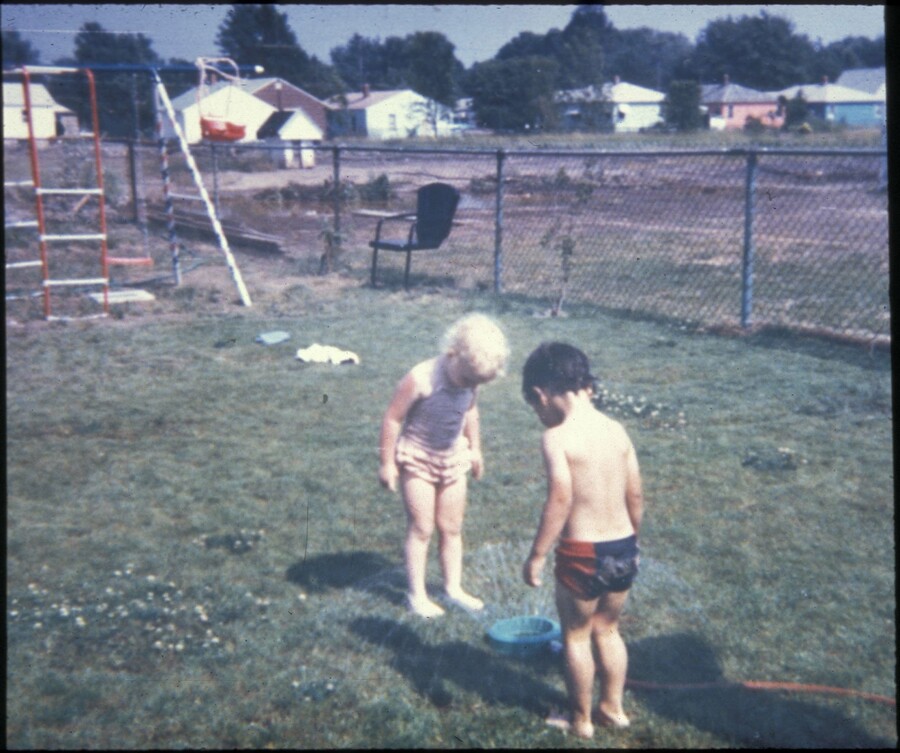 Two children playing in a backyard adjacent to rising toxic waste at Love Canal, Niagara Falls, New YorkIn this photo, two children are pictured playing outside in close proximity to "rising" toxic waste. It is part of the legacy of the Love Canal Disaster which started when the Hooker Chemical Company used the canal site as a dump for chemical waste from 1942 to 1953, before capping the dump and selling it to the Niagara Falls School Board. This waste, including many known carcinogens, contaminated the neighborhoods around it and led to severe health issues for many residents, including epilepsy, cancer, asthma, kidney diseases, migraines, and birth defects.
-
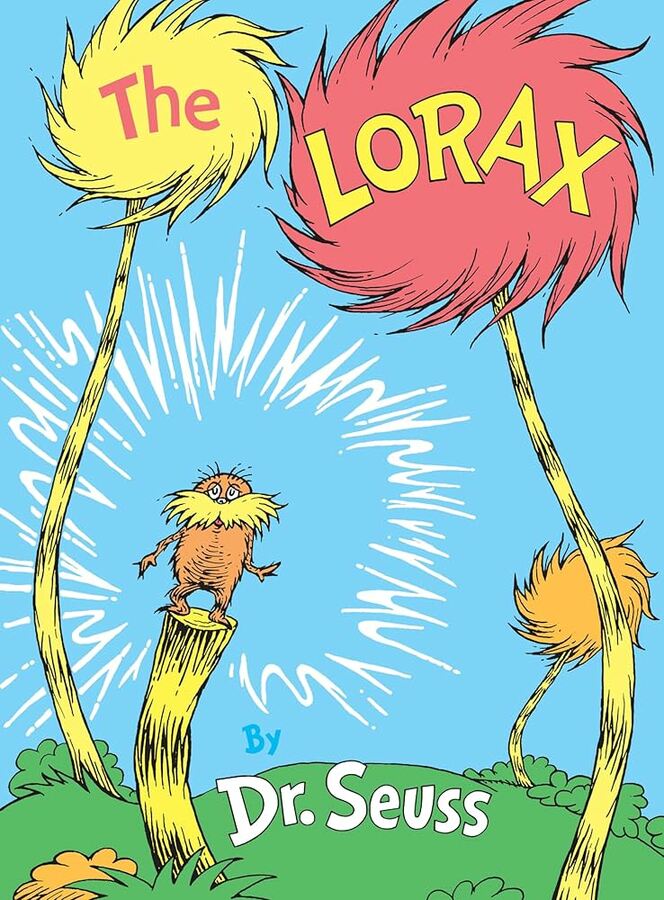 The LoraxOne year after the first Earth Day ceremony, Theodore Geisel, also known as Dr. Seuss, published the famous children's book, “The Lorax.” The story is about a businessman called the Once-ler who discovers a forest of Truffula Trees. He starts cutting down the trees to sell garments called “Thneeds.” The Lorax, who speaks for the trees, warns him that this will destroy the forest and cause pollution, which is exactly what happens. Once the last tree gets cut down, the business collapses, and the animals leave because the resources are gone, making the Once-ler isolated and full of guilt. This book aims to raise awareness about environmental destruction and expose the greed inherent in capitalism.
-
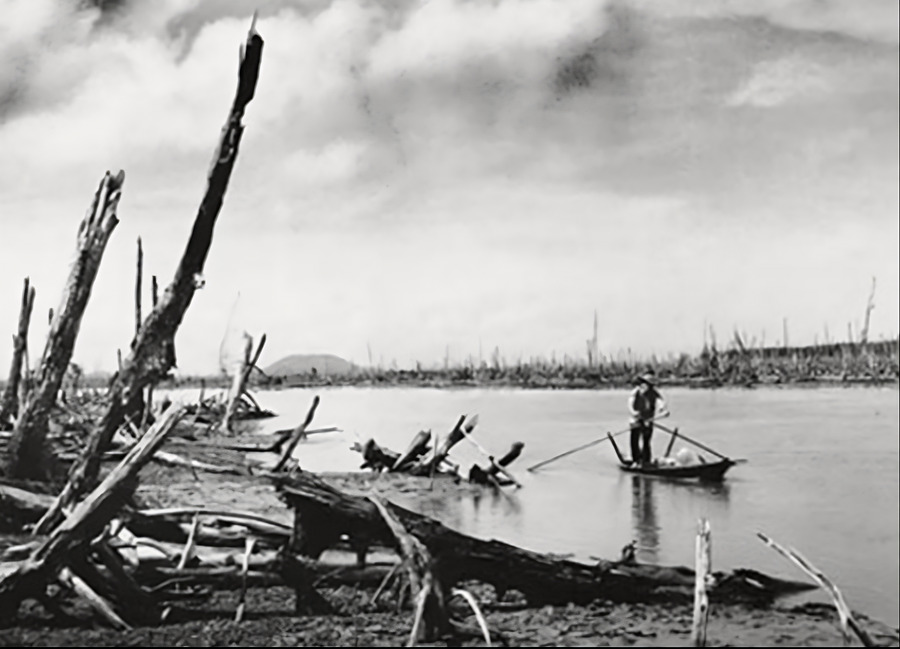 Operation Ranch Hand: Legacy of Agent OrangeFrom 1962 to 1971, the U.S. military’s Operation Ranch Hand sprayed over 19 million gallons of herbicides over South Vietnam, including more than 12 million gallons (45 million liters) of Agent Orange, to destroy forest cover and enemy crops. This act is a significant event in American Environmental History, despite its overseas nature, as it represents one of the largest-scale uses of chemical defoliants in warfare, an act often described as "ecocide." The spraying destroyed an estimated 5 million acres of upland and mangrove forests, leading to a catastrophic loss of biodiversity. As this image shows, the ecological effects were destructive to the livelihoods of people that lived in that area. Because Agent Orange was contaminated with the persistent toxin dioxin, it remains in Vietnam's soil and water decades later, poisoning the food chain and preventing the long-term recovery of these complex ecosystems.
-
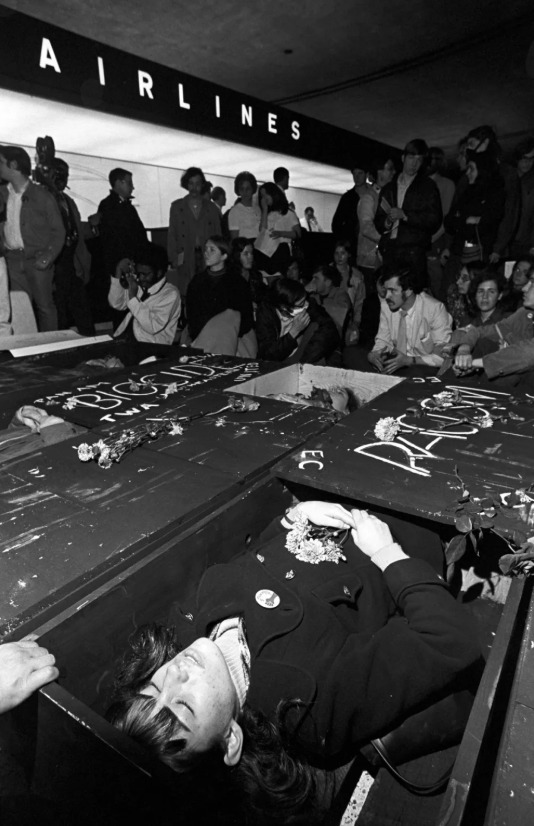 Students Protest Noise Pollution at Logan AirportOn the first Earth Day in 1970, one event that garnered attention was a protest by students at the Logan Airport in Boston. Over a hundred were present, while 13 were arrested for staging a "die-in", which was effectively a sit in but they made and brought in coffins, which some people laid inside. The largest target of the protest was the potential of the Concorde Jet coming to the airport which would have caused a mass amount of noise pollution to the surrounding environment.
-
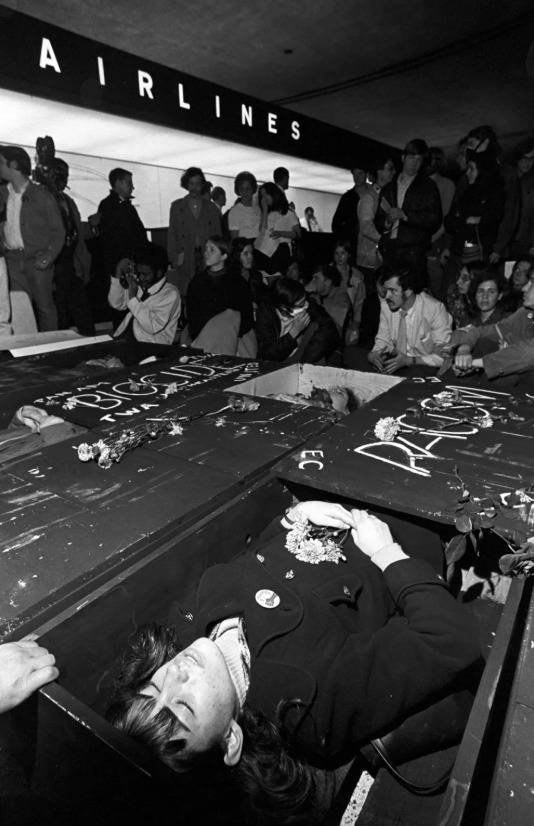 Students Protest Noise Pollution at Logan AirportOn the first Earth Day in 1970, one event that garnered attention was a protest by students at the Logan Airport in Boston. Over a hundred were present, while 13 were arrested for staging a "die-in", which was effectively a sit in but they made and brought in coffins, which some people laid inside. The largest target of the protest was the potential of the Concorde Jet coming to the airport which would have caused a mass amount of noise pollution to the surrounding environment.
-
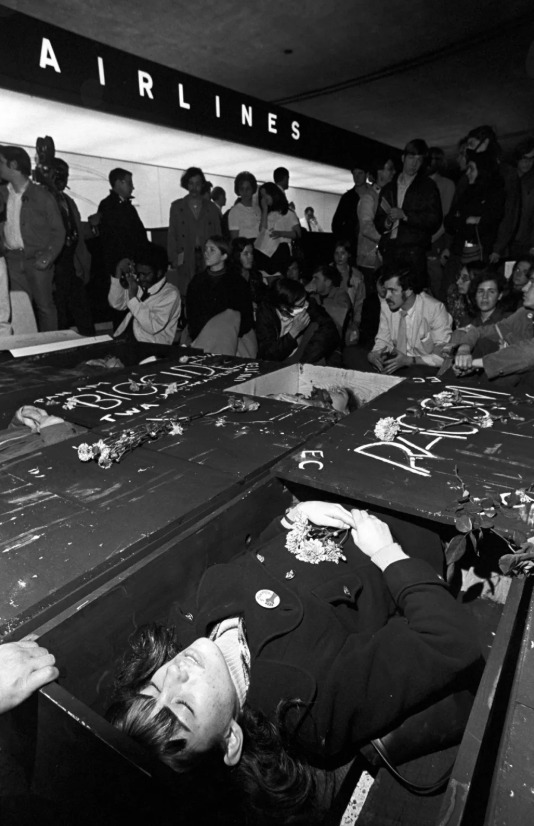 Students Protest Noise Pollution at Logan AirportOn the first Earth Day in 1970, one event that garnered attention was a protest by students at the Logan Airport in Boston. Over a hundred were present, while 13 were arrested for staging a "die-in", which was effectively a sit in but they made and brought in coffins, which some people laid inside. The largest target of the protest was the potential of the Concorde Jet coming to the airport which would have caused a mass amount of noise pollution to the surrounding environment.
-
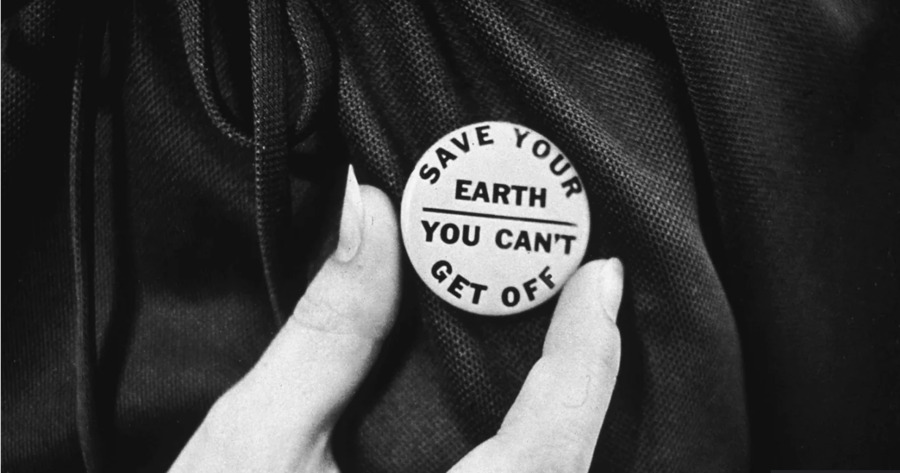 The First Earth Day20 million people around the country took to the streets to protest for the world's first Earth Day, with the campaign being led by Wisconsin Senator Gaylord Nelson. Culminated by seeing the devastating impacts from Santa Barbara oil spills and the space mission where the first images of Earth from space were photographed, Earth Day was created. Denis Hayes, the organizer of the original Earth Day, said, "Our aspirations were to have an event that resembled some of the anti-war rallies and civil rights rallies. But instead of having them in one or five communities, we looked at it in many cities across the country."
-
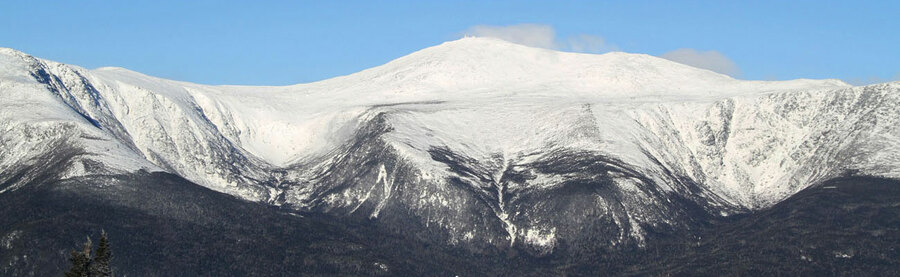 White Mountain National Forest is EstablishedThe passing of the "Weeks Act" of 1911 allowed the federal government to purchase private land to protect the headwaters of navigable rivers. In 1914, with the authority of the Weeks Act, the federal government purchased 7,000 acres in Northern New Hampshire and Maine for $13 an acre, thus creating the White Mountain National Forest. Today, the forest has grown to 800,000 acres, and it's tallest peak, Mt. Washington, holds the record for the fastest recorded wind gust on Earth not associated with a tornado or cyclone, at 231 mph in 1934, the coldest windchill in U.S. history at -108.4° F, and the coldest air temperature in U.S. history, at -47.2° F, both set in February 2023. It is also home to great hiking and skiing.
-
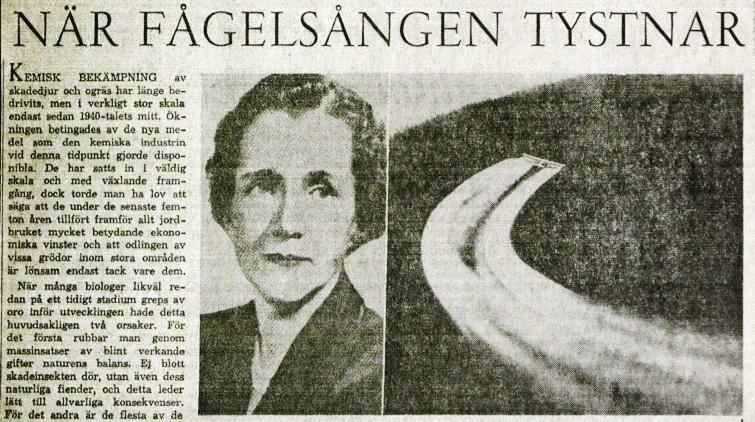 When the Birdsong Falls SilentNot only did Rachel Carson blow up in America from her book Silent Spring, but she also gained much popularity in Europe, specifically Sweden. Sweden had an awakening to protect all of the natural birds that lived there, and Carson helped this cause tremendously.
-
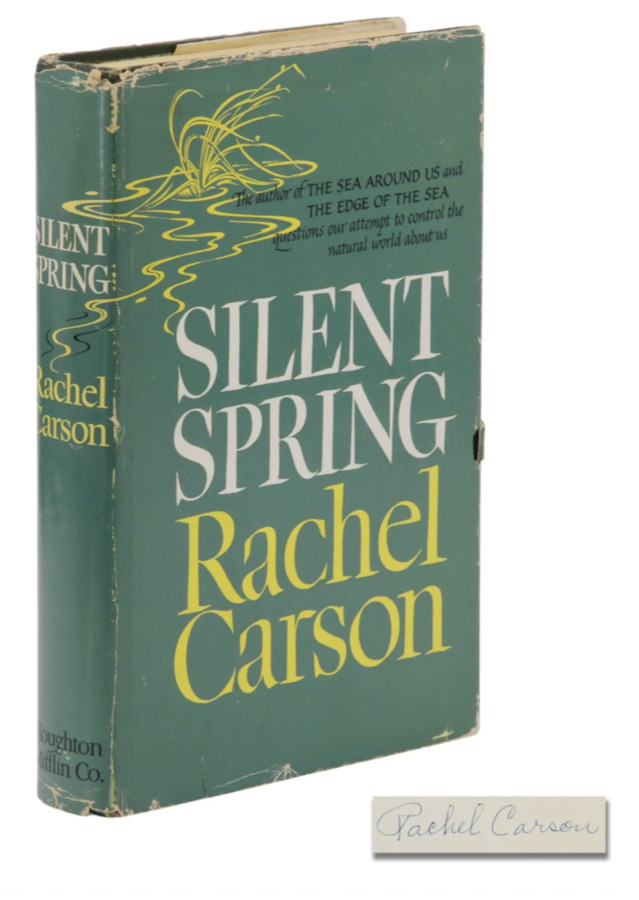 Rachel Carson Whistle Blowing the Effects of DDTRachel Carson describes the harmful effects of pesticides like DDT on the environment. She formatted her writing in simple terms so that its more accessible to people. Her book is widely credited with helping launch the environmental movement.
-
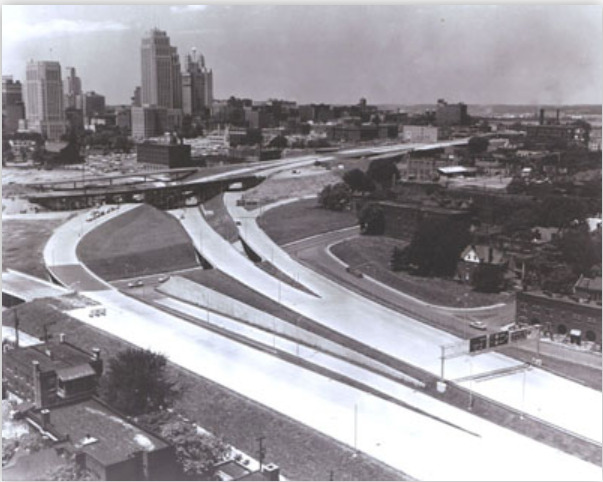 Construction of the Interstate Highway SystemThe establishment of the Interstate Highway was first authorized on June 29, 1956, when President Eisenhower signed the Federal-Aid Highway Act. The first section to begin construction was a section of what's now known as I-70 in St. Charles County, Missouri, and the interstate system was considered "complete" by 1992 (though additions are made even to this day.) This system represented a shift in the nation's infrastructure to prioritizing cars, and it made the nation more interconnected which contributed to the prevalence of the suburban commute. Some environmental consequences of the Interstate system included the restructuring of American cities to accommodate highways, the increase in motor vehicle smog in urban areas, and shifting patterns of land use, especially as some of these highways would later be expanded with more and wider lanes.
-
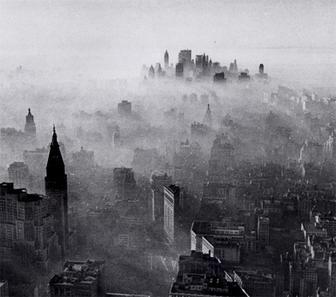 1966 ‘Killer Smog’The toxic smog most likely stemmed mostly from industrial residues and power plants using coal. The smog hovered for some three days, starting on Thanksgiving and prompting a citywide alert that ordered all incinerators to close and utility companies to use natural gas. An 11-year-old at the time recalled, "they would have to "wash pollution off your face and hands”.
-
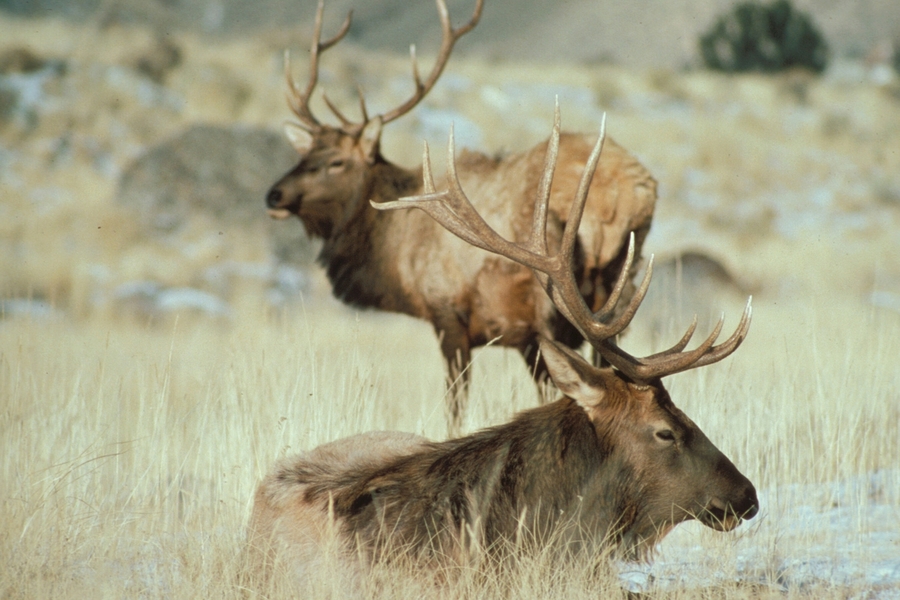 Correspondence between Peter Oscar Little Chief and the Department of the InteriorPeter Oscar Little Chief, a Blackfeet Indian, writes to the Department of the Interior requesting hunting privileges in Glacier National Park. The Blackfeet Indians used to be able to hunt in the park, and now Little Chief asks just to hunt one elderly, one deer, and two mountain sheep for subsistence. He is refused by the Department of the Interior. This exchange demonstrates the negative impact the conservation movement had on local and Native American communities whose land was being federalized, who could no longer live or survive off of their own land. It also shows the lack of influence they had on any policy or exceptions for their communities.
-
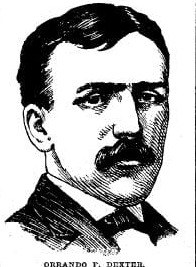 The Murder of Orrando Perry DexterOrlando Dexter was shot while riding in his buggy to collect his mail. Dexter owned a large estate in the Adirondacks and had it fenced off so the locals could not use his land for hunting, fishing and firewood. He sued people who trespassed on his land and was incredibly disliked by the local Adirondackers.
-
 New York State Forest Preserve Act 1885The New York State Forest Preserve Act of 1885 created the Adirondack and Catskill Forest Preserves. The law required that all state lands in eleven Adirondack and three Catskill counties "be forever kept as wild forest lands." This law also authorized the creation of a new Forest Commission to administer the law.
-
 National Park Service ActPresident Woodrow Wilson put "The Organic Act" through congress in 1916. It ended up getting passed and renamed to the National Park Service, it's goal was to conserve the scenery and natural and historic objects and wildlife, and provide for their enjoyment in such a manner as will leave them unimpaired for the enjoyment of future generations.
-
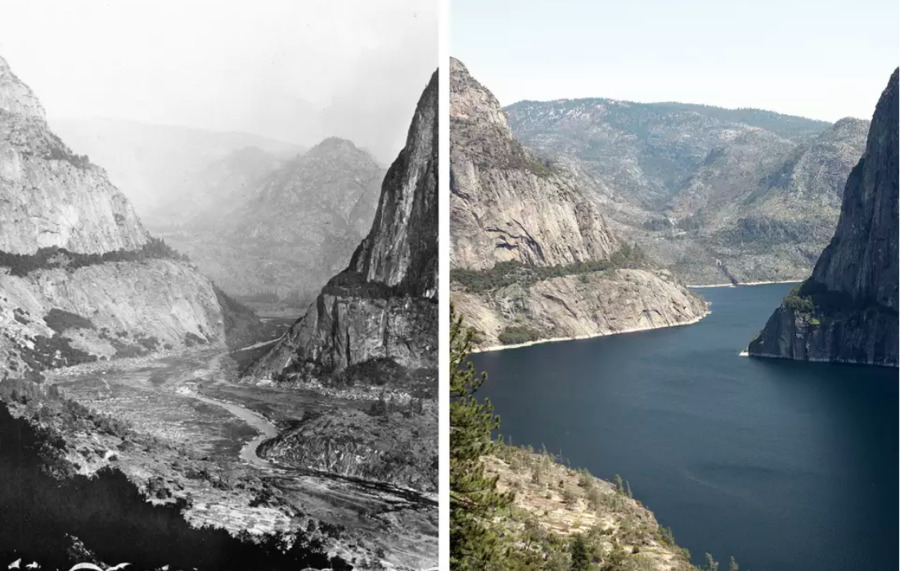 Hetch Hetchy Valley Before and After the O’Shaughnessy Dam was ConstructedHetch Hetchey is the sister valley to Yosemite, and was once part of the park itself, before it was separated and dammed. The name Hetch Hetchy comes from “hatchhatchie,” which means “edible grasses” in the language of the park’s original Miwok inhabitants, and the dam is named for its chief engineer Michael O’Shaughnessy, who also built Hoover Dam. As we discussed in class, San Francisco’s 1906 earthquake (and the devastating lack of water to combat resultant fires) tilted public opinion in favor of the dam. Something else I learned was that John Muir, who fought hard to protect Hetch Hetchy, died a year after the 1913 Raker Act permitted the dam’s construction within the national park.
-
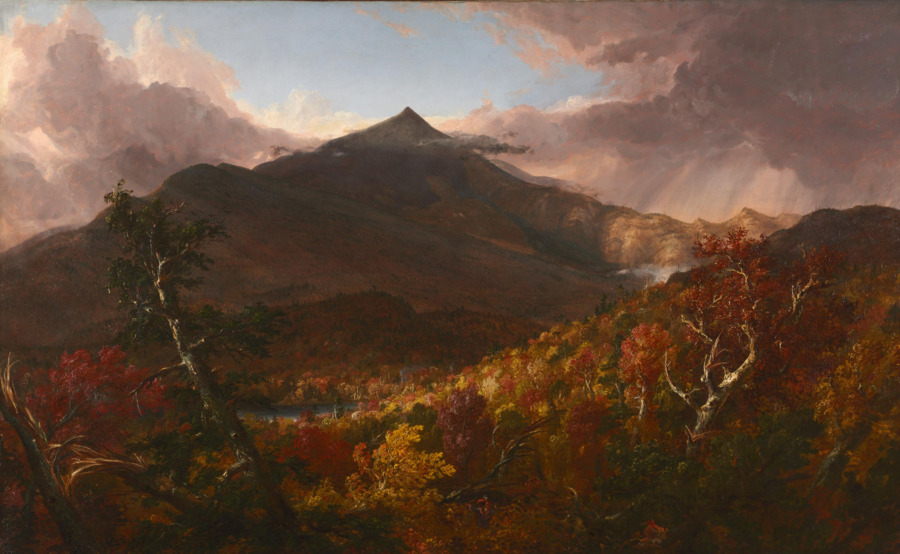 View of Schroon Mountain, Essex County, New York, After a StormThis awe-inspiring painting depicts a dramatic rendition of Hoffman (Schroon) Mountain after a storm. It includes eye-catching fall foliage, dramatic clouds, distant rain, and two Native American men in the bottom right corner. This painting was created by Thomas Cole and is part of the Hudson River School art movement, which was most influential in the mid-1800s. Artists who took part in this movement tended to paint the northeast landscapes of the United States with a focus on the dramatic beauty and grandeur of the American natural world. Many prominent members of the movement, including Cole, interacted with authors who belonged to the transcendentalist movement. Both movements had ties to American nationalism and looked back to a time before the technological developments of the 1800s while romanticizing the wilderness. In their celebrations of idealized natural spaces, the artists and writers of the Hudson River School and the transcendentalist movement influenced the very beginning of American conservation efforts.
-
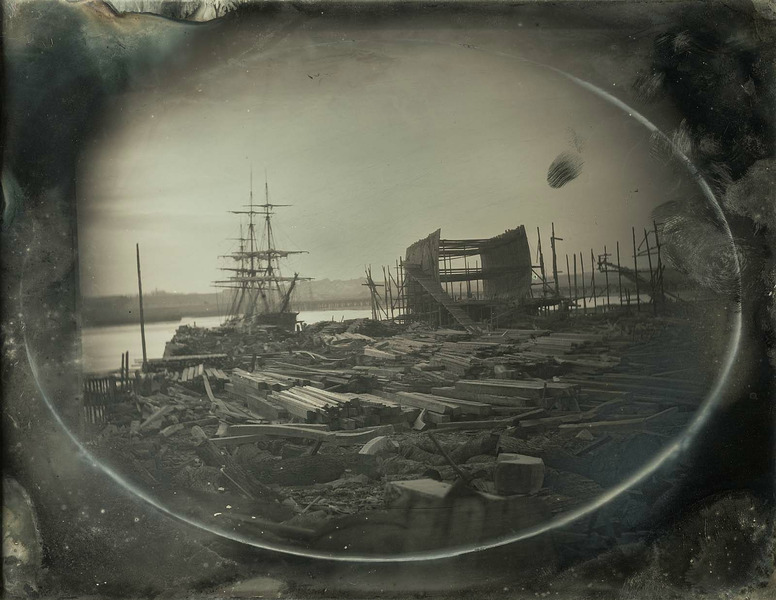 Boston shipbuilding exportsOne of the most important industries that was fueled by the deforestation of the New England colonies was shipbuilding for the royal navy. Boston was the hub for ship building and exports in pre-revolutionary America, with its built up port infrastructure and ability to export a diverse range of wood types serving as its primary advantages. This level of importance likely provided a large amount of stimulation to the economy, helping the city to serve as an important city in the early United States
-
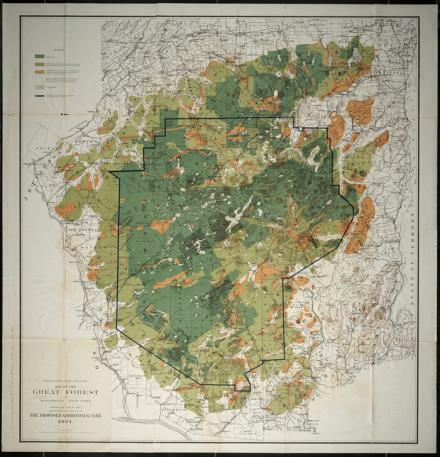
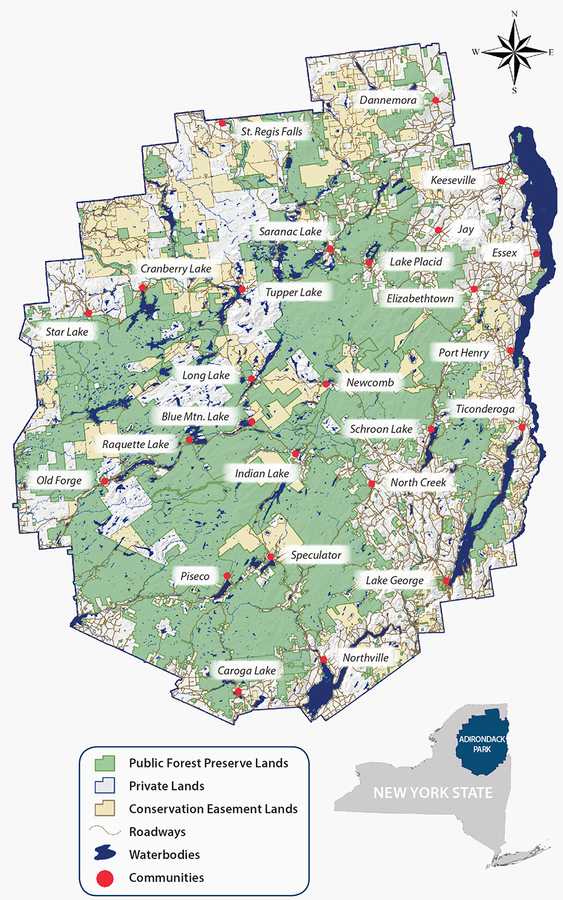 Creation of Adirondack ParkIn 1892, the New York State Legislature created Adirondack Park. It started as a three million acre preserve within New York State created through concerns of deforestation and impact it could have on rivers, farmland, and communities. Two years after its inception, New York state granted the park permanent protection through a constitutional amendment in order to ensure the land will remain "forever kept as wild forest lands." This an environmental turning point in American history as it displayed the power governments had to protect future resources. In current day the park is approximately 6 million acres, larger than Yellowstone, Everglades, Glacier, and Grand Canyon NAtion Parks combined. This makes Adirondack Park the largest publicly protected area in the contiguous United States. It consist of forest, wetlands, lakes, rivers, with both public preserve and private communities.
-
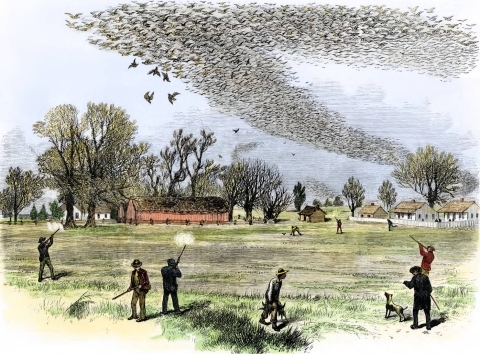 The Lacey Act of 1900The Lacey Act, passed in 1900, is a U.S. law that prohibits the trade of fish, wildlife, or plants that have been captured illegally. The purpose of the law was to reduce the killing of wildlife by halting hunting and trading, ultimately preventing endangered species from extinction. It was one of the first political measures implemented in the name of conservation. Congressman John Fletcher Lacey introduced the act to the House of Representatives on April 30th, 1900, and it was later signed by President William McKinley on May 25th. The act was first established to address the overhunting of game birds but evolved to protect many other wildlife species.
-
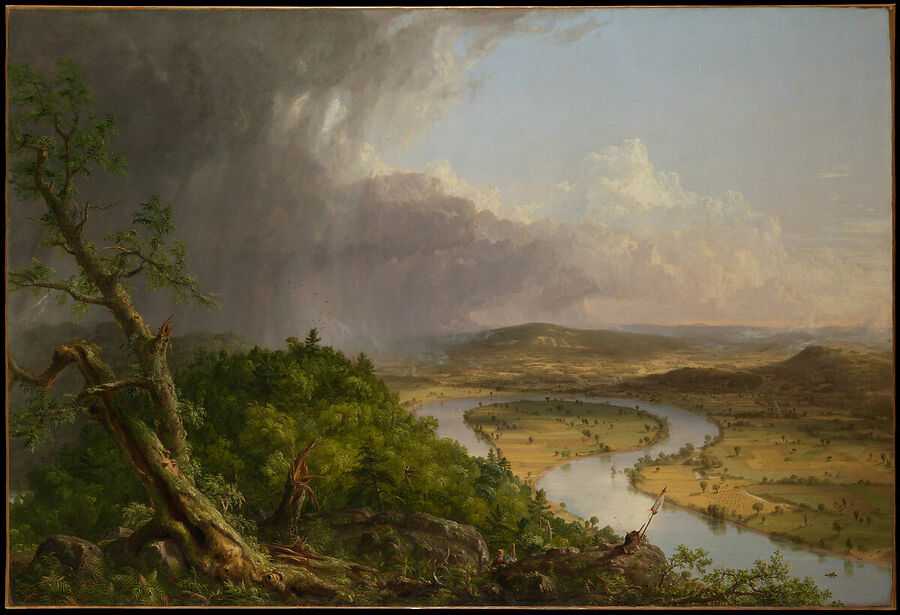 The Hudson River SchoolThe Hudson River School was a group of artists from New York City that was founded by Thomas Cole. Their paintings were usually of American landscapes, but some were related to religion or of foreign landscapes. The goal of the paintings was to capture the beauty and sublimity of the landscape. Their success is correlated with an increase in tourism and vacations though not conservation. Thomas Cole himself was aware and regretted the wanton destruction of the American environment but resigned himself to the inevitability of such a cost of progress.
-
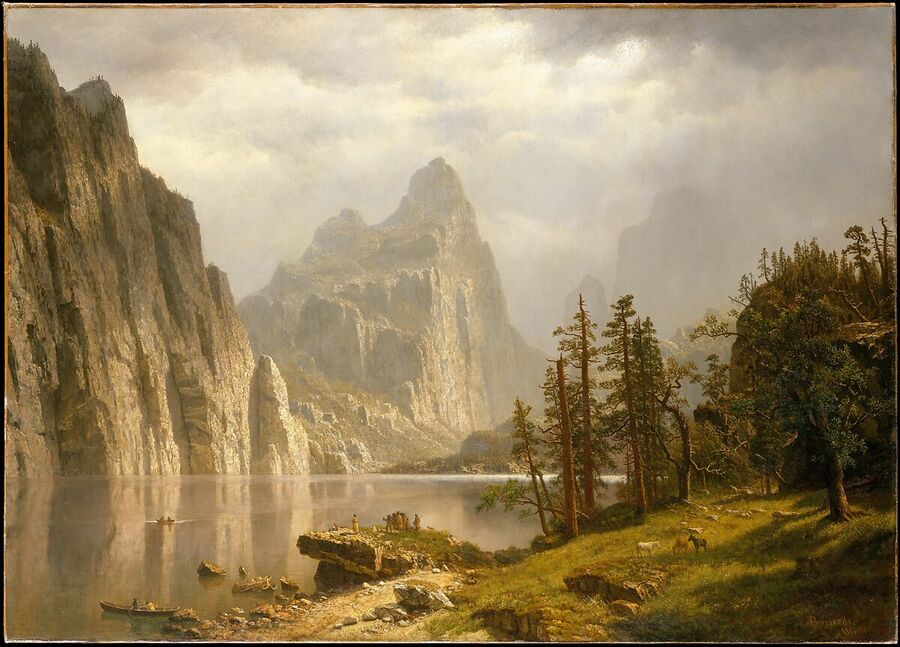 A Park in Wartime: Lincoln's Vision for YosemiteSigned into law by President Abraham Lincoln on June 30, 1864, the Yosemite Grant Act was a foundational moment in American conservation. This legislation removed Yosemite Valley and the Mariposa Grove of Giant Sequoias from the public domain and granted them to the state of California to be held “for public use, resort, and recreation...inalienable for all time.” It marked the first time in U.S. history that the federal government set aside land for preservation and public enjoyment, establishing a crucial precedent that would directly lead to the creation of the National Park System. The grant represents a pivotal shift in the national consciousness, codifying the idea that unique natural landscapes were not just resources to be exploited but treasures to be protected for all people.
-
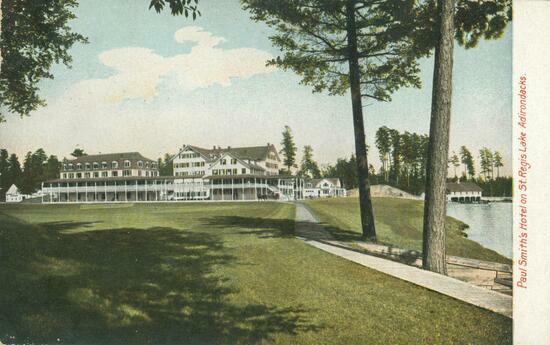 Paul Smith's HotelApollos A. “Paul” Smith and his wife Lydia built Paul Smith’s Hotel, the Adirondacks’ first wilderness resort in 1859. The hotel was located at the edge of Lower St. Regis Lake, deep in the Adirondacks near Lake Placid, and offered an escape from the city life that so many people were seeking. The hotel drew in many high-profile guests including three different U.S. presidents, as well as many other wealthy individuals. After the hotel burned down in 1930, Paul Smith's College was founded at the estate, which is a forest conservation and management-based college.
-
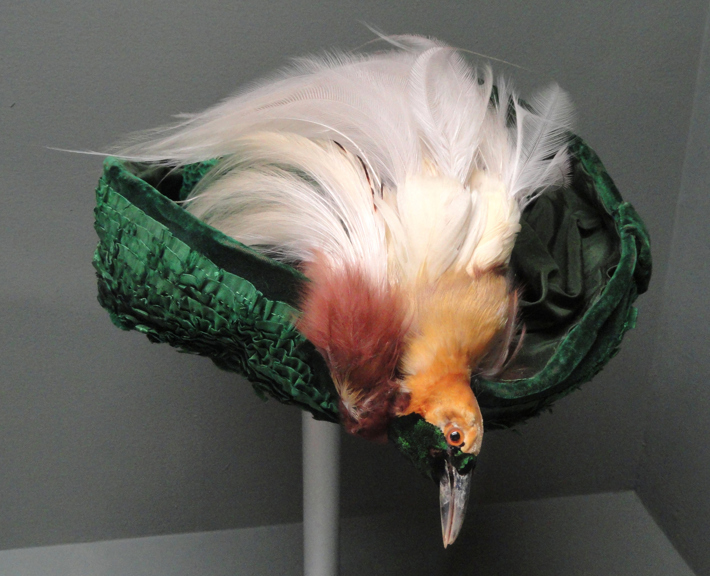 Feather FeverA fashion statement that began as a show of wealth and status quickly turned into a wildly popular display of fashion among all classes in the late 19th century. This was the use of bird feathers or plumage on hats. Women of the time looked to acquire the most extravagant feathers, or at times, even full birds upon their hats. The massive demand that was required to fuel this new fashion trend proved to be largely devastating to bird populations across the world, with large feather markets in major cities like London and New York City, yet hunting of these birds was being done wherever they could be found. At the peak of the "feather fever", many different species of birds faced extinction, like the Snowy Egret, but with the help of conservationists like Paul Kroegel, Harriet Hemenway, and Theodore Roosevelt, along with the societal change during WW1 to more practical clothing, many of these bird populations were saved. The "feather fever" shows just how much of an effect humans have on the environment, as a simple fashion trend was able to nearly wipe out large numbers of bird populations in a couple of decades.
-
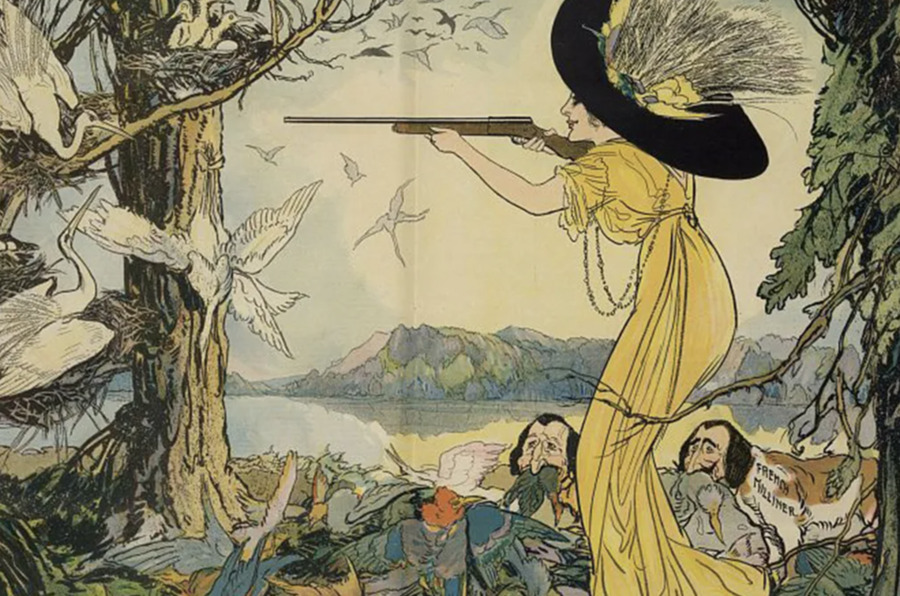 Migratory Bird Treaty Act and the Fight to Keep Feathers off HatsThe Migratory Bird Treaty Act grew out of a time when hats decorated with bird feathers were at the height of fashion, driving the killing of millions of egrets, herons, and other species. Early conservationists and women’s groups pushed back, arguing that style should not come at the cost of wildlife. Their efforts led to the 1918 law, which gave federal protection to migratory birds and helped species like the snowy egret recover. The story shows how a trend in clothing sparked one of the nation’s first major conservation victories and why the law still matters today as new threats to bird protection continue to appear.
-
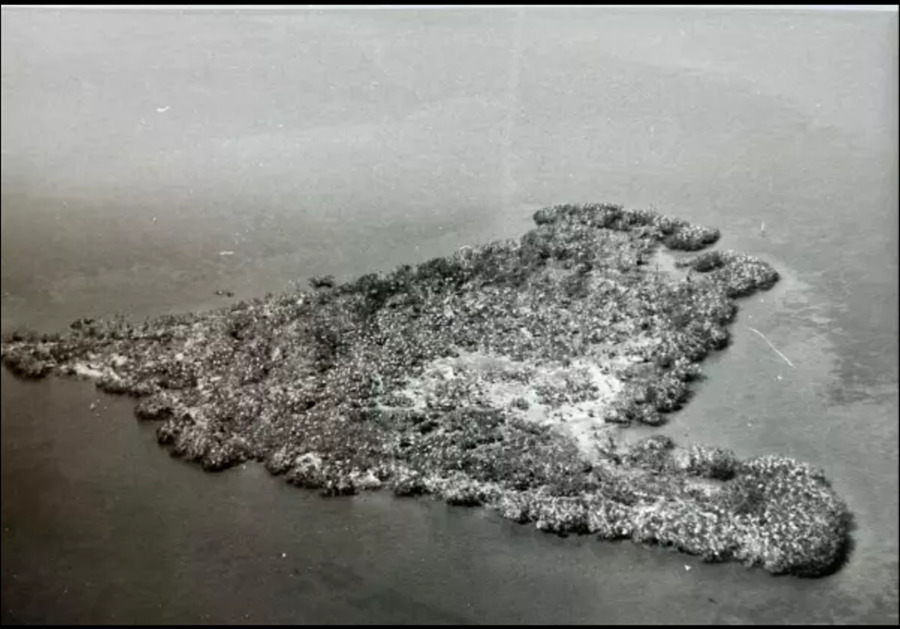 Establishment of Pelican IslandPelican Island was established through an executive order signed by President Theodore Roosevelt. It's managed by the Audubon Society (est. 1886), and provides habitat for dozens of endangered and native species. It represents one of the first instances of wildlife conservation being implemented at the federal level, demonstrating a significant shift from the treatment of species like the passenger pigeon and buffalo.
-
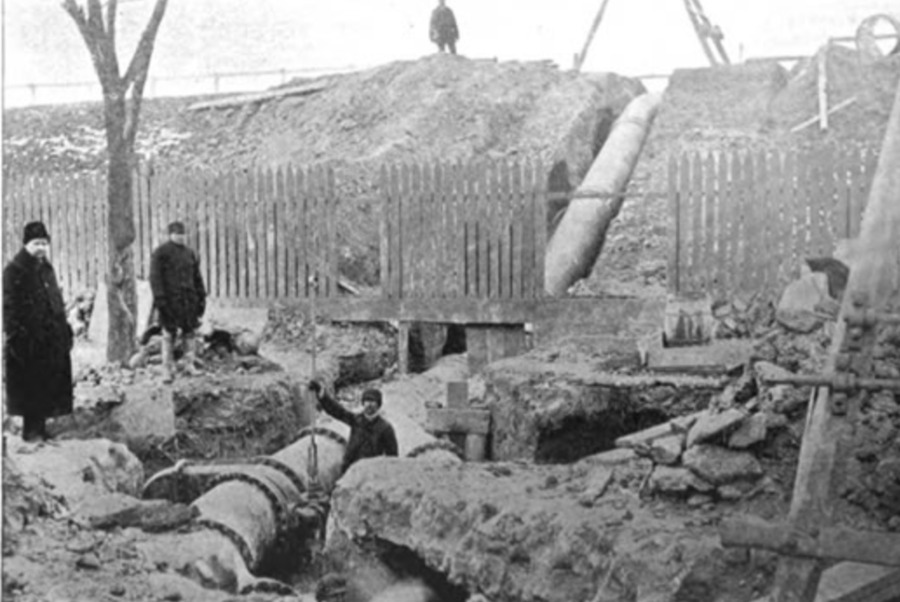 A water main being constructed at the former Bleecker Reservoir in Albany around 1898Around the mid-1800s, Americans start to realize that water systems need to be created in order to keep away diseases and overall improve the sanitation of their cities. One of the first filtered and chlorinated water treatment centers was created in New York's capital, Albany. This picture shows workers building main water pipes underground, which connected to the Bleecker Reservoir. Later becoming Bleecker Stadium. Before the creation of iron pipes, in Albany there were hollowed-out tree trunks, instead that acted as underground waterways.
-
 The Founding of the Massachusetts Audubon SocietyThe Audubon Society (first organized at the state level in Massachusetts in 1896, then nationally in 1905) organization remains at the forefront of conservation movements, intending to influence policymakers to pass key legislation. Most notably, the society helped pass the Audubon Plumage Law in 1910, the 1918 Migratory Bird Treaty Act, the Endangered Species Act in 1973, and the mammoth climate-change-focused Inflation Reduction Act in 2022. Audubon's work continues across the globe today in the forms of scientific research, policymaking, education, community engagement, and the conservation of 300 million acres of bird habitat.
-
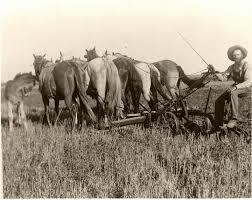 Factory-Style Farming After World War IIAfter WWII, pork and poultry production became industrialized. Animals were packed into feedlots and fed corn, soybeans, fishmeal, vitamins, hormones, and antibiotics. This system made meat production faster and cheaper, but it also depended on huge amounts of resources and changed how food was raised.
-
 Creation of U.S. Department of Agriculture's Beef Grading SystemThe U.S. Department of Agriculture (USDA) created its beef grading system, which declared that beef with higher fat content indicates higher quality beef. Not only did this USDA guideline incentivize the feedlot industry to fatten up young steers on corn and slaughter them prematurely as compared to before, but it also made raising livestock a more factory-oriented process. At first, feedlots had issues with excessive water consumption and were draining water out of the ground. Now, feedlots are criticized for releasing ammonia, methane, and carbon dioxide into the atmosphere.
-
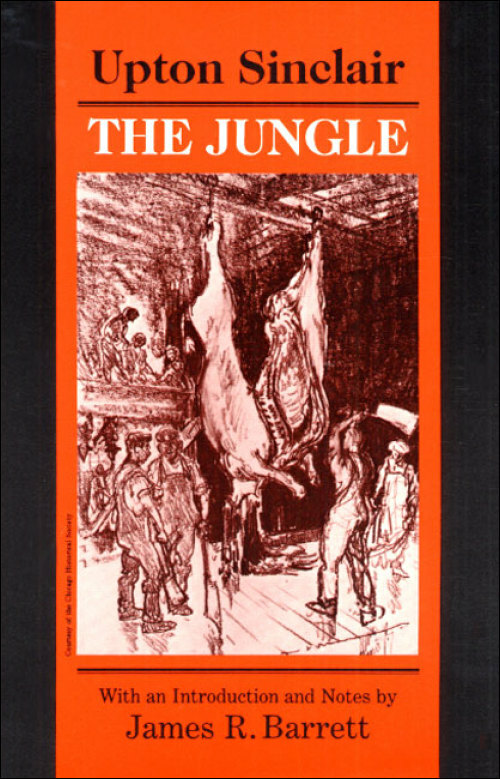 The Jungle by Upton SinclairThe Jungle was released as an exposé on the working and sanitary conditions of American meatpacking plants. The book revealed the horrifying conditions of these plants, mentioning rat contamination and other unsanitary issues. This led to the enactment of the 1906 Meat Inspection Act, which standardized sanitary conditions for these plants. This regulation contributed to the expansion of the meat packing industry because it gave the plants a sense of credibility in the public eye and allowed consumers to purchase meat at a lower price. This market expansion drove more production of beef in the U.S. and more cattle taking up space and resources, like water, corn, and land, across the country.
-
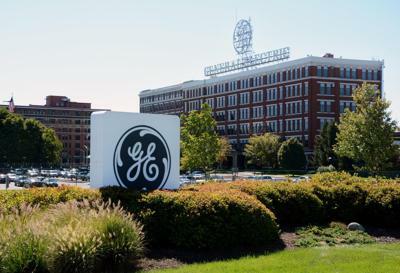 General Electric's Pollution of Ground WaterSemi volatile organic compounds and volatile organic compounds have been found to exist in the groundwater beneath General Electric. General electric sits near where the city of Schenectady gets its groundwater. The groundwater conditions have to be monitored by a system of wells to ensure that the contaminated water under GE does not leech into Schenectady's supply.
-
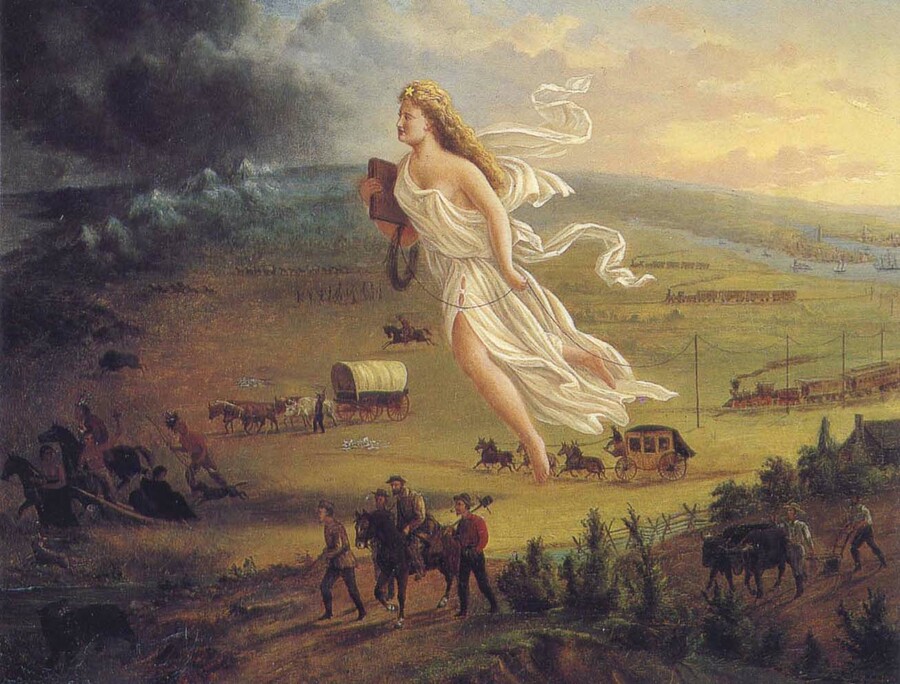 American ProgressAmerican Progress by John Gast depicts the United States' westward expansion during the 1800s. Gast chose to present this expansion as the angelic figure of Columbia bringing white settlers, railways, horses, and other technology along with her. This painting also includes Indigenous Americans and buffalo, who appear to be being chased away. Columbia's angel-like presence further illustrates the religious associations behind this perspective, including the idea of Manifest Destiny. Plowed fields, oxen, horses, and railways are depicted as improvements to a dark land, or "progress".
-
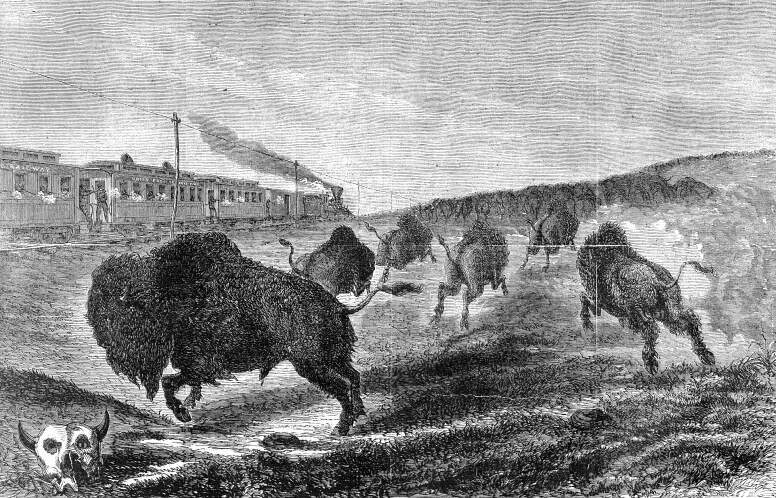 The Hunting of Buffalo from the Kansas Pacific RailroadThe train is slowed down to a rate of speed about equal to that of the herd of migrating buffalo, at which point the passengers get out firearms which are provided for the defense of the train against the Indians, and from the windows and platforms of the cars begin to fire in a manner that resembles a full blown skirmish. Frequently a young bull will turn at bay for a moment. His exhibition of courage is generally his death-warrant, for the whole fire of the train is turned upon him, either killing him or some member of the herd in his immediate vicinity.
-
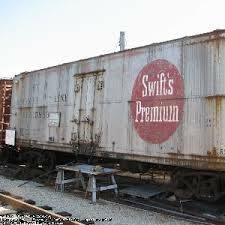 Transformation of Refrigerated Railroad CarsThe Western Railroad of Massachusetts started with a car for nonperishable items in 1842, in 1867 J.B. Sutherland got the first patent for a refrigerated railroad car. However in 1878 it became more sanitary when Gustavus Swift, a Chicago meat packer, collaborated with engineer Andrew Chase to develop the first practical ice-cooled reefer car.
-
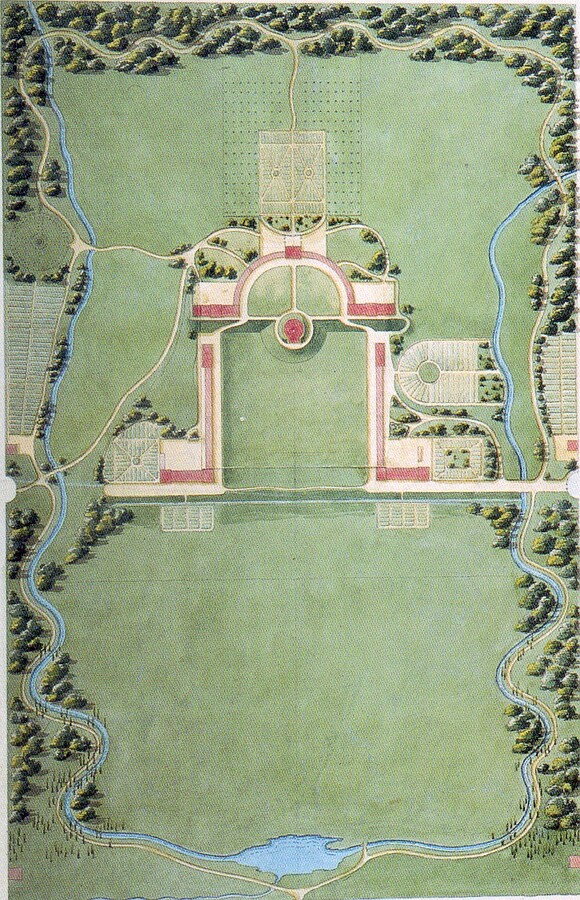 Ramée Plan for Union CollegeUnion College was the first college or university in the U.S. to have a formal plan for the layout of its grounds and buildings. The campus was deliberately oriented to look west, out the Mohawk River valley, toward what was then the western frontier.