-
Title
-
The Lacey Act of 1900
-
Description
-
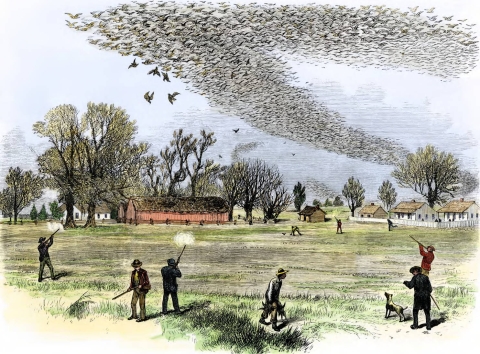
The Lacey Act, passed in 1900, is a U.S. law that prohibits the trade of fish, wildlife, or plants that have been captured illegally. The purpose of the law was to reduce the killing of wildlife by halting hunting and trading, ultimately preventing endangered species from extinction. It was one of the first political measures implemented in the name of conservation. Congressman John Fletcher Lacey introduced the act to the House of Representatives on April 30th, 1900, and it was later signed by President William McKinley on May 25th. The act was first established to address the overhunting of game birds but evolved to protect many other wildlife species.
-
Date
-
May 25, 1900 – May 25, 1900
-
Location - Physical Location
-
U.S. House of Representatives, Washington, DC 20515
-
Name
-
Andrea Olanescu
-
cites
-
Cart, Theodore Whaley. "The Lacey Act: America's first nationwide wildlife statute." Forest History Newsletter 17, no. 3 (1973): 4-13. Ennis, Christine. "Revisiting the Lacey Act: Overview and Considerations for Use in Animal Welfare." Dep't of Just. J. Fed. L. & Prac. 72 (2024): 195.